


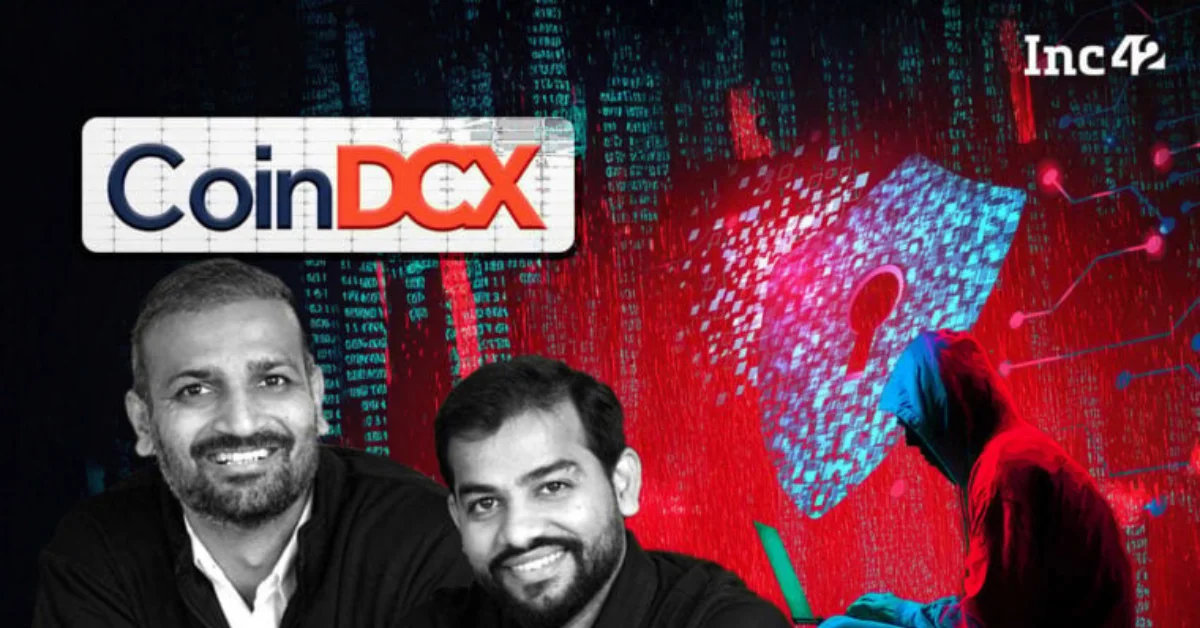
Wait — CoinDCX founders arrested? Let's actually read what happened
So this news dropped yesterday and the headlines were pretty alarming. "CoinDCX founders arrested" was floating around. But when you actually read through the details, this is a much more complicated story — and honestly, a deeply worrying one for anyone who invests in crypto in India.
Let me break it down properly.
What actually happened
A 42-year-old insurance consultant lost ₹71 lakh to what he thought was CoinDCX. He was using a website with the URL coindcx.pro — not the real CoinDCX at coindcx.com. The .pro domain was a fake, a scam site set up by fraudsters to impersonate the legitimate CoinDCX exchange.
The victim filed an FIR with Mumbai Police. The FIR named CoinDCX co-founders Sumit Gupta and Neeraj Khandelwal. Mumbai Police then called the founders in for questioning at a station in Mumbra on March 21.
Economic Times reported that the duo were actually arrested following the FIR. Moneycontrol reported they were called in for questioning. CoinDCX's own statement calls the fraud allegations false claims.
CoinDCX's version — and it's credible
CoinDCX responded on X: impersonators posed as the company's founders to "cheat the public at large." The company posted a public notice on its website warning users about fraudsters targeting their brand name.
Here's the stat that really puts this in perspective: CoinDCX says it reported over 1,212 fake websites impersonating its name and business between April 2024 and January 5, 2026. That's more than one fake CoinDCX website every single day for nearly two years.
The company confirmed to Inc42: "We have no concern with these websites and it is fake." They also said they're cooperating fully with law enforcement investigating the matter.
The victim's side — and why this is complicated
Here's what makes this genuinely messy. A source told Moneycontrol: "The victim who lost over ₹71 lakhs through the scam had done it through a fake website impersonating CoinDCX. The fake website had a URL: coindcx.pro. The victim didn't even reach out to the company with this issue prior to the FIR."
And then this line: "The founders are equally taken aback by the sudden complaint."
Think about that for a second. A person lost ₹71 lakh — that's life-altering money for most Indian families. The loss is real and devastating. But the people named in the FIR appear to be the victims of identity theft, not the perpetrators of the fraud. The actual criminals — whoever is running coindcx.pro — are the ones who took the money.
This is the fundamental problem with crypto scams in India right now: victims lose money, file complaints against the branded company whose name was used, and the actual fraudsters often vanish.
Why this keeps happening — 1,212 fake websites in less than two years
One thousand, two hundred and twelve. Let that number sink in. That's how many fake CoinDCX websites were reported to authorities in under two years. Fraudsters are running entire operations impersonating legitimate Indian crypto exchanges — fake websites, fake apps, fake customer support lines.
The playbook is simple and brutal. They build a site that looks exactly like CoinDCX. They advertise it — often through WhatsApp groups, Telegram channels, and even paid social media ads. They promise high returns. They take deposits. Then they disappear.
The URL tricks are subtle. coindcx.pro instead of coindcx.com. Or coindcx.in, coindcx.net, coin-dcx.com. To someone not paying close attention, especially someone new to crypto investing, these look legitimate.
What this means for Indian crypto investors
If you're using any crypto exchange in India — CoinDCX, WazirX, CoinSwitch, Zebpay — this story is a wake-up call. The fake site problem is not limited to CoinDCX. Every major Indian exchange has imposters.
Always access your exchange by typing the URL directly. Bookmark the real URL. Never click links from WhatsApp forwards or Telegram messages claiming to be from your exchange. If someone calls you claiming to be from CoinDCX or any other exchange and asks for money or OTPs — that's a scam, full stop.
For context on how serious the ₹71 lakh loss is: that's roughly what someone earning ₹1 lakh per month would need 6 years to save. This is catastrophic for a household, and these scams are running at industrial scale.
My honest take
From what's available publicly, CoinDCX's founders appear to be victims of circumstance here — their brand was weaponized by fraudsters, and now they're being questioned by police because a victim filed an FIR naming them. That's a genuinely unfair situation.
But here's what I think CoinDCX — and every Indian fintech company — needs to do more aggressively: make it dramatically harder for fake sites to exist. Work with domain registrars, Google, Meta, and WhatsApp to take down imposters faster. The 1,212 fake site number is shocking, but what's the average time between a fake site going live and being taken down? That's the number that actually matters for protecting users.
India's crypto market is growing, trust is fragile, and stories like this — where even innocent founders get dragged into police stations — do real damage to the ecosystem. The fraudsters win twice: they steal the money, and they make the legitimate platforms look untrustworthy.
For now: keep your crypto on registered Indian exchanges, verify URLs obsessively, and if you ever get duped, report to your actual exchange first before filing an FIR — give them a chance to help track the fraud.



Comments (0)
Be the first to comment!