


Key Takeaways
- Cradlewise closed a $12 million Series A round led by 3one4 Capital and Prudent Investment Management, signaling strong institutional confidence in AI-driven infant sleep hardware.
- The funding will fuel expansion into new sales channels and international markets, giving the startup a serious runway to scale beyond its early-adopter base.
- For Indian parents browsing baby tech, this round validates the broader investor appetite for smart nursery products that blend sensors, AI, and real-time app connectivity.
- The raise matters because it proves venture capital is still willing to fund hardware-heavy consumer brands when the use case is safety-critical and the user is an exhausted new parent.
- Expect the company to prioritize safety certifications, app experience, and distribution partnerships as it spends the new capital.
What's the news
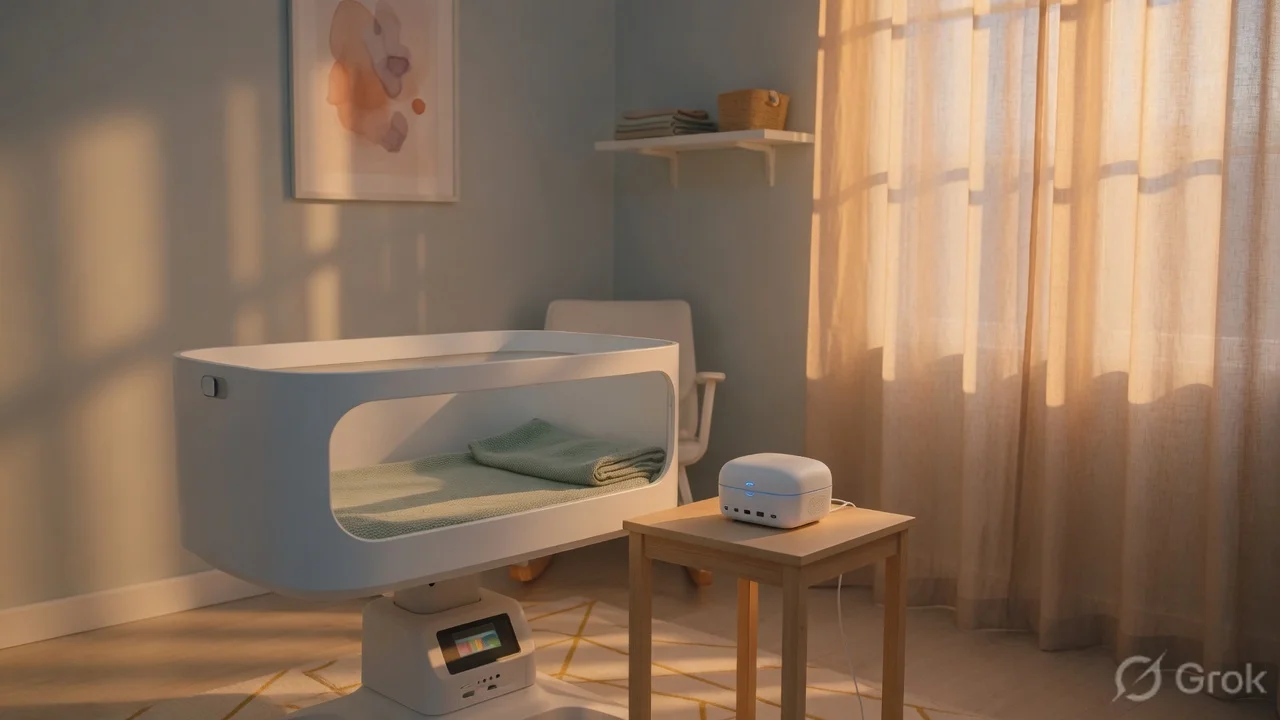
Cradlewise has raised $12 million in a Series A funding round, led by 3one4 Capital with participation from Prudent Investment Management. The startup, which builds an AI-powered smart bassinet designed to monitor infant sleep, movement, and breathing patterns, is using the fresh capital to expand its product business across new channels and into international markets.
In practice, this means Cradlewise now has the financial firepower to grow beyond the early-adopter households that initially bought its connected nursery hardware. The round is not a me-too seed check; it is a deliberate institutional vote of confidence that there is enough urgency and upside in the infant sleep tech space to support a dedicated hardware-software play.
Details
The smart bassinet that Cradlewise sells is meant to sit in a nursery as a next-generation crib. It uses an array of sensors and artificial intelligence to track how a baby sleeps, how often the infant moves, and whether breathing looks regular. All of this data does not just sit on the device; it flows into a companion mobile application where parents can review sleep cycles, get gentle alerts, and even let the bassinet softly rock a baby back to sleep with minimal manual intervention.
For a hardware startup, survival past the prototype phase is the real test. Manufacturing at scale, achieving safety certifications, and maintaining software integration are expensive and unforgiving. By raising Series A money rather than going back for additional seed funds, Cradlewise is signaling that its unit economics and repeat purchase potential are looking healthy enough for institutional investors to back a bigger bet.
The use of the new capital will likely cover supply chain expansion, app development, and building out partnerships with retailers and distributors in geographies where Cradlewise is not yet present. International expansion is especially attractive because the connected crib market in North America and Europe is valued higher per unit, which can justify the premium pricing that such a product requires.
India impact
India is already a massive market for baby products, but it is still intensely price-sensitive and dominated by local manufacturing giants selling through large formats like Reliance Retail or D-Mart, alongside import-heavy premium segments on platforms like Amazon India. If Cradlewise decides to make India a priority in its international push, it would need to solve several puzzles: adapting hardware to handle domestic power fluctuations, pricing aggressively enough to compete with imported and local smart monitors, and navigating the regulatory maze around child safety devices.
That said, the funding news is not irrelevant to Indian audiences. It signals that global venture capital is warming up to the hardware-software crossover model in parenting. Indian founders building similar nursery tech — whether targeting newborn breathing monitors, temperature-regulated cribs, or AI sleep coaches — can point to this round as proof that the investor appetite exists.
The rise of digital payments through UPI and the dominance of e-commerce marketplaces like Flipkart have made it far easier for niche imported brands to reach Indian consumers than it was five years ago. If Cradlewise develops an India strategy, it would almost certainly start with direct-to-consumer channels, use UPI for frictionless checkout, and eventually list on Amazon India or Flipkart to capture mass-market demand.
Local retail chains dominate the mid-range, while premium imported brands sit on top. Any global entrant must decide whether to price at the top of the pyramid or build a budget-friendly tier, neither of which is easy when factory costs and import duties bite.
For now, the lesson for the local ecosystem is clear: smart baby tech is no longer a novelty. Investors are funding it, and Indian parents will eventually have more choices in connected nursery hardware than they do today.
Use cases
The most obvious use case is giving parents peace of mind. New fathers and mothers are often sleep-deprived and hyper-vigilant about infant safety. A smart bassinet that tracks breathing and movement can reduce anxiety without requiring a separate, clunky camera monitor in the room. The app can push notifications for unusual patterns, and the device itself can self-rock to soothe a crying baby, which is especially useful during midnight wakeups when parents are half-asleep.
A second use case is data-driven parenting. Japanese and Western pediatric trends increasingly emphasize understanding sleep architecture and linking it to feeding intervals. Cradlewise captures that longitudinal data, letting parents spot that a two-week-old is starting to consolidate night-time sleep or that a four-month-old is going through a growth spurt.
Third, the system acts as a hands-off sleeping coach. Exhausted parents do not always want another app telling them what to do. Cradlewise can quietly adjust rocking intensity or simply report back to the phone without demanding attention. It is the kind of ambient intelligence that disappears into the background while actually serving a human need.
Honest take
$12 million is a respectable stacked Series A that most hardware startups dream of. Cradlewise has survived the hardest stretch: proving that parents will pay a premium for connected crib tech when traditional bassinet sales are commoditized. That is no small achievement, especially in an era where VCs seem obsessed with pure-play SaaS and hardware is viewed as high-maintenance.
But the honest reality is that the infant tech market is crowded. A flood of smart monitors, wearable sleep trackers, and even AI-driven parenting gadgets has made investors cautious. The winners in this space will be determined by battery life, safety certifications, and how well the hardware fades into the background of a baby's life.
Cradlewise needs to make sure its app experience does not feel like another notification dashboard. New parents do not need more things pinging at 2 AM. The product must sell itself through reliability and calm design.
There is also the matter of mobile app support for Indian languages and offline functionality, because not every Indian parent has gigabit fiber running to the nursery.
As for India, the company is not announcing an immediate local launch, and that is probably wise. The appliance market in India rewards cost efficiency above almost everything else. Unless Cradlewise can price its smart bassinet for the Indian middle class — a massive challenge — it will remain a premium import choice even if it officially enters the market.
Still, the round is a healthy signal. It means serious investors see a future where hardware and AI meet infant care in a way that is safe, useful, and commercially scalable.
FAQs
What exactly does Cradlewise do? Cradlewise makes an AI-powered smart bassinet that monitors infant sleep patterns, breathing, and movement through built-in sensors. It connects to a mobile app to provide parents with real-time insights and gentle motion to soothe babies back to sleep.
Who led the Series A round and how much was raised? The Series A round was led by 3one4 Capital, with Prudent Investment Management also participating. The company raised $12 million in total.
Will Cradlewise launch in India soon? The company did not announce immediate India expansion plans in this funding round. However, the capital will be used to explore international markets, which could logically include India in the coming years if product-market fit and regulatory compliance align.
How does Cradlewise differ from traditional baby monitors? Unlike standard baby monitors that primarily offer audio or visual feeds, Cradlewise uses AI and physical motion to analyze sleep and actively rock the baby back to sleep. It also tracks longer-term patterns through a connected app, offering actionable insights rather than just real-time snapshots.
Is smart baby tech a viable market in India? Yes, the Indian baby tech market is growing, especially in metropolitan areas where parents are early adopters of connected devices. However, success depends on addressing price sensitivity, heat and humidity factors, and local regulatory landscapes while leveraging platforms like Flipkart and UPI payments.




Comments (0)
Be the first to comment!