


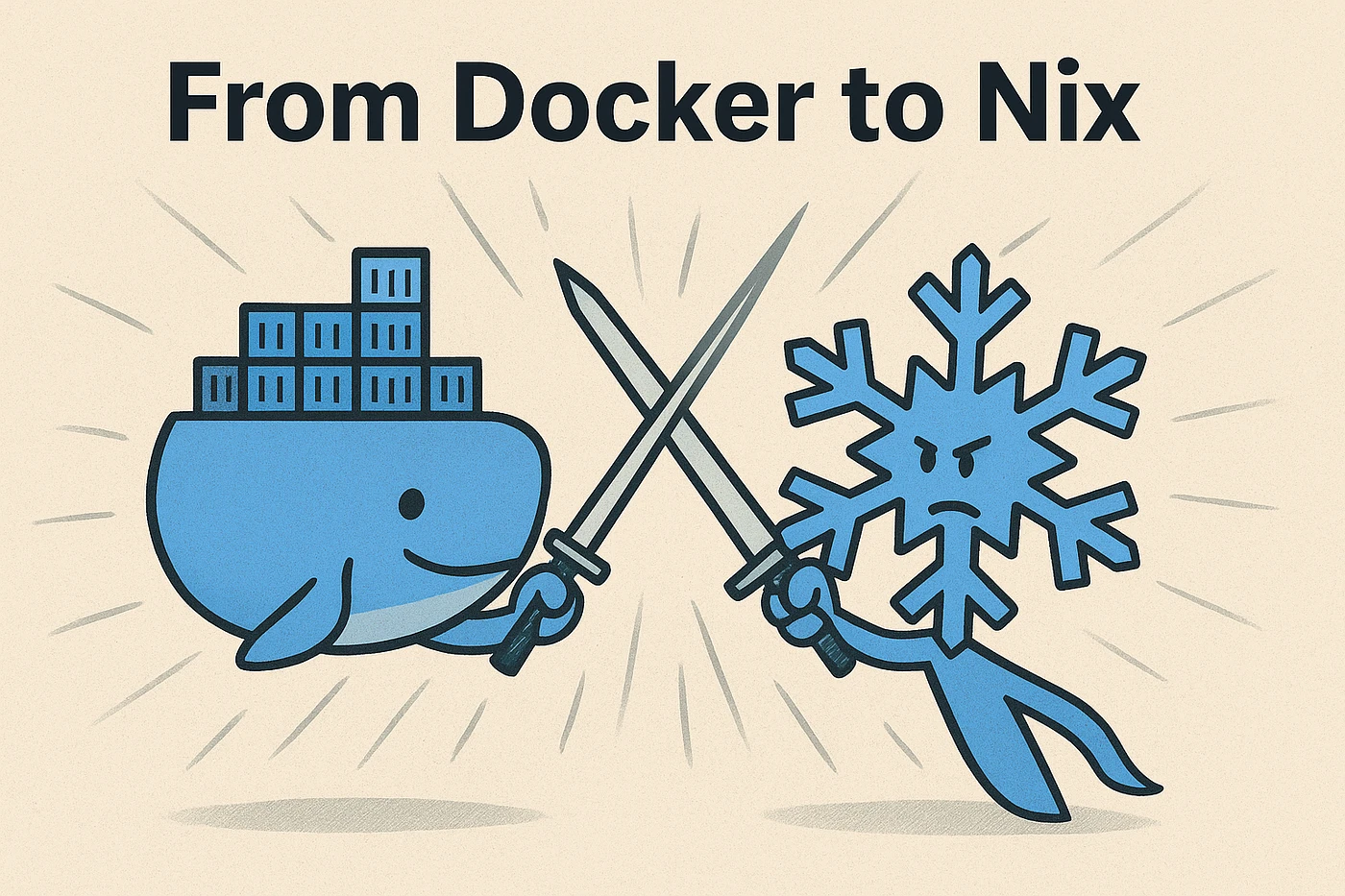
Introduction: The Developer Tooling Dilemma
If you are a developer in 2026, you have almost certainly used Docker. It is the default containerization tool that powers everything from local development to massive Kubernetes clusters in production. With 92% adoption among IT professionals and 71.1% of developers actively using it, Docker is ubiquitous.
But there is another tool that has been quietly gaining momentum among infrastructure teams, open-source maintainers, and reproducibility enthusiasts: Nix. Created all the way back in 2003, Nix has recently surged to become the #1 repository on GitHub by contributor count for two consecutive years, with its latest NixOS 25.11 release receiving 2,742 contributors and 59,430 commits.
If you have heard developers say things like "it works on my machine" or you have spent hours debugging why your CI pipeline produces different results from your local build, then this comparison is for you. Docker and Nix address the same fundamental problem — environment reproducibility — but they take radically different approaches.
In this comprehensive guide, we will break down both tools, compare them across every dimension that matters, and help you decide which one (or both) to invest your learning time in.
What is Docker? A Quick Overview
Docker was created by Solomon Hykes in 2013 and quickly revolutionized how developers package, ship, and run applications. At its core, Docker uses containerization — a lightweight form of virtualization that packages your application and all its dependencies into a single portable unit called a container.
Premium Content
You've read all your free articles today. Subscribe to continue reading.
You've used 3 of 3 free articles today.
Subscribe NowAlready subscribed? Sign in




Comments (0)
Be the first to comment!