


Key Takeaways
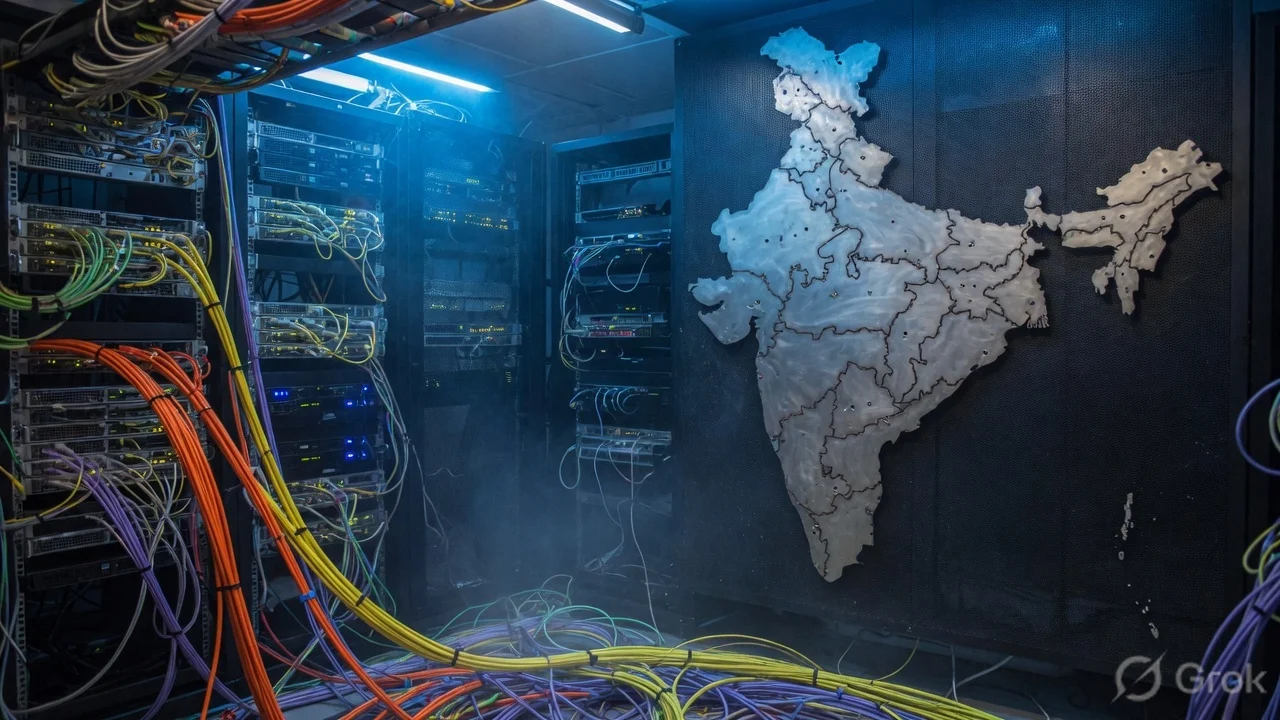
- The Department of Telecommunications (DoT) has mandated that all telecommunication traffic and user data must remain within the borders of India.
- New 'Network Authorisation' rules replace the decades-old licensing system, simplifying how companies like Jio, Airtel, and local ISPs operate.
- Every authorized entity must now ensure that no data, including metadata and call logs, is stored or processed on servers located outside India.
- Failure to comply with these data residency rules can result in penalties up to ₹50 crore per circle and potential cancellation of authorization.
The Big Shift in Indian Telecom
For years, we have been talking about data privacy and where our information goes. Today, in July 2026, the Indian government has taken the most significant step toward 'Data Sovereignty' by notifying the new Network Authorisation rules under the Telecommunications Act. This isn't just a minor update; it is a complete overhaul of how the internet and phone calls work in our country. The core message from the DoT is loud and clear: if the data belongs to an Indian user, it stays in India. No more routing through servers in Singapore, Europe, or the US for 'processing' or 'storage'.
This move comes at a time when India is rapidly expanding its 5G network and testing 6G technologies. With billions of gigabytes being consumed every month, the government wants to ensure that this massive treasure trove of information doesn't fall into the wrong hands or remain outside the reach of Indian law enforcement. For the average user, this might sound like technical jargon, but it fundamentally changes the security layer of every WhatsApp call, every YouTube stream, and every UPI transaction you make through your mobile network.
How We Got Here: From 1885 to 2026
To understand why this is a big deal, we have to look back. For over a century, India operated under the archaic Indian Telegraph Act of 1885. Even as we moved into the era of smartphones and high-speed fiber optics, the legal framework was stuck in the age of telegrams. The Telecommunications Act of 2023 was the first step in fixing this, and now in 2026, the specific rules for 'Network Authorisation' have finally been notified. Previously, companies had to deal with a complex 'Licensing' regime that was bureaucratic and slow. Now, 'Authorisation' is the new buzzword, designed to be more business-friendly but with much stricter rules on national security.
In the past, many ISPs and telecom players used cloud servers located in various parts of the globe because it was cheaper or more efficient. However, this created a massive blind spot for our national security agencies. If a crime was committed and the data was stored in a server in California, getting access to it involved months of international paperwork. By mandating that data must not leave India, the DoT is closing this loophole once and for all. This is the government's way of saying that digital borders are just as important as physical ones.
The 'No Data Export' Rule Explained
The most striking part of the new notification is the clause regarding data residency. According to the new rules, every company providing telecom services—be it your mobile operator or your local broadband provider—must ensure that all user data, including personal details, call records, and internet usage logs, are stored within the geographical boundaries of India. But it doesn't stop at storage. The rules specifically bar the 'transfer' of this data for processing. This means companies cannot send your data to an AI model in another country to analyze your usage patterns or for targeted advertising without strict local processing.
This also applies to 'Critical Telecommunication Infrastructure'. The hardware used in our towers and exchanges must now be from 'Trusted Sources'. We’ve seen the government being wary of certain foreign equipment manufacturers in the past, and these new rules solidify that stance. If an ISP wants to use a new server or a routing switch, they have to ensure it meets the security standards set by the DoT. The goal is to create a 'Clean Network' where every bit and byte can be accounted for within our own jurisdiction.
What Does This Mean for You?
You might be wondering, "Will my internet get slower?" or "Will my recharge plans become expensive?" Honestly, there might be a short-term impact. Building local data centers and migrating data from global clouds to Indian servers costs money. Telecom giants like Jio and Airtel are already well-prepared, but smaller ISPs might struggle with the initial investment. We might see a slight bump in corporate costs which could eventually trickle down to the consumer. However, the trade-off is significantly better privacy and faster local access to services as more companies move their 'Edge' servers to India.
From a privacy perspective, this is a win for the Indian user. When your data stays in India, it is governed by the Digital Personal Data Protection (DPDP) Act. You have more legal recourse if a company mishandles your info. On the flip side, some privacy advocates argue that this makes 'lawful interception' (government surveillance) easier since the data is right here. It’s a classic balance between national security and individual privacy that we will have to navigate as these rules are implemented over the next few months.
Network Authorisation: The New Gatekeeper
The transition from 'License' to 'Authorisation' is not just a change in name. Under the new rules, the process of starting an ISP or a satellite communication service becomes digital and streamlined. However, the conditions are tougher. Each authorized entity must appoint a local Chief Security Officer and a Nodal Officer who are residents of India. They will be personally responsible for ensuring that no data leaks across the border. This puts the accountability directly on the people running these companies.
Interestingly, the rules also cover 'In-flight and Maritime Connectivity'. So, even when you are flying over Indian airspace or sailing in Indian waters, the data generated by your devices must follow these localization rules. The DoT has also introduced a tiered structure for authorization, making it easier for startups to enter niche areas like M2M (Machine to Machine) communication and IoT (Internet of Things) without the heavy baggage of a full-scale telecom license.
TamilTech’s Take: The Road Ahead
At TamilTech, we think this is a double-edged sword. On one hand, seeing India take control of its digital destiny is great. For too long, our data has been the 'digital oil' that fueled foreign corporations. By keeping it here, we are not only securing our citizens but also encouraging the local data center industry to grow. We expect to see a massive boom in the construction of server farms in states like Tamil Nadu, Maharashtra, and Karnataka. This means more local jobs and better infrastructure.
But, we also have to be realistic. The government now has a 'master key' to the data. While they say this is for national security, the lack of a strong judicial oversight on how this data is accessed by agencies remains a concern. Also, for the global tech giants, India is becoming a 'walled garden' with its own set of complex rules. We hope this doesn't lead to a situation where some global services decide to skip the Indian market because the compliance costs are too high. For now, keep an eye on your service provider's updated terms and conditions — you'll be seeing a lot of 'Processed in India' labels soon!






Comments (0)
Be the first to comment!