


Key Takeaways
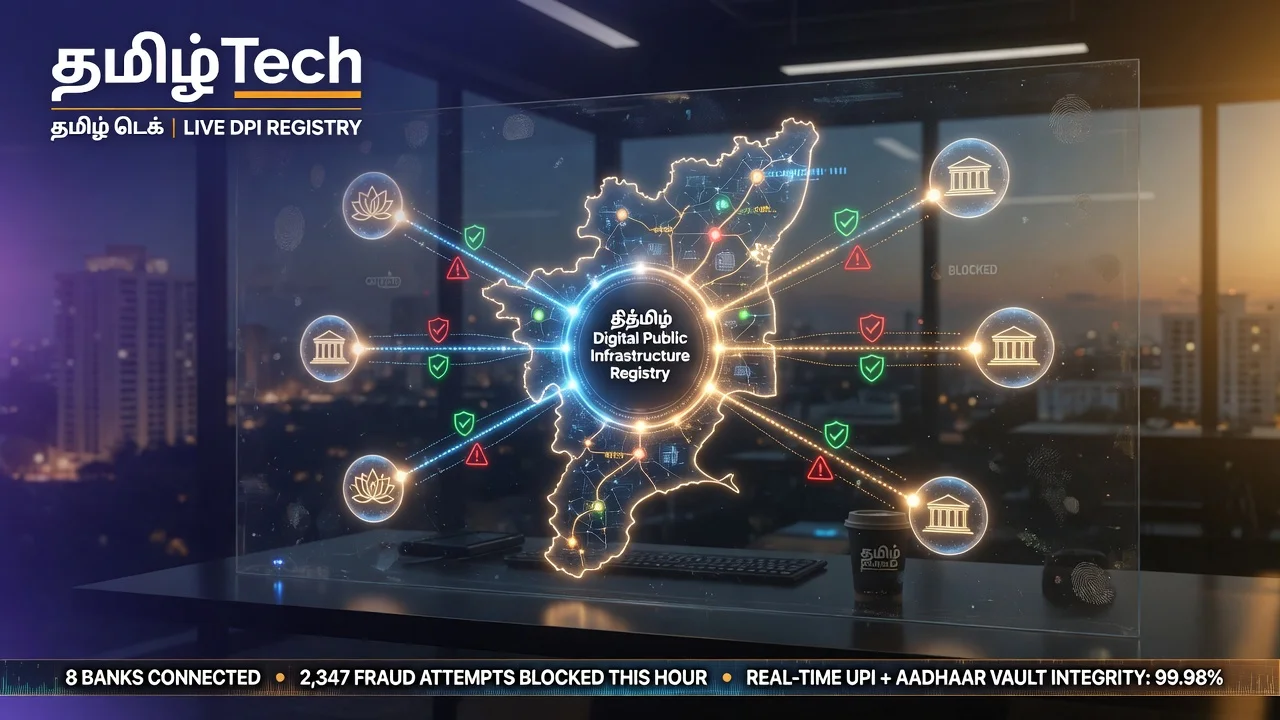
- Eight major banks have integrated with DPIP Smart Registry, enabling instant flagging of risky accounts.
- The registry aggregates signals from UPI, IMPS and card networks to build near‑real‑time risk profiles.
- Phase 2 will introduce real‑time scoring for every digital transaction, shifting fraud detection from batch to instant.
- Early participants report faster alert response and reduced reliance on manual reviews.
- The system supports smaller banks by giving them access to shared fraud intelligence.
What's the news
In September 2026 the Digital Payments Infrastructure Platform announced that its Smart Registry is live with eight partner banks. The registry works as a shared repository where each bank can upload and query information about accounts that display abnormal behaviour. When a transaction originates from a flagged account, the receiving bank gets an alert within seconds, allowing it to block or review the payment before funds move. This launch marks the first step of a broader plan to move fraud detection from periodic batch reviews to instantaneous decision‑making.
Details
The Smart Registry collects data points such as login frequency, device changes, sudden spikes in transaction volume and links to known mule accounts. By correlating these signals across UPI, IMPS and card networks, the platform creates a risk profile that updates in near real time. The eight banks that have completed the technical integration are State Bank of India, HDFC Bank, ICICI Bank, Axis Bank, Kotak Mahindra Bank, IndusInd Bank, Yes Bank and Federal Bank. They are now feeding live data into the registry. The underlying technology uses a distributed ledger for data integrity and a rule‑engine that can be updated centrally without requiring each bank to rewrite its own fraud‑rules.
Technical architecture
The registry runs on a permissioned blockchain network that ensures data cannot be tampered with once written. Each participating bank operates a node that validates incoming records before they are added to the shared ledger. A smart contract layer enforces the rules for what constitutes a risky signal, and updates to these rules are pushed through a governance console managed by DPIP. APIs expose the registry to banks’ existing fraud‑management systems, allowing them to query an account’s risk score in sub‑second latency. Data minimisation principles are applied; only non‑personal identifiers such as hashed account IDs and transaction metadata are stored, keeping customer privacy intact.
India impact
For consumers, the immediate benefit is a lower chance of losing money to account‑takeover scams or fraudulent merchant purchases. When a compromised account attempts to transfer funds, the alert can stop the transaction before the victim notices any unauthorized activity. For businesses, especially merchants relying on UPI collections, the reduction in fraudulent chargebacks translates to better cash flow and lower operational overhead. Regulators have welcomed the initiative as it aligns with the Reserve Bank of India’s push for a safer digital payments ecosystem. The system also helps smaller banks that lack extensive fraud‑analytics teams by giving them access to a collective intelligence pool.
Use cases
One common scenario involves a fraudster who gains control of a user’s UPI ID through phishing and then tries to send money to multiple mule accounts in quick succession. The Smart Registry detects the sudden spike in outgoing transfers from the compromised account and flags it, preventing the funds from leaving the ecosystem. Another use case is the detection of synthetic identities used to open bank accounts solely for laundering. By checking the registry during the onboarding process, banks can spot links to previously flagged entities and reject the application early. Merchants also benefit when a card‑not‑present transaction originates from a device that has been associated with earlier fraud attempts; the registry can prompt an additional authentication step.
Honest take
The launch of the DPIP Smart Registry is a pragmatic step toward real‑time fraud prevention in a country that processes billions of digital payments each month. Its strength lies in the collaborative model – banks sharing insights without compromising individual customer data – which creates a network effect that grows stronger as more participants join. Challenges remain, however. Ensuring the accuracy of the risk signals is vital; false positives could frustrate genuine users and erode trust. Privacy safeguards must be transparent, and the governance framework needs clear rules on data retention and dispute resolution. If the upcoming Phase 2 delivers on its promise of instant scoring for every UPI transaction, India could see a measurable dip in fraud losses, but success will depend on consistent adoption, regular updates to the rule‑engine, and ongoing dialogue between banks, regulators and technology providers.
Challenges and outlook
Adoption beyond the initial eight banks will be crucial for the registry to reach its full potential. Smaller cooperative banks and payment‑only entities may need technical assistance to connect their systems. DPIP has announced a sandbox programme that offers pre‑built connectors and testing environments to lower the barrier. Another area of focus is the calibration of risk thresholds; too sensitive a setting can block legitimate payments, while too lax a setting lets fraud slip through. Continuous monitoring and feedback loops are built into the rule‑engine to allow adjustments based on real‑world outcomes. Looking ahead, the platform aims to integrate with emerging technologies such as tokenised payments and central bank digital currency pilots, ensuring the fraud‑prevention layer stays relevant as the payment landscape evolves.




Comments (0)
Be the first to comment!