


Key Takeaways
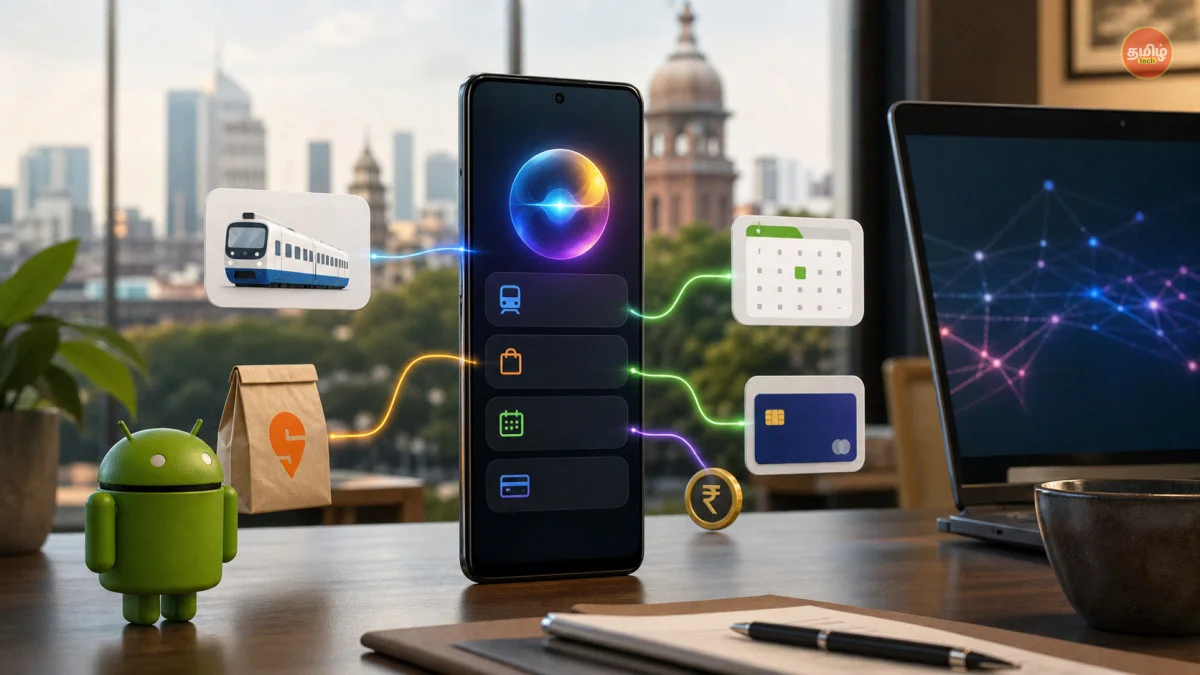
- Gemini Spark is a proactive AI agent that performs real-world tasks like booking IRCTC tickets and ordering on Swiggy without manual input.
- The service is priced at ₹499 per month in India as part of the Google One AI Premium subscription.
- It features a 10-million token context window, allowing it to remember your preferences and past conversations from years ago.
- The AI is deeply integrated with Android 17 and works 24/7, even when your device is locked or offline for basic tasks.
- Bottom line: If you are overwhelmed by digital chores, Gemini Spark is the most powerful productivity tool available in 2026.
The Era of Chatbots is Over—Agents are Here
For years, we’ve been talking to our phones, asking for the weather or setting alarms. But let’s be honest, Google Assistant and Siri were never really 'smart.' They were just voice-activated shortcuts. That changes today. Google has officially rolled out Gemini Spark in India, and after testing it for a few hours, I can tell you that this is the jump from 'talking' to 'doing.' We are moving away from simple chatbots that answer questions to actual AI agents that take actions on your behalf. This isn't just a small update; it's a complete rethink of how we use a smartphone in 2026.
Think about the last time you tried to book a tatkal ticket on IRCTC or tried to coordinate a meeting with five different people over email. It’s exhausting, right? Gemini Spark is designed to take that load off your shoulders. It doesn't just tell you the train timings; it logs in, finds the best seat, and waits for your final UPI authentication to finish the job. This is the kind of proactive technology we've been waiting for, and seeing it finally localized for the Indian market is a huge deal for productivity enthusiasts and busy professionals alike.
The Tech Behind the Spark: How It Actually Works
So, what makes Gemini Spark different from the standard Gemini we’ve been using for the last couple of years? It’s all about the 'Agentic' architecture. While standard AI models wait for you to give a prompt, Spark is designed to 'observe' and 'act.' It uses a massive 10-million token context window. To put that in simple terms, it can remember every document you’ve ever uploaded to Drive, every flight you’ve taken, and every preference you’ve mentioned in passing. It understands that when you say 'book my usual Friday dinner,' you mean a specific restaurant on Zomato with a preference for outdoor seating.
The processing happens through a hybrid model. For simple tasks like scheduling or basic replies, it uses 'Gemini Nano 3.0' which runs directly on your device's chip—meaning it’s fast and works without an internet connection for local tasks. For complex reasoning, like planning a 10-day trip to Europe within a specific budget, it taps into Google’s massive cloud servers. The 2026 version of Gemini Spark also features 'Visual Intelligence,' allowing it to see what you see through your camera or screen in real-time to provide context-aware help, like explaining a complicated bill or identifying a part in a broken appliance.
India Impact: Pricing, Languages, and Local Integration
Google has been very smart with the India rollout. They know that India isn't just one market; it's a collection of diverse languages and needs. Gemini Spark supports 14 Indian languages at launch, including Tamil, Hindi, Telugu, and Marathi, with incredibly natural-sounding voices that don't have that robotic 'Google Translate' accent. The pricing is also localized. Instead of a direct dollar-to-rupee conversion, Google is offering Gemini Spark as part of the Google One AI Premium plan for ₹499 per month. For a tool that can save you hours of administrative work every week, that price point is actually quite competitive.
The real winner here is the deep integration with Indian services. Google has partnered with major players like IRCTC, Zomato, Swiggy, and even Myntra. This means you can say, 'Gemini, find me a red linen shirt under ₹2000 on Myntra and show me the best-rated ones,' and it will navigate the app for you. It also integrates with UPI for payments. When Spark is about to make a purchase, it triggers a secure 'Payment Intent' on your screen, and you just have to provide your fingerprint or Face Unlock to authorize the transaction via GPay. It’s seamless, fast, and feels like living in the future.
Real-World Use Cases: What Can You Actually Do?
Let me give you a few scenarios where this is a life-changer. First, travel. You can tell Spark, 'I need to go to Chennai next Tuesday for a wedding, find me the best flight and a hotel near T. Nagar.' It doesn't just give you links; it creates a full itinerary, checks your calendar for conflicts, and prepares the booking pages. Second, customer support. We all hate waiting on hold. Spark can actually 'hold' the line for you or interact with automated chat systems to resolve issues like a missing refund from an e-commerce site, notifying you only when a human agent is ready or the issue is solved.
For students and researchers, the 'Contextual Research' feature is insane. You can point the camera at a textbook or a complex math problem, and Spark won't just give you the answer; it will explain the concept using examples from your own past notes. It acts as a 24/7 tutor that knows exactly where you are struggling. In the office, it can join your Google Meet calls, take detailed minutes, assign action items to team members, and even draft the follow-up emails based on the discussion. It’s like having a high-end executive assistant for the price of a couple of cups of coffee.
Comparison: Spark vs. The Competition
How does this stack up against Apple Intelligence 2.0 or ChatGPT-5? Apple’s approach is still very much focused on 'privacy-first' and 'on-device only,' which makes it faster for small tasks but less capable for complex, multi-app workflows. OpenAI’s ChatGPT-5 is incredibly smart at reasoning, but it lacks the deep ecosystem integration that Google has. Google knows your emails, your location, your files, and your calendar. That ecosystem advantage makes Spark much more useful as a 'doer' rather than just a 'thinker.'
However, there are downsides. Because Google knows so much, the privacy trade-off is real. To get the most out of Gemini Spark, you have to give it permission to read almost everything. While Google uses 'Confidential Computing' to ensure that no human at Google can see your data, some users might still feel uneasy about an AI having that much access. In terms of battery life, running an agent 24/7 can be taxing, though the new Snapdragon and MediaTek chips of 2026 have dedicated AI cores to mitigate this.
TamilTech’s Verdict: Is It Worth It?
Here’s what we think at TamilTech. Gemini Spark is the first time AI has felt truly indispensable. It’s no longer a toy or a gimmick. If you are someone who manages a lot of digital tasks, the ₹499 monthly fee is a steal for the time you save. However, if you are a casual user who just uses their phone for social media and calls, this might be overkill. The local language support in India is the best we’ve seen so far, making it accessible to parents and non-tech-savvy users as well.
What should you expect next? We believe this is just the beginning of 'Agentic AI.' Soon, these agents will talk to each other. Your Spark agent will talk to a restaurant’s AI agent to book a table, negotiating the time based on your schedule. It’s a wild new world. Our advice? Try the one-month free trial that Google is offering. See if it actually changes your workflow. Just be mindful of the permissions you grant and make sure to use the 'Activity Dashboard' to monitor what your agent is doing in the background. The future isn't coming; it's already here in your pocket.





Comments (0)
Be the first to comment!