


Key Takeaways
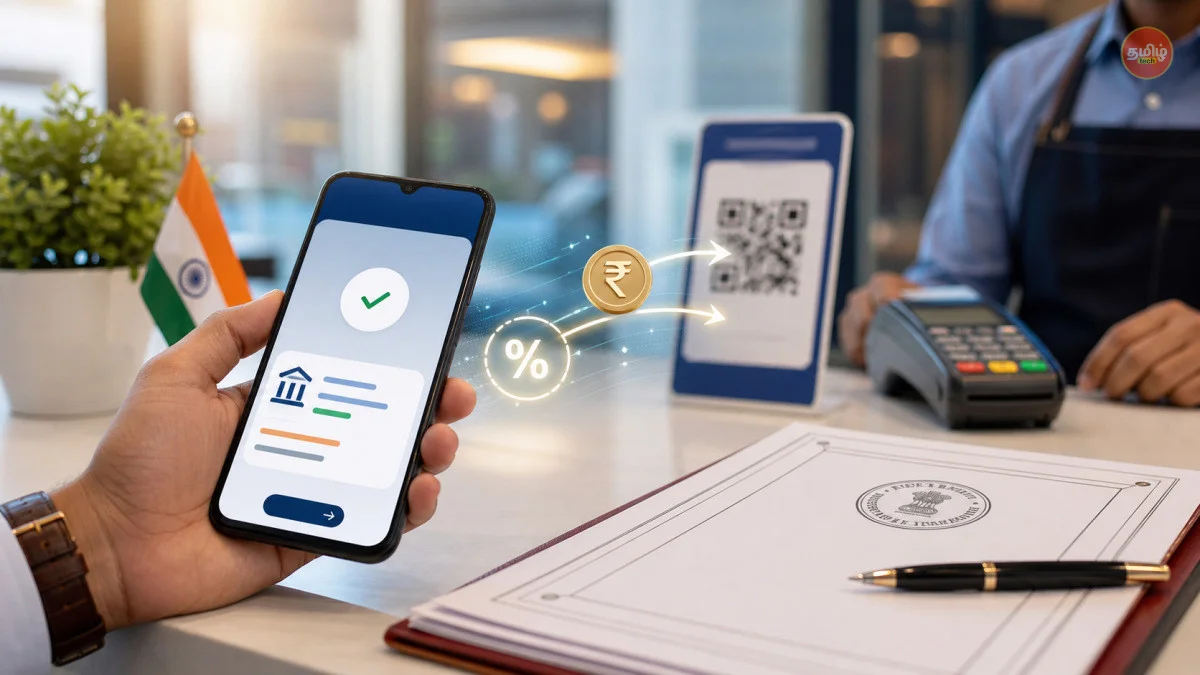
- The Indian government is planning to amend the Payment and Settlement Systems Act to allow Merchant Discount Rate (MDR) on UPI transactions.
- Banks and payment service providers currently bear an estimated annual cost of ₹15,000 to ₹20,000 crore to maintain the UPI infrastructure without direct revenue.
- The proposed MDR is expected to be a tiered structure, potentially starting as low as 0.1% to 0.3% for high-value merchant transactions.
- Small merchants with annual turnovers below a certain threshold (likely ₹20 lakhs) may remain exempt from these charges to protect the ecosystem's growth.
The Free Ride Might Be Over for UPI
For years, we have enjoyed the absolute convenience of UPI without paying a single paisa extra. Whether it is buying a cup of tea for ₹10 or a smartphone for ₹50,000, we just scan and pay. But as we stand in August 2026, the scale of UPI has reached a point where 'free' is no longer a sustainable business model. The government is now seriously looking at opening the doors for Merchant Discount Rate (MDR) on UPI. This isn't just a rumor anymore; there are active moves to amend the existing digital payment rules to allow banks and payment apps to finally earn from the massive infrastructure they have built.
If you are wondering why this is happening now, the answer lies in the sheer volume of transactions. In 2026, UPI is processing over 20 billion transactions every month. While this is a massive win for Digital India, the banks, NPCI, and apps like PhonePe and Google Pay are spending thousands of crores every year on servers, security, and technology updates. Currently, the government provides some subsidies to compensate these players, but it is nowhere near enough to cover the actual costs. This move to introduce MDR is seen as a way to make the system self-reliant without depending on government doles every budget session.
How Did We Get Here? A Brief History of Zero MDR
Back in 2020, the government mandated a 'Zero MDR' policy for UPI and RuPay Debit cards. The goal was simple: kill cash and make digital payments the default choice for every Indian. It worked brilliantly. India became a global leader in real-time payments. However, this success came at a cost. Banks started complaining that they were losing money on every UPI transaction because they had to maintain the software and hardware but got zero revenue in return. For the last few years, there has been a constant tug-of-war between the Finance Ministry and the banking sector.
In 2024 and 2025, we saw some small steps, like charges on PPI (Prepaid Payment Instruments) or wallets used on UPI. But the core 'bank-to-bank' UPI transfer remained free. Now, in 2026, the government realizes that to bring the next level of innovation—like advanced AI-based fraud detection and global UPI expansion—the ecosystem needs a steady stream of revenue. Therefore, the legal framework is being tweaked to allow a small percentage of the transaction value to be collected as a fee from the merchants.
The Details: What is Changing in the Rules?
The government is working on an amendment to the Payment and Settlement Systems Act. This amendment will specifically define how and when MDR can be applied to UPI. According to our sources, the plan is not to have a flat fee for everything. Instead, they are looking at a 'Tiered Pricing Model'. This means a small grocery store might pay nothing, while a large showroom or an e-commerce giant like Amazon or Flipkart might have to pay a small percentage. This ensures that the small 'Kirana' stores are not discouraged from using UPI.
The expected MDR could range between 0.1% and 0.3%. While this sounds small, when you consider the trillions of rupees moving through UPI, it adds up to a significant amount. This money will be split between the 'Issuer Bank' (your bank), the 'Acquirer Bank' (the merchant's bank), and the network provider (NPCI). A portion will also go to the TPAPs (Third Party Application Providers) like Google Pay, PhonePe, and Paytm, who have been struggling to find a solid revenue model for their UPI services.
India Impact: Will Your Local Shopkeeper Charge You Extra?
This is the biggest concern for most of us. When a merchant is charged a fee, they often try to pass it on to the customer. We’ve seen this with credit cards where some shops ask for a '2% extra' fee. However, the government is likely to put strict guidelines to prevent this for UPI. Since the proposed MDR is much lower than credit cards (which can be 2-3%), many large merchants will likely absorb the cost as part of their business expenses. For small merchants, the government is expected to keep transactions below ₹2,000 or merchants with low turnover completely free from MDR.
In the Indian context, this move might actually improve the quality of service. Have you ever faced a 'Server Down' message while paying at a busy petrol pump? Or a transaction that got stuck for 3 days? With MDR revenue coming in, banks will have the funds to upgrade their aging server infrastructure, leading to fewer transaction failures and faster processing. It’s a trade-off: a tiny fee for a much more reliable system.
How MDR Works: The Hidden Backend
To understand why this is necessary, you need to know what happens when you scan a QR code. It’s not just magic. Your app talks to your bank, which then talks to NPCI's switch. NPCI then talks to the merchant's bank, which finally confirms the payment to the merchant's app. All of this happens in less than 3 seconds. Thousands of high-end servers are working 24/7 to make this happen. Every time you check your balance or send ₹1, a cost is incurred in terms of electricity, bandwidth, and cybersecurity.
Currently, for every ₹100 you send, the bank might be spending about 20 to 30 paise behind the scenes. Without MDR, the bank is essentially losing that money. By introducing a 0.1% MDR, the bank earns 10 paise, which helps reduce their loss. It’s about keeping the digital heart of India beating without it becoming a liability for the financial system.
UPI vs. Other Payment Methods
Even with MDR, UPI will remain the most attractive payment method in India. Let's compare the landscape in 2026: Credit cards still charge 2% to 3%, and Debit cards have their own set of complexities. Cash has the 'hidden cost' of handling, theft risk, and the hassle of change. UPI, even with a 0.2% MDR, is significantly cheaper for a business than accepting a credit card. For the end consumer, it remains the fastest way to pay.
The real competition will be between different UPI apps. Now that they can earn revenue, we might see them offering better rewards, insurance products, or even specialized 'Premium' features for users. The competition will shift from 'who can give more cashback' to 'who can provide the most secure and seamless experience'.
TamilTech's Take: Is This Good or Bad?
At TamilTech, we believe this is a necessary evolution for UPI. You can't run a world-class system on 'free' forever. If we want UPI to be as fast as lightning and work even in the remote corners of the country with 100% success rates, the companies building it need to be profitable. However, our concern is the 'Common Man'. The government must ensure that small-scale vendors—the vegetable sellers, the tea stalls, and the small workshops—are never burdened with these charges.
What we expect next is a formal notification from the RBI and the Finance Ministry detailing the exact percentages and the turnover limits. We might see this being implemented in a phased manner, starting with large-scale commercial transactions. For you, the user, UPI will likely remain free for 'Person-to-Person' (P2P) transfers, so you can still send money to your friends and family without worrying about any extra cost. Stay tuned to TamilTech for more updates on this!

Comments (0)
Be the first to comment!