


Key Takeaways
- Granta has officially ceased publishing the winners of short story contests and will no longer participate in external publishing partnerships it does not fully control.
- The decision follows a major controversy where a contest winner was accused of using advanced AI models to generate their submission.
- AI detection software in 2026 has become increasingly unreliable, making it nearly impossible for publishers to verify the 'human-ness' of a story.
- For Indian writers, this means more stringent verification processes and a potential shift towards 'handwritten' or 'live-monitored' final rounds in major competitions.
The Shockwave in the Literary World
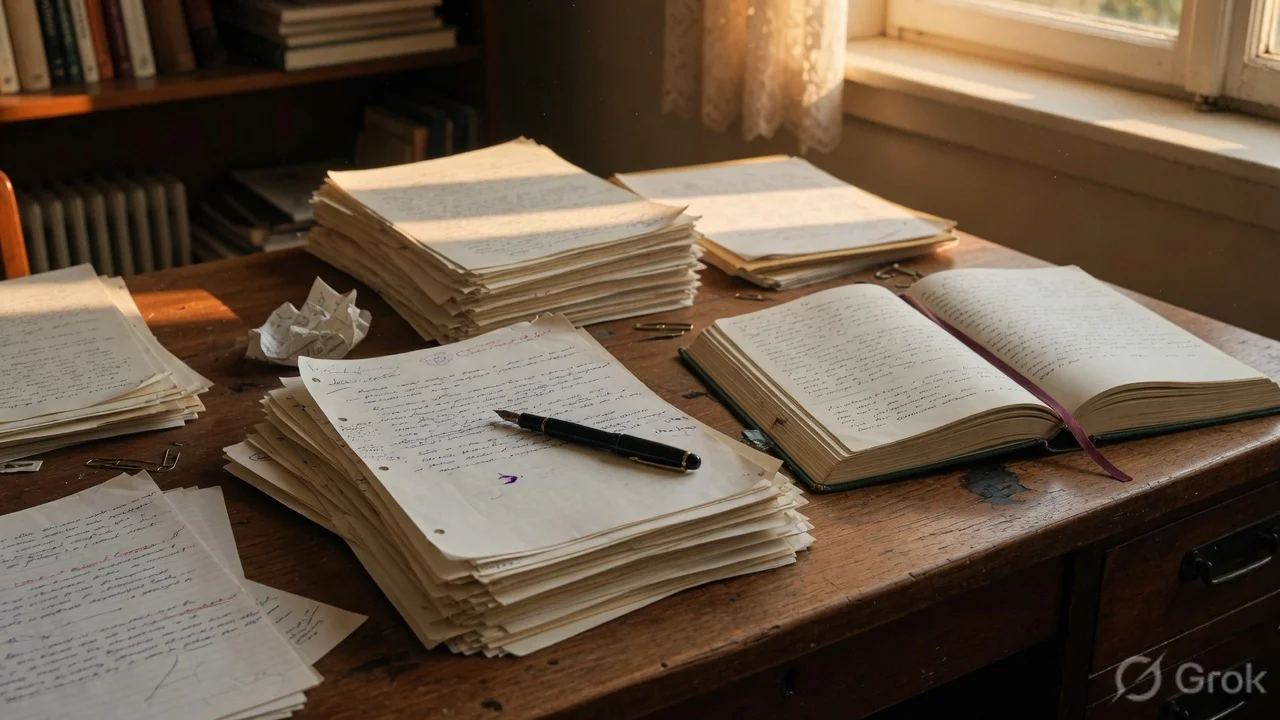
Imagine spending years honing your craft, pouring your soul into every sentence, only to find out that the winner of a prestigious global literary prize was actually an AI bot. That is exactly the nightmare scenario that has been unfolding recently. Granta, one of the most respected names in the publishing industry, has just made a massive announcement that has sent ripples through the creative community. They are stepping back from publishing contest winners and distancing themselves from any partnership where they do not have 100% oversight. This is not just a policy change; it is a defensive move to protect the very soul of literature in an era where AI can mimic human emotion with terrifying accuracy.
The move comes after allegations surfaced regarding a recent winner who supposedly used a high-end Generative AI model to craft a prize-winning short story. While the specific names are being kept under wraps for legal reasons, the impact is public and painful. Publishers are realizing that their traditional gatekeeping methods are no longer sufficient to keep out the machines. At TamilTech, we have been watching this trend closely throughout 2026, and it is clear that the line between human creativity and machine output has blurred to the point of invisibility. This decision by Granta marks the first time a major literary giant has essentially said, 'We give up on trying to filter the AI; we are just closing the doors to outside contests instead.'
How We Got Here: The AI Trust Crisis
For decades, literary contests were the primary way for new, unknown writers to break into the industry. You send a manuscript, a panel of judges reads it, and if it’s brilliant, you get published. But as we move through 2026, that system is broken. In the early 2020s, AI was clunky and easy to spot. Today, AI models are trained on specific author styles, nuances, and even cultural contexts. They don't just write; they perform. The scandal that triggered Granta’s response involved a story that was so perfectly structured and emotionally resonant that no human judge suspected a thing until a whistleblower pointed out specific algorithmic patterns in the prose.
This isn't just about one person cheating. It's about the systemic failure of trust. When a brand like Granta puts its name on a book, it is a seal of quality. If that seal is applied to a machine-generated text, the brand's value evaporates overnight. By stopping the publication of contest winners, Granta is effectively saying that they can only trust work that has been vetted through their own internal, long-term editorial processes. They are moving away from the 'lottery' style of discovery and back to traditional, slow-burn talent scouting. It’s a return to the old ways because the new ways have been hijacked by silicon chips.
The Technical Reality: Why Detection is Failing
You might ask, 'Why don't they just use AI detectors?' Well, the reality in 2026 is that AI detectors are about as reliable as a weather forecast in a hurricane. For every new detection tool, there are three new 'humanizer' algorithms that can tweak AI text to bypass them. These tools add intentional human-like errors, varying sentence lengths, and 'burstiness' that mimic the way a person thinks. Even the most advanced linguistic analysis software now returns 'False Positives' at an alarming rate, sometimes flagging genuine human masterpieces as AI-generated.
Because the risk of a legal battle or a PR disaster is so high, Granta decided that the only winning move was not to play. They are also cutting ties with external partnerships. In the past, Granta would partner with local festivals or smaller publishers to showcase new talent. But if those partners don't have the same rigorous (and expensive) vetting standards, Granta's reputation is at risk. They want full control over the chain of custody for every word they print. This means if they didn't see the writer's progress from draft one to the final version, they probably won't publish it.
What This Means for Indian Writers and Publishers
In India, where we have a massive community of aspiring writers competing for global recognition, this news is a double-edged sword. On one hand, it protects the integrity of the craft. On the other, it makes it much harder for a kid from a small town in Tamil Nadu or Karnataka to get noticed by a global giant like Granta through a simple contest. We are likely to see Indian literary festivals and magazines like Juggernaut or the Sahitya Akademi implementing much stricter rules. We might even see a return to 'in-person' writing rounds where finalists have to produce work in a controlled environment without internet access.
Moreover, the cost of entering these contests might go up. If publishers have to spend more on manual verification and background checks for every submission, that cost will be passed down to the writers. At TamilTech, we believe this will lead to a surge in 'Verified Human' certifications—a digital watermark of sorts that tracks a document's history from the very first keystroke. If you can't prove you wrote it, you might not be able to sell it. This is a massive shift for the Indian freelance market, which has already been struggling with AI-generated content flooding the system.
How to Protect Your Career as a Writer in 2026
If you are a writer, you need to change how you work right now. It is no longer enough to just produce a great story; you must have a 'paper trail' of your creativity. Here is the TamilTech guide to staying relevant: First, always keep your early drafts and notes. Whether they are handwritten or in a digital file with a clear version history (like Google Docs or Notion), this data is your proof of life. Second, build a personal brand. Publishers are more likely to trust a writer with a visible history of work, a blog, or a social media presence where they discuss their process.
Third, use AI as a tool, not a creator. It is perfectly fine to use AI for research or to check for grammatical errors, but the 'voice' must be yours. If you rely on AI to generate plots or dialogue, you are setting yourself up for failure in the long run. Eventually, the algorithms will catch up, or the policies will change—just like they did with Granta. The goal is to be 'un-AI-able.' Write about personal experiences, local nuances, and specific human emotions that a machine, which has never felt pain or joy, cannot truly replicate.
Comparison: Human Writing vs. AI Mimicry
Let's look at the pros and cons. AI writing is fast, grammatically perfect, and can be produced in any style. However, it lacks 'soul'—that intangible quality that makes a reader cry or rethink their life. Human writing is slow, messy, and often flawed, but those flaws are what make it relatable. Granta’s decision is a vote of confidence in the 'messy' human side of things. They are choosing quality and authenticity over volume and speed. While many tech-optimists argue that AI will eventually surpass humans in art, the current backlash suggests that we, as readers, still crave a connection with another human mind.
The downside of Granta’s new policy is that it might make the literary world even more 'elitist.' If contests are gone, then who you know and where you went to school might become even more important for getting a foot in the door. This is something the industry will have to solve. We need new ways to discover talent that are both AI-proof and inclusive. Perhaps the future lies in community-vetted platforms where a writer’s reputation is built over time through interaction and transparency.
TamilTech’s Honest Take: What’s Next?
At TamilTech, we think Granta is doing the right thing, even if it feels harsh. In 2026, trust is the most valuable currency we have. If we lose the ability to distinguish between human art and machine output, we lose a part of our humanity. We expect other major publishers like Penguin Random House and HarperCollins to follow suit with similar 'Human-Only' mandates for their prestigious imprints. We might even see a 'Human-Made' badge on books, similar to 'Organic' labels on food.
For our followers who are into tech and writing, our advice is simple: Don't take the easy way out. AI is a great assistant but a terrible master. If you want to be the next big thing in literature, focus on your unique voice. The world doesn't need another perfectly polished AI story; it needs your unique, flawed, and beautiful human perspective. The era of the 'Easy Win' via AI is over. The era of the 'Authentic Voice' has officially begun. Stay tuned to TamilTech for more updates on how AI is reshaping our world.

Comments (0)
Be the first to comment!