


- Code over control policies: HexaShell drops heavy end-to-end policy networks in favour of a thin command-line harness that lets a coding model write its own helper tools.
- Triangulation over guessing: The agent uses three calibrated RGB cameras, finding exact 3D coordinates by calculating where visual rays cross or hit known surfaces like tabletops.
- New high score on RoboDojo: Across all 42 benchmark tasks, the system recorded a 39.7% success rate and a 48.0 progress score using Codex with GPT-6-Astra.
- Physical contact remains the bottleneck: While the model solves the reasoning and spatial geometry, handling unpredictable physics like friction during pushes exposes where pure code agents still struggle.
What is HexaShell, in one line?
HexaShell is a lightweight software harness that lets a visual coding model control a two-armed robot using command-line scripts instead of complex reinforcement learning policies. Think about how web developers debug code today. You run an automation script, read the traceback error in your terminal, write a quick helper function to bypass the bug, and try again. HexaShell applies that exact same loop to physical hardware.
Created by researchers at HexaFuture, the project treats physical robotics manipulation as an ordinary software debugging challenge. The research paper is hosted on Hugging Face at https://huggingface.co/papers/2610.23479, and the underlying code is open on GitHub.
How does a coding model actually move physical arms?
Most modern robotics teams spend months gathering thousands of teleoperated demos to train deep neural policies. HexaShell takes the opposite route by keeping the software harness paper-thin.
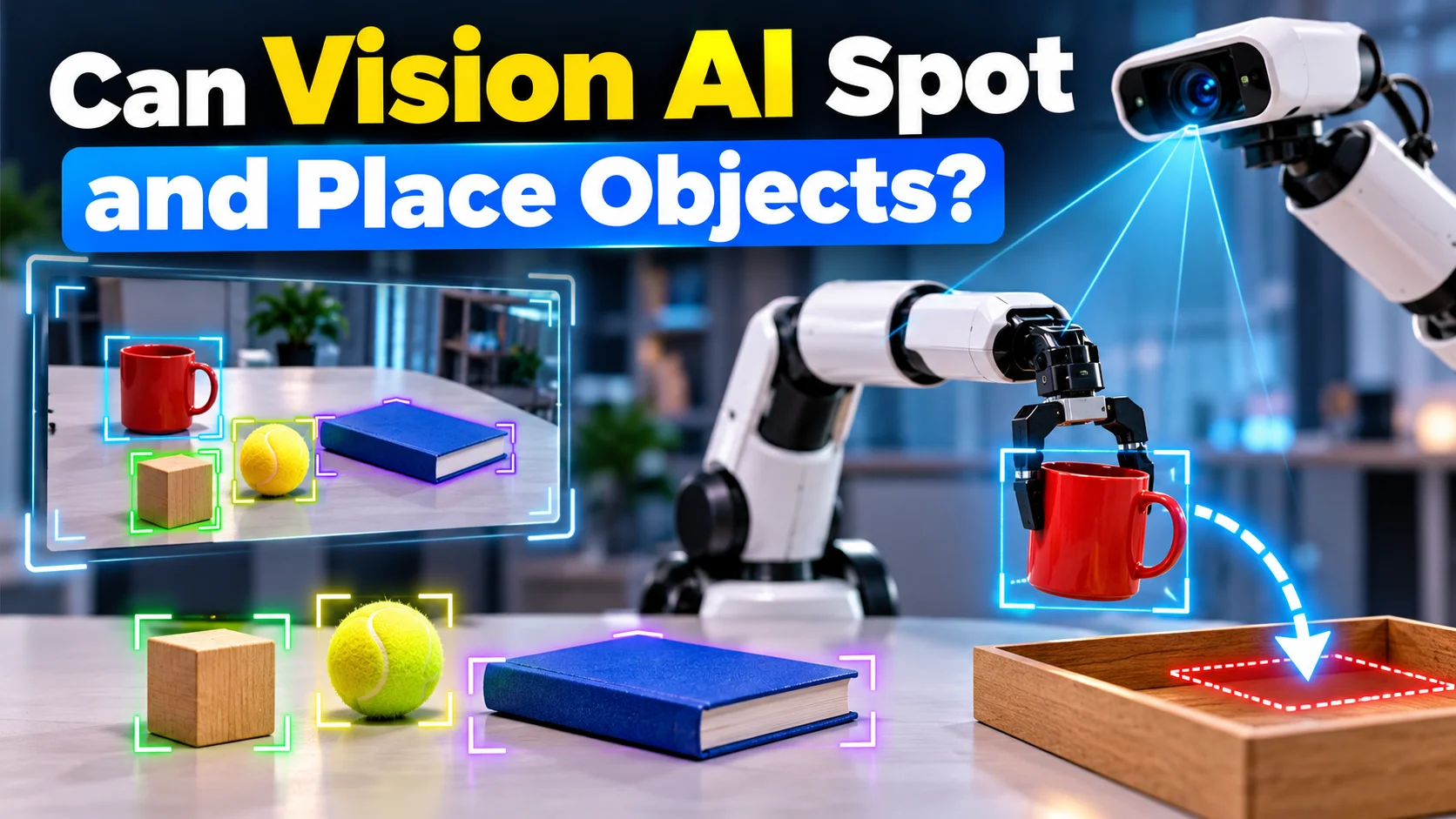
The system does not decide joint angles with an opaque neural network. Instead, the harness merely accepts commands from an AI agent and translates them directly into hardware motion. The agent sits in front of a standard command line, driving a two-armed robot equipped with three calibrated RGB cameras.
When a run fails, the agent inspects the execution log, pinpoints what went wrong, and writes small Python-like programs called tools. Once written, these tools stick around in the codebase just like unit test fixes in a Git repository.
How does it calculate depth without an expensive LiDAR sensor? It relies on classic high school geometry and triangulation. If two cameras see the same corner of a box, the agent computes the point where those two camera rays intersect.
If an object rests on a known flat surface, like a workbench or the top of a plastic block, the agent calculates where the single camera ray hits that plane. If the overhead head camera gets blocked, the agent commands the robot to tilt its wrist camera for an alternate angle.
What do the benchmark numbers prove on RoboDojo?
The researchers tested this approach on RoboDojo, a popular simulation benchmark featuring 42 distinct manipulation tasks. The test ran on Codex backed by GPT-6-Astra set to a medium reasoning effort.
The training setup was deliberately tight. The agent developed its custom tool library using only ten layout configurations from a single seed per task. After that initial phase, the researchers froze the generated tools completely.
They evaluated those frozen tools on ten completely new layouts of the same task seeds. HexaShell hit an average success rate of 39.7% and achieved a progress score of 48.0. That score sets a new state of the art on the RoboDojo leaderboard.
The paper points out a fascinating pattern in where the agent failed. The limitation was not spatial reasoning or visual planning. The wall it hit was physical contact mechanics, particularly pushing actions where sliding friction and contact dynamics become chaotic.
Why does this matter for Indian engineers and startups?
If you visit any robotics lab in Bengaluru, Hyderabad, or Pune, you will spot a familiar headache: hardware budgets. Training heavy diffusion policies or reinforcement learning setups requires racks of GPUs and weeks of hardware wear-and-tear.
HexaShell demonstrates that standard RGB cameras paired with smart geometric triangulation can get serious work done. You do not need five-lakh-rupee depth sensors or bespoke proprietary drivers for basic picking and alignment tasks.
For Indian software developers trying to transition into robotics, this lowers the entry barrier. You do not need a PhD in control theory or deep reinforcement learning to build useful prototypes. If you understand APIs, camera calibration, and clean Python debugging, you can direct robotic manipulators.
Warehousing and manufacturing startups experimenting with kitting, light sorting, or electronics handling can build tool libraries incrementally. Instead of retraining a massive model every time a package shape changes, the agent writes a modular script that handles the new dimension.
What are the big catches holding this back?
Do not expect to plug HexaShell into an industrial assembly line tomorrow morning. This is early research, not ready-to-ship production software.
A 39.7% success rate is an impressive benchmark record for an automated coding agent, but in an operational factory, that failure rate would halt the entire conveyor line. Industrial automation demands four or five nines of reliability.
The contact problem is also tricky. While writing small geometric scripts works wonders for reaching and grasping rigid blocks, fluid interactions remain unsolved. Pushing a soft box, adjusting a slippery cable, or handling deformable fabrics cannot be calculated cleanly with simple ray intersections.
Latencies and API costs present another real-world hurdle. Running reasoning models repeatedly to diagnose execution logs takes time. If an arm takes 30 seconds to parse a log file between arm movements, high-speed sorting remains completely out of reach.
What should you build or try right now?
First, inspect the public repository. Look closely at how the researchers structure their camera ray intersections and tool definitions rather than worrying about the raw model size.
Second, brush up on multi-camera calibration. If your extrinsic and intrinsic camera parameters are off by even a few millimetres, triangulation math falls apart quickly, regardless of how capable your reasoning model is.
Finally, start small in simulation. Try wiring a vision-language coding agent to a simple simulated gripper in PyBullet or Isaac Sim before putting real hardware at risk. Teaching an AI model to write its own tools is powerful, but giving it unchecked access to real servo motors requires strict safety envelopes.


Comments (0)
Be the first to comment!