


Key Takeaways
- Indian semiconductor companies have attracted a cumulative $1.4 billion in funding.
- Nearly half of that total was raised since 2025, marking a clear acceleration.
- The capital wave tracks India's broader push for local chip design, packaging and manufacturing.
- Funding is flowing into both early-stage design startups and later-stage manufacturing plays.
- The numbers underline growing investor belief that India can reduce its heavy chip import bill.
What's the news
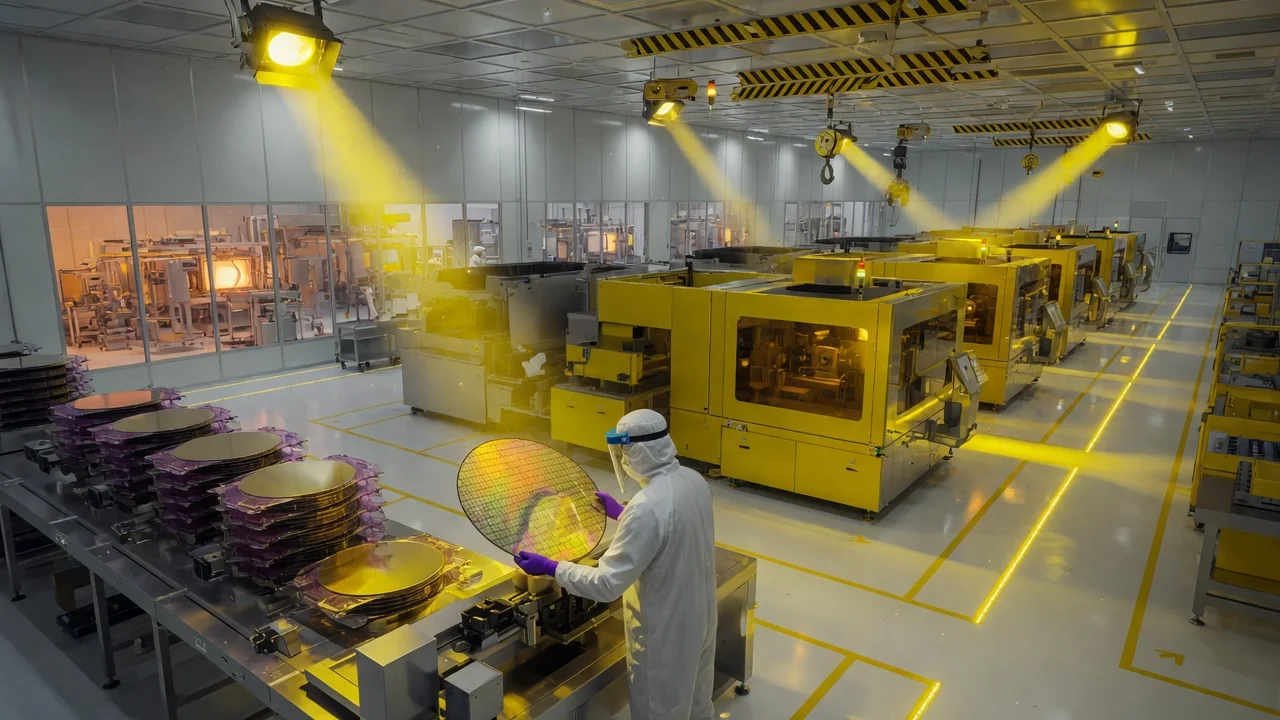
India's semiconductor story just got a hard number attached to it. A recent report pegs total funding into Indian semiconductor companies at $1.4 billion. The more interesting bit sits in the timing: nearly half of that entire pile arrived since 2025.
That is not a slow drip. It is a noticeable step-up in how quickly capital is finding chip-related bets in India. For years the conversation stayed stuck on policy announcements and MoUs. Now the cheque books appear to be opening in a more consistent way.
The $1.4 billion figure covers the sector as a whole — design houses, IP players, packaging specialists, equipment-adjacent startups and the early manufacturing ecosystem. It does not magically turn India into Taiwan overnight. But it does show that investors are no longer treating Indian semis as a pure policy slide. They are putting real money behind the thesis.
Details
Break the $1.4 billion into two rough halves and the picture sharpens. One half represents the slower build-up of earlier years. The other half — nearly 50 percent — has landed since 2025. That compression of capital into a short window is what stands out.
Why the rush after 2025? A few practical reasons stack up. Global chip buyers and foundries have spent the last few years looking for geographic alternatives after the pandemic shortages and geopolitical friction. India kept showing up in those diversification conversations. At the same time, domestic incentives for fabrication, assembly and design matured enough that founders could pitch credible multi-year plans instead of pure PowerPoint.
Funding has not been limited to one flavour of company. Design and EDA-linked startups continue to raise because India already has a deep pool of chip-design talent from the services era. Packaging and testing plays are attracting interest because they sit closer to actual silicon and can scale faster than a full-blown fab. Manufacturing-related bets are still capital-hungry and slower, yet even those are seeing more serious diligence than before.
The report does not claim every rupee went into greenfield fabs. A large share of semiconductor funding in emerging ecosystems typically lands in design, IP, tools and OSAT-style activity first. That pattern appears to be holding here. The important shift is the velocity: capital that used to arrive in dribs and drabs is now arriving in larger, more frequent rounds.
Currency and valuation context also matter. Global investors who once parked money only in US or Israeli chip startups are now willing to underwrite Indian teams at valuations that would have looked ambitious three or four years ago. Local funds and corporate venture arms have followed, creating a thicker capital stack than the sector previously enjoyed.
India impact
India imports the overwhelming majority of the chips that power its phones, cars, payment terminals and data centres. Every serious push to localise even a slice of that demand has knock-on effects for foreign exchange, supply security and industrial jobs.
The $1.4 billion funding total, especially the post-2025 acceleration, gives the ecosystem breathing room. Startups can hire specialised engineers instead of losing them to overseas offers. Later-stage companies can place equipment orders and lock in customer pilots. Policy schemes that require private co-investment look more bankable when private capital is actually showing up.
On the ground this translates into more design centres in Bengaluru, Hyderabad and Noida, more packaging and testing conversations in Gujarat and Tamil Nadu, and a thicker pipeline of semiconductor-related coursework and skilling programmes. It also creates a feedback loop: when funded companies start shipping real silicon or IP, the next set of founders finds it easier to raise.
For the broader tech economy the impact is quieter but real. Indian smartphone brands, EV makers, and UPI-linked device manufacturers all benefit if more of the silicon they need can be designed or packaged closer to home. Even partial localisation reduces lead-time risk and gives product teams more room to customise chips for Indian use cases — think payment terminals that stay online on patchy networks or automotive chips tuned for Indian road and temperature conditions.
None of this erases the capital intensity of actual wafer fabs. A single advanced fab still costs many times $1.4 billion. The current funding wave is better understood as foundation capital — the money that builds the design, packaging and talent layers that make larger manufacturing investments less lonely.
Use cases
Where does this capital actually show up in products Indians touch?
Smartphone and IoT design teams can now source more local IP blocks and verification services instead of waiting on overseas queues. That shortens iteration cycles for feature phones still sold in volume and for mid-range 5G devices.
Electric two-wheelers and four-wheelers need power-management and motor-control chips that can handle Indian heat, dust and voltage swings. Funded Indian design houses are increasingly pitching exactly those specialised parts rather than generic imports.
Data-centre and AI infrastructure build-outs inside India create demand for networking, storage and acceleration silicon. Even if the most advanced GPUs still come from elsewhere, supporting chips and packaging work can stay closer to the racks being installed in Mumbai, Chennai and Hyderabad.
Defence and strategic electronics have long preferred trusted supply. A thicker domestic semiconductor funding base gives those programmes more Indian design and packaging options without waiting for a full commercial fab to come online.
Payment hardware — the POS machines and biometric devices that sit behind UPI and Aadhaar-linked services — also benefits. Locally designed secure elements and power chips reduce dependence on single overseas sources and make customisation for Indian certification easier.
Honest take
The $1.4 billion headline is genuinely encouraging. The fact that nearly half arrived since 2025 is the real signal — capital is responding to policy clarity and global diversification pressure at the same time.
Still, keep the champagne on ice. India remains a rounding error in global semiconductor manufacturing capacity. Design strength is real; high-volume advanced-node manufacturing is still a multi-year, multi-tens-of-billions climb. Talent density is improving but competition for experienced process and packaging engineers is fierce. Power, water and specialised chemical supply chains for fabs are not solved overnight.
The healthiest way to read the report is as proof of concept for the capital layer. Investors are no longer treating Indian semis as a charity case or a pure government slide. They are writing cheques. If the companies that raised since 2025 start delivering working silicon, IP licences and packaging capacity, the next funding cycle will be larger and less sceptical.
For founders the message is straightforward: the window is open, but the bar is rising. Generic "AI chip" pitches will struggle. Specific, India-relevant problems — power efficiency, cost-down for mass devices, ruggedised automotive parts, secure payment silicon — will keep attracting capital.
For policymakers the number is useful ammunition. Private money is co-investing. That makes it easier to defend continued incentives and infrastructure spend without looking like a pure subsidy story.
Bottom line: $1.4 billion with half of it landing since 2025 is the strongest funding signal the Indian semiconductor sector has put up so far. It does not finish the race. It does, finally, look like the starting gun has been heard by people who write actual cheques.




Comments (0)
Be the first to comment!