


Key Takeaways
- Karnataka will allocate Rs 25 crore to support 100 startups for pilot projects in government departments.
- Each selected startup can receive a work order of up to Rs 25 lakh under the Government First scheme.
- The initiative is part of the state’s Startup Policy 2025‑30 and runs under the existing Elevate programme.
- Focus areas include health, education, agriculture and urban services where tech can solve real‑world problems.
- Applications open immediately; evaluation will be done by a inter‑departmental committee.
What's the news
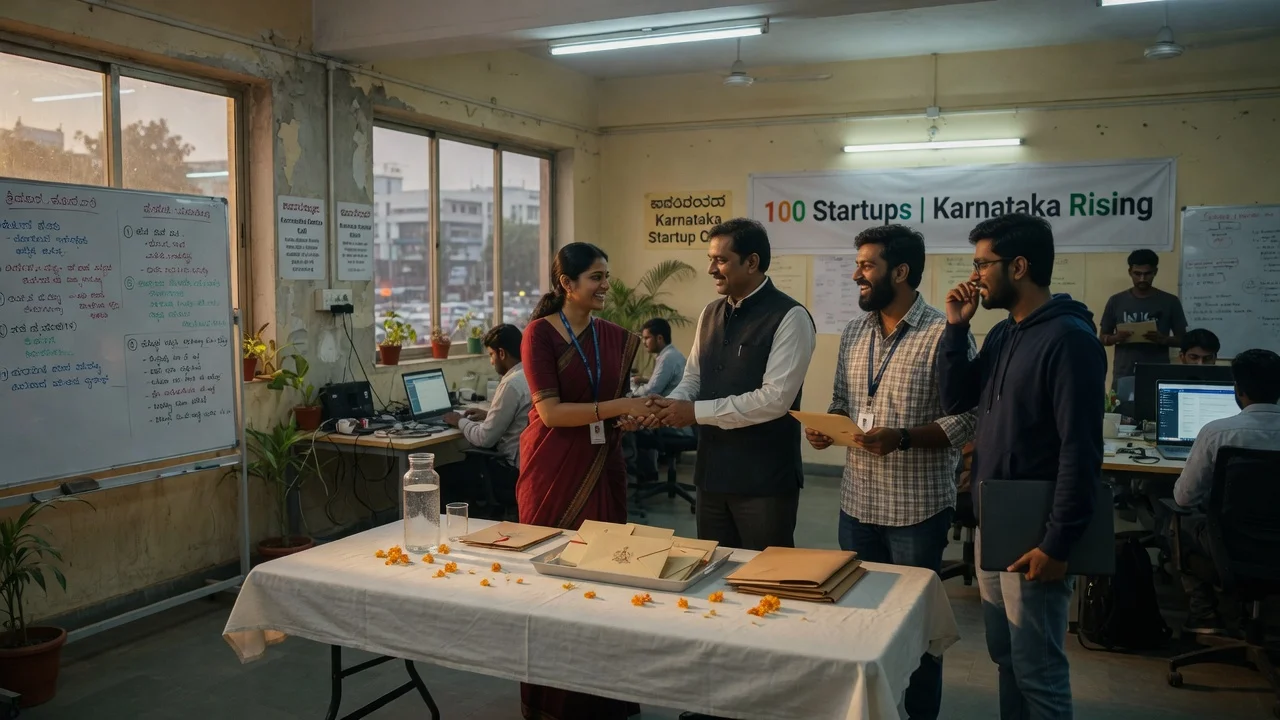
On 12 September 2026 the Karnataka government announced a fresh funding window aimed at getting startups to work directly with state departments. The programme, called Government First, is positioned as a pilot‑only track under the broader Elevate umbrella that has already helped hundreds of early‑stage ventures since its launch. The total outlay is Rs 25 crore, which will be split into 100 work orders of up to Rs 25 lakh each. The goal is to let startups test their solutions in a live government environment without the long procurement cycles that usually stall innovation.
The announcement came as part of the state’s refreshed Startup Policy 2025‑30, which stresses deeper integration of young companies into public service delivery. Officials said the move is designed to de‑risk adoption for departments while giving founders real‑world validation, user feedback and a potential pathway to larger contracts.
Details
According to the note shared with TamilTech, the scheme is open to startups registered in India with a minimum viable product or prototype. Applicants must propose a clear pilot that addresses a specific pain point identified by a participating department. The departments involved span health (tele‑consultation, remote diagnostics), education (digital classrooms, learning analytics), agriculture (soil testing, market linkages) and urban management (waste tracking, traffic optimisation).
Each selected team will receive a work order valued at up to Rs 25 lakh. The fund covers development, deployment and limited operational costs for the pilot period, which is set at three to six months. At the end of the pilot, the department will evaluate the outcome based on pre‑agreed metrics such as user adoption, cost savings or service improvement. Successful pilots may lead to follow‑on contracts or scaling within the state.
The application process will be handled through the Elevate portal. A joint committee comprising officials from IT, BT and the respective sector departments will review proposals. Evaluation criteria include innovation, feasibility, alignment with departmental goals and the startup’s capacity to deliver. The government has committed to announce the first batch of selections within 45 days of the application window closing.
India impact
Karnataka’s move mirrors a growing trend among Indian states to use startup agility for public sector modernization. While central schemes like Startup India and the Atal Innovation Mission provide early funding, state‑level pilots often bridge the gap to actual procurement. By earmarking a dedicated pool for short‑term tests, Karnataka reduces the perceived risk for departments that might otherwise shy away from unproven vendors.
For the startup ecosystem, the initiative offers a credible reference point. A successful government pilot can be leveraged when raising further rounds or approaching other states. It also creates a feedback loop where founders get to see how bureaucratic processes work, which can inform product design for broader market fit.
At a macro level, if the model scales, it could encourage other states to adopt similar micro‑funding windows, thereby increasing the overall addressable market for B2G (business‑to‑government) tech solutions in India.
Use cases
Imagine a health‑tech startup that has built an AI‑based triage tool for rural clinics. Under Government First, they could deploy the tool in a few primary health centres in a district, collect real‑world data on accuracy and workflow impact, and refine the algorithm based on doctor feedback. The Rs 25 lakh would cover device integration, training and a small support team for the pilot duration.
In agriculture, a startup offering satellite‑based soil nutrient mapping could run a pilot with the state’s horticulture department. The work order would fund field surveys, data processing and the delivery of actionable recommendations to a cluster of farmers. Success would be measured by improvements in yield or reduction in fertilizer use.
For urban services, a mobility analytics platform could partner with the city traffic police to pilot a dynamic signal‑timing system at a handful of intersections. The fund would cover sensor installation, software customization and a three‑month trial period, with outcomes evaluated on average travel time and congestion indices.
Honest take
The concept is sound: give startups a sandbox, let them prove value, and then decide on larger commitments. The Rs 25 lakh cap per pilot is realistic for early‑stage teams and keeps the financial exposure limited for the government. What will matter most is the speed and transparency of the selection process. If the evaluation drags on or becomes opaque, the scheme risks turning into another paperwork‑heavy exercise that frustrates founders.
Another watch‑out is the post‑pilot pathway. History shows that many promising pilots stall because there is no clear procurement route after the test phase. Karnataka should accompany Government First with a fast‑track mechanism to convert successful pilots into repeat orders or framework agreements, otherwise the initiative may generate good publicity but limited lasting impact.
Overall, the move signals that the state is willing to experiment with its own procurement logic. If executed well, it could become a template for other states looking to harness startup innovation without overhauling entire tender systems.





Comments (0)
Be the first to comment!