


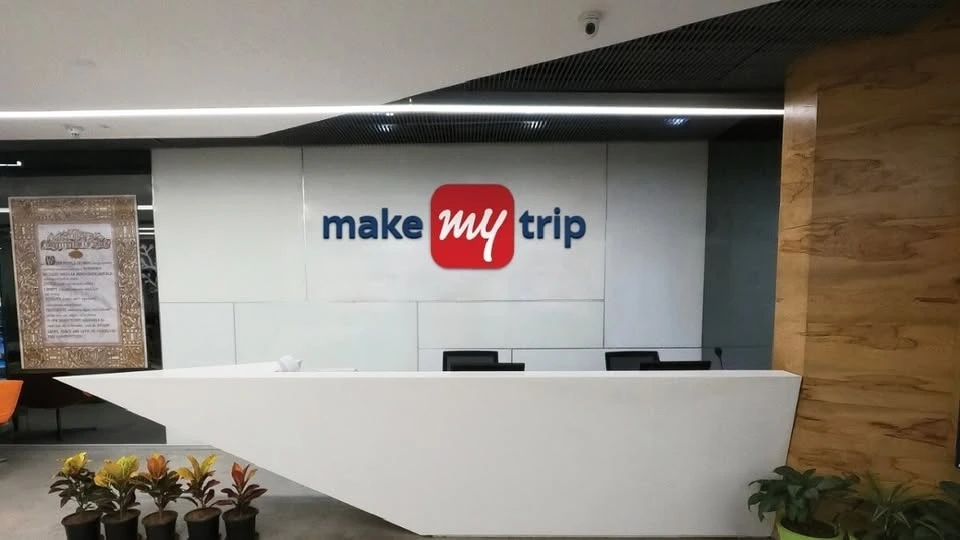
India's most-used travel app just got the Hindenburg treatment
When you search for hotels on MakeMyTrip and wonder why the prices look the same everywhere — on the hotel's own website, on competitor platforms, everywhere — that might not be a coincidence. A detailed short-seller report released this week accuses MakeMyTrip of actively enforcing that price uniformity, despite being fined by India's antitrust regulator three years ago specifically for doing exactly that.
The report comes from Morpheus Research, a US financial research firm that includes veterans of Hindenburg Research — the same outfit that shook Adani Group in 2023. Morpheus has disclosed that it holds short positions in MakeMyTrip's Nasdaq-listed stock, meaning it profits if MakeMyTrip's share price falls. That financial conflict of interest is worth keeping in mind, but it doesn't automatically invalidate the research — which reportedly involved interviews with over 100 industry insiders including former MakeMyTrip employees, hotel chain managers, and executives at rival platforms.
MakeMyTrip's response: no comment. The company said it does not respond to short-seller reports.
The price parity problem — what it means for you
This is the central allegation, and it's the one that directly affects every Indian who books travel online.
"Price parity" is a clause that online travel platforms insert into hotel partner agreements. It essentially says: you cannot list your hotel rooms cheaper anywhere else — not on your own website, not on competitor apps, not anywhere. If you undercut our price, we'll penalise you.
India's Competition Commission of India (CCI) investigated this practice and in October 2022 fined MakeMyTrip approximately ₹220 crore ($26 million) for anti-competitive behaviour. The regulator explicitly told MakeMyTrip to stop imposing these clauses on hotel partners.
Morpheus Research alleges that MakeMyTrip never actually stopped. Former employees told the firm that price parity checks continue to be conducted daily, with hotels assigned a "price competitiveness score" — a system that penalises hotels for offering cheaper rates elsewhere. Two mid-sized hotel chain managers reportedly confirmed to Morpheus that the parity clause remains in their current contracts. The report also claims MakeMyTrip quietly removes or demotes hotels from its search results if those hotels list cheaper prices on their own websites or refuse exclusive terms.
Separately, Morpheus says it uncovered evidence of a new, undisclosed CCI investigation into whether MakeMyTrip's pricing agreements amount to a cartel arrangement — a "hub-and-spoke" conspiracy where MakeMyTrip acts as the central hub coordinating pricing across competing hotels. Under Indian competition law, that would be a significantly more serious offense than the 2022 violation.
The accounting allegations — the numbers are striking
The second major accusation is about how MakeMyTrip reports its financial performance.
MakeMyTrip is listed on Nasdaq and reports financial results using both IFRS (International Financial Reporting Standards — the globally accepted accounting framework) and its own "adjusted" metrics. The gap between the two is where Morpheus raises a red flag.
Since 2021, there has been a cumulative $212 million difference between MakeMyTrip's adjusted profits and its actual IFRS profits. In one recent quarter, an IFRS profit of $7.2 million became $51 million after MakeMyTrip's adjustments — a sevenfold inflation. Morpheus says MakeMyTrip's adjustments account for 76% of its total reported adjusted profit, which is dramatically higher than industry peers and raises questions about what's really being excluded from the adjusted numbers.
One specific concern: MakeMyTrip uses an "adjusted margin" metric that adds back customer acquisition costs — the money spent on advertising and offers to attract users. Excluding acquisition costs from a profitability metric in a platform business is unusual because those costs are core to the business model.
Two other financial red flags the report highlights:
The GoAir receivable: Go First airline (formerly GoAir) went insolvent in 2023. MakeMyTrip has a $20 million receivable from the airline — money it's owed that it likely will never collect. Every major competitor has written this off entirely. MakeMyTrip has only provisioned half of it, leaving $10 million sitting on its books as an asset despite the airline being bankrupt.
The CCI fine provision: MakeMyTrip has appealed the 2022 CCI fine. Its appeal is still pending, with the next hearing scheduled for April 29, 2026. Standard accounting practice is to set aside money for potential liabilities under appeal. Morpheus says MakeMyTrip has provisioned for only 10% of the original fine — the remaining 90%, plus accruing interest, could amount to $34 million. That's roughly 60% of MakeMyTrip's entire 2025 net income. If the appeal fails and the full amount comes due, that hits earnings hard.
The customer protection allegations
Beyond the competition and accounting concerns, the report also hits MakeMyTrip on customer safety and dark patterns.
Morpheus claims to have identified 113 hotels on MakeMyTrip's platform with reviews specifically raising women's safety concerns — hotels that remained listed despite documented complaints. The report alleges MakeMyTrip rarely removes "bad actor" hotels even when they have serious complaint histories.
On the dark patterns front — manipulative interface tricks that push users into purchasing things they didn't intend to — the report alleges MakeMyTrip uses mandatory-seeming insurance add-ons that aren't actually mandatory, hidden convenience fees, and misleading bundle offerings that inflate the final price above what was initially shown. Anyone who's booked on any Indian travel platform has probably experienced some version of this, but the allegation is that MakeMyTrip's implementation is particularly aggressive.
The market share story the CEO doesn't want to tell
MakeMyTrip's CEO Rajesh Magow said in July 2025 that the company only "theoretically" faces competition — implying there's no real rival in the Indian OTA market. Morpheus's data challenges that claim directly.
MakeMyTrip's wallet share with Marriott Hotels in India reportedly dropped from 38% in 2022 to 31% — a 7 percentage point decline. International platforms like Booking.com and Agoda are growing their India presence. The report argues that MakeMyTrip is losing ground while publicly downplaying competitive threats to investors.
What does this mean if you use MakeMyTrip?
If you book hotels regularly, the price parity allegation is directly relevant to you. If MakeMyTrip is indeed enforcing these clauses — making hotels unable to offer cheaper rates on their own websites — it means you can't beat the MakeMyTrip price by booking direct, even when hotels would prefer to sell to you directly at a lower commission. The hotel you're staying at might be paying MakeMyTrip 15-20% commission, and you're paying the same price as if you'd bypassed the platform entirely.
The practical advice: always check the hotel's direct website before confirming a booking. If the prices are identical everywhere (which they often are), that's the price parity system at work. If the hotel's own website is cheaper — and some smaller hotels do manage to undercut despite the clauses — book direct. You'll often get better cancellation terms and more responsive customer service too.
TamilTech's take
Short-seller reports are inherently conflicted documents — Morpheus profits if MakeMyTrip's stock falls, so they have financial motivation to find and amplify problems. That doesn't make the allegations false, but it's why you don't take them at face value. What makes this one harder to dismiss is the specificity: 103 interviews, named hotel chain managers confirming active price parity enforcement, documented accounting gaps with exact dollar figures. These aren't vague claims. MakeMyTrip refusing to engage with any of it doesn't help their credibility. The CCI investigation that Morpheus alleges is undisclosed — if that's real and it becomes public, that's when this story gets significantly bigger. Watch for the April 29 CCI hearing on the existing fine. That's the next concrete data point in this story.


Comments (0)
Be the first to comment!