


Key Takeaways
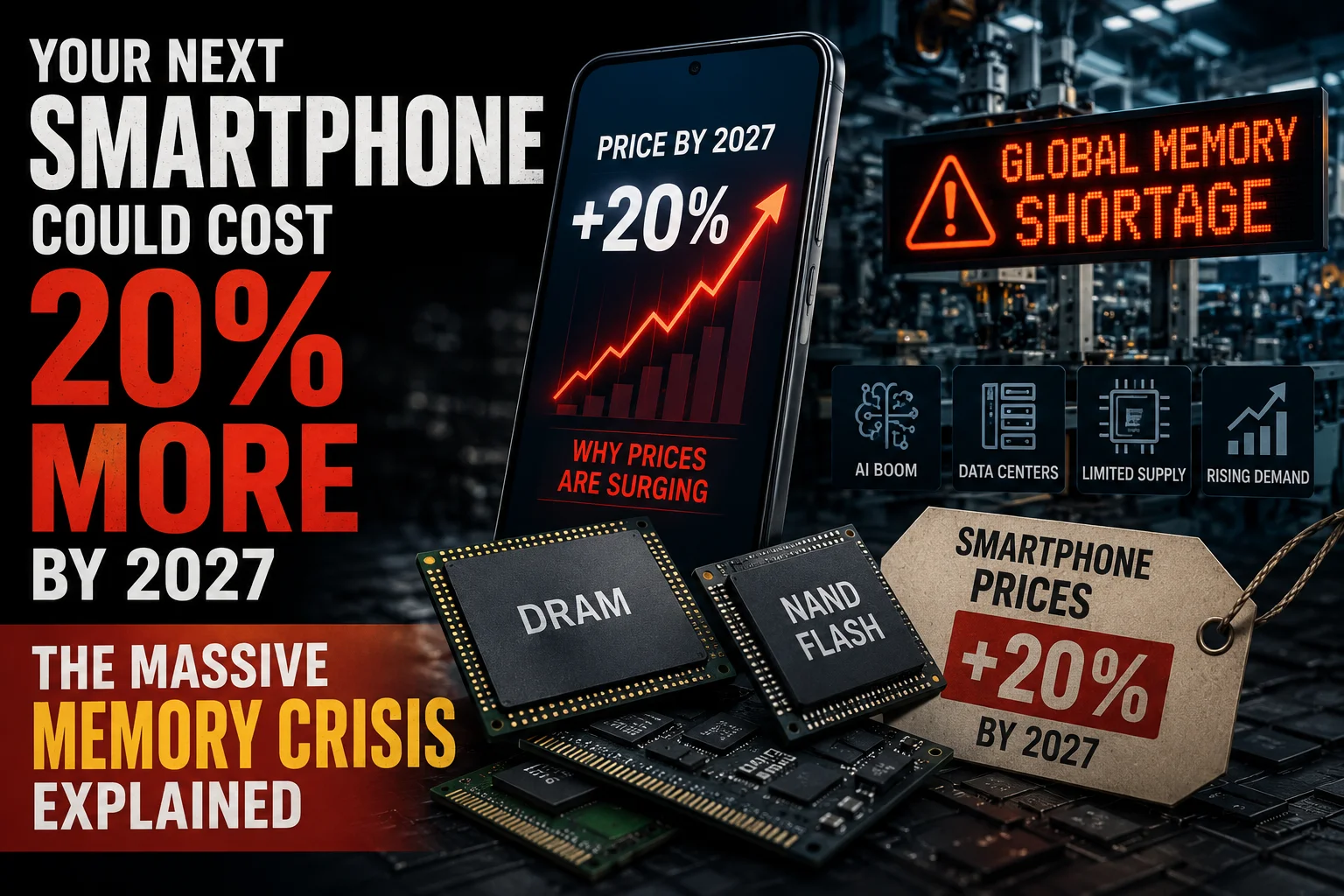
- Between 15% and 20% of memory production capacity originally meant for consumer electronics in 2026 is being diverted to AI data centers for 2027.
- The supply-demand gap for DRAM and NAND flash memory is expected to widen significantly through 2027, leading to price hikes.
- Mid-range smartphones in India (₹20,000 - ₹40,000) will likely see the sharpest price increases as manufacturers struggle with component costs.
- Wait times for high-end custom PC builds and specialized gaming laptops are expected to increase starting late 2026.
The Invisible Crisis in Your Pocket
If you have been tracking the tech market lately, you might have noticed that smartphone prices haven't exactly been dropping, despite the massive competition. But what is coming in 2027 is going to make the current prices look like a bargain. Here at TamilTech, we have been looking into the supply chain data for the upcoming year, and the reality is quite startling. The very chips that make your phone fast—the RAM and the storage—are becoming the most sought-after commodities in the world, and unfortunately, you are competing with tech giants like Google, Microsoft, and Nvidia for them. We are looking at a situation where the memory supply-demand gap is not just growing; it is exploding. By the time we hit 2027, the shortage will be the defining story of the tech industry.
Why is this happening now? It is quite simple. The AI boom that started a couple of years ago has reached a point of no return. Every major company is building massive data centers to handle Large Language Models (LLMs) and generative AI. These servers don't just need any memory; they need the highest grade, fastest, and most expensive memory chips available. Because the profit margins on selling memory to a data center are significantly higher than selling it to a smartphone maker, the manufacturers are making a cold, hard business decision. They are moving their production lines away from your phones and laptops and toward the cloud. This isn't just a minor adjustment; it is a fundamental shift in how the global silicon supply is distributed.
The 20% Shift: Where Did Your RAM Go?
Let's look at the hard numbers because they tell a very clear story. Our research shows that approximately 15% to 20% of the production capacity that was originally earmarked for consumer electronics in 2026 is being reassigned. This capacity is shifting toward data center products for the 2027 cycle. To put that into perspective, imagine if one out of every five memory chips intended for a Samsung Galaxy or an iPhone simply disappeared from the consumer market and went into a server rack in Virginia or Bengaluru instead. That is the scale of the reallocation we are talking about. When supply drops by 20% while demand for 16GB and 24GB RAM phones is actually increasing, there is only one possible outcome: the price goes up.
This isn't just about the quantity of chips; it is about the type. Data centers are hungry for HBM (High Bandwidth Memory) and DDR5. The factories (fabs) used to produce these are the same ones that produce the LPDDR5X found in your high-end smartphones. When a company like Samsung or SK Hynix decides to prioritize HBM for AI servers, they have to reduce the production of mobile RAM. This creates a ripple effect. Even if you aren't buying an AI-powered supercomputer, you are paying the "AI tax" because the components in your budget-friendly Redmi or Realme phone are now more expensive for the manufacturer to source. We expect this gap to keep widening well into late 2027 before any new factories can come online to balance the scales.
How This Hits the Indian Market
In India, we are particularly sensitive to these price shifts. The ₹15,000 to ₹30,000 segment is the heart of the Indian smartphone market. Manufacturers in this segment operate on razor-thin margins. When the cost of an 8GB RAM module increases by even $5 or $10 due to global shortages, it doesn't just stay at $10 by the time it reaches the Indian consumer. After factoring in import duties, GST, and distribution margins, that $10 increase can easily turn into a ₹2,000 or ₹3,000 hike in the final MRP. We have seen this happen before, but the scale of the 2027 shortage is unprecedented. We are predicting that the "standard" 8GB RAM configuration might become a premium feature again, or prices will simply shift upward across the board.
Furthermore, the PC building community in India is going to feel the pinch. If you are planning to build a gaming rig in 2026 or 2027, you should be prepared for fluctuating prices on DDR5 RAM and NVMe SSDs. Platforms like Amazon India and Flipkart will likely see more "Out of Stock" signs for popular high-capacity memory kits. Even local retailers in places like Ritchie Street in Chennai or Lamington Road in Mumbai will find it harder to secure stock at reasonable rates. The Indian government's PLI (Production Linked Incentive) scheme for local manufacturing helps with assembly, but since we still import the actual silicon wafers and memory modules, we are at the mercy of these global supply shifts.
The Ripple Effect: Laptops and Beyond
It isn't just phones. Laptops are perhaps the most vulnerable to this memory gap. Most modern thin-and-light laptops now come with soldered RAM, meaning you can't upgrade it later. If manufacturers can't get enough chips, they will either launch fewer models or significantly increase the price of the 16GB variants. For students and working professionals in India who need a reliable machine for coding, video editing, or even basic office work, the entry-level price for a "good" laptop is likely to jump from the current ₹45,000 range to over ₹55,000 by 2027. This is a significant barrier for many middle-class families.
We also have to consider the secondary market. When new tech becomes expensive, everyone flocks to the refurbished and used market. We expect platforms like Cashify and Sahivalue to see a massive surge in demand. However, even there, the prices won't stay low for long. If a new phone costs more, the resale value of your old phone also stays higher. While that is good if you are selling, it is bad news if you are looking for a budget second-hand deal. The entire ecosystem is interconnected, and the memory shortage is the stone thrown into the pond that creates ripples everywhere.
TamilTech’s Verdict: What Should You Do?
So, what is our honest take on this? If you are using a phone or a laptop that is starting to show its age, 2026 might actually be the best time to upgrade. Waiting for the "next big thing" in 2027 might result in you paying a significantly higher price for roughly the same specs, simply because the cost of materials has gone up. We don't say this to create panic, but the supply chain data is very clear. The shift of 15-20% capacity to data centers is a deliberate move by chipmakers to chase higher profits from the AI industry, and the average consumer is the one who will foot the bill.
What can you expect next? Watch out for manufacturers starting to promote "Virtual RAM" or "RAM Expansion" even more aggressively. This is often a marketing gimmick to hide the fact that they are using less physical RAM to save costs. Our advice: don't fall for the virtual RAM trap. Always look for the physical hardware specs. If you see a good deal on a 16GB RAM laptop or a 12GB RAM smartphone during the festive sales in late 2026, grab it. By mid-2027, those same specs might carry a much heavier price tag. Stay tuned to TamilTech, and we will keep you updated as the situation evolves.





Comments (0)
Be the first to comment!