


Key Takeaways
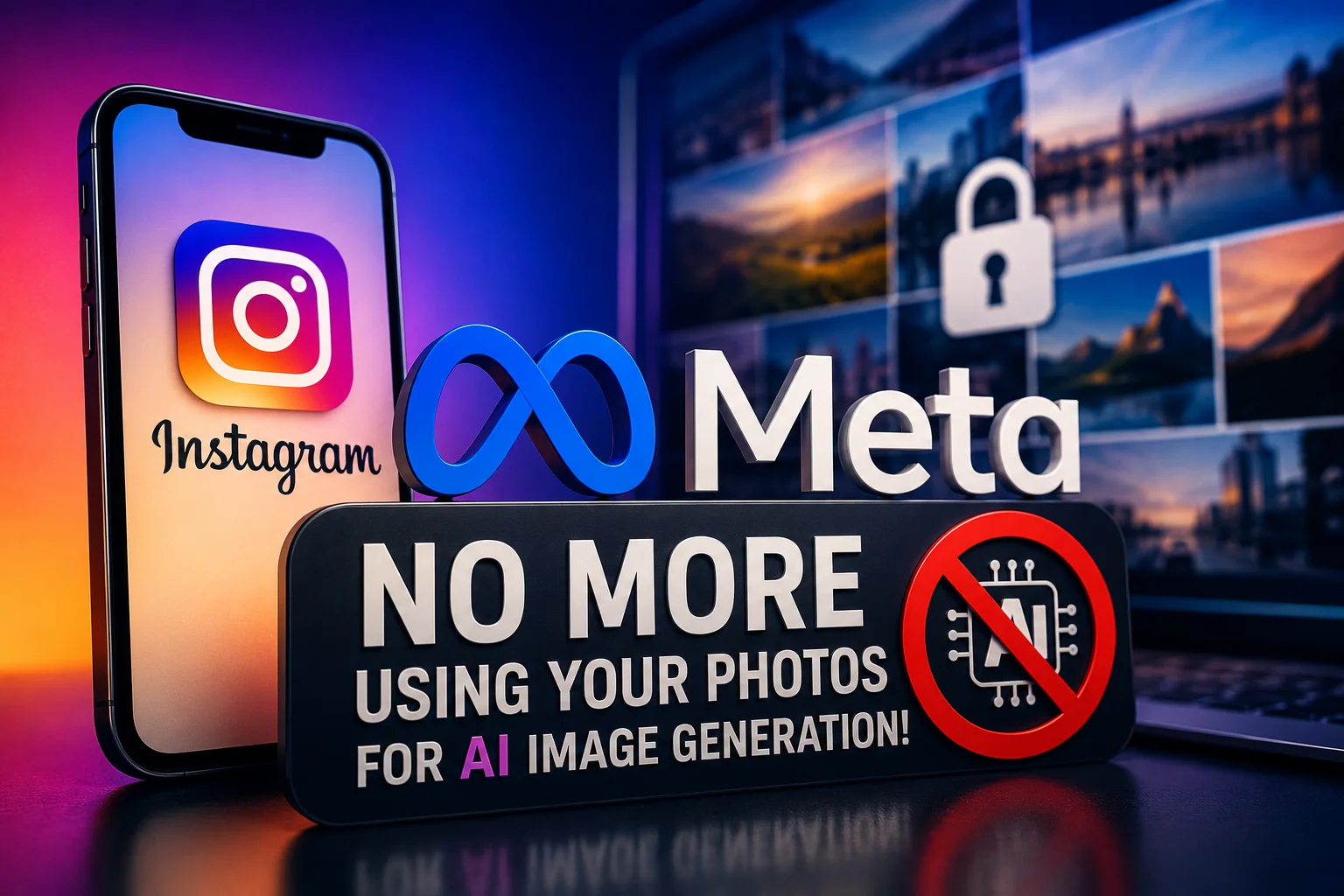
- Meta is discontinuing the feature that allowed Meta AI to generate images based on public Instagram account data.
- The decision follows intense global criticism regarding user consent and the 'scraping' of personal memories for AI training.
- In India, this move is seen as a proactive step to comply with the fully enforced DPDP Act of 2026.
- Users can still manually share photos with Meta AI, but the automatic indexing of public profiles for generation is ending.
The Big Update: Meta Finally Listens to Users
So, here is the thing — Meta just did a massive U-turn, and honestly, it is about time. For the past few months, there has been a lot of heat around how Meta AI was behaving. If you have been using Instagram lately, you might have noticed that Meta AI was getting a bit too 'familiar' with your public posts. Essentially, the AI was able to look at public Instagram accounts and use those images as a reference or a base to generate new AI art. Imagine someone typing 'Create an image of a person at a beach' and the AI using your last vacation photo from Goa as the blueprint just because your profile is public. Yeah, creepy, right? Well, after days of non-stop criticism from creators, privacy experts, and regular users like us, Meta has officially announced they are killing this feature.
We have been tracking this for a while at TamilTech, and let's be real: the line between 'public data' and 'personal data' has been getting very blurry. Meta’s logic was simple — if you put it out there for the world to see, their AI should be allowed to see it too. But users argued that they post photos to share memories with friends and followers, not to provide free training material for a multi-billion dollar AI model. This pushback reached a boiling point last week, leading to this sudden discontinuation. It is a rare win for user privacy in an era where AI seems to be eating everything in its path.
How the Feature Actually Worked (And Why It Failed)
To understand why this is a big deal, you need to know how Meta AI was pulling this off. Since early 2025, Meta had been integrating its Llama models deeper into Instagram and Facebook. The feature allowed a user to prompt the AI with something like, 'Show me what @username would look like as a superhero.' If that account was public, the AI would scan the photos, understand the facial features and style, and churn out an image. While it seemed like a 'fun' creative tool, the implications were a nightmare. From deepfakes to identity theft, the potential for misuse was sky-high.
The technical side of it was even more controversial. Meta was using 'real-time scraping' of its own platform. Most AI models like Midjourney or ChatGPT were trained on old datasets, but Meta had the advantage of 'live' data. Every time you posted a reel or a photo, the AI was learning. The criticism wasn't just about the 'fun' feature; it was about the lack of an easy 'Opt-out' button. In many regions, the settings to stop your data from being used were buried so deep in the menus that you’d need a map and a compass to find them. This 'forced consent' approach is what eventually backfired.
The India Impact: Privacy and the DPDP Act
Now, let's talk about why this matters specifically for us in India. As of 2026, the Digital Personal Data Protection (DPDP) Act is in full swing. The Indian government has been very clear: tech giants cannot just feast on Indian users' data without explicit, clear, and granular consent. Meta’s move to discontinue this feature globally is likely a pre-emptive strike to avoid massive fines in the Indian market. With over 400 million Instagram users in India, we are Meta's biggest playground, and they cannot afford a legal battle here.
For the average Indian user, this is a relief. We use Instagram for everything — from family weddings to food blogging. The thought of our personal celebrations being used to generate AI images for strangers was never going to sit well with our culture of privacy. If you are worried about your existing photos, the good news is that this specific 'generation' feature is stopping. However, your data might still be used for 'training' the model unless you specifically go into your settings and object to it. It is a small victory, but the war for data privacy is far from over.
What Should You Do Now? (A Quick Guide)
Even though Meta is stopping this specific feature, you shouldn't just leave your profile wide open. Here is what we recommend doing right now to stay safe. First, if you don't need a public profile for business or influencer work, just turn it to 'Private.' This is the single most effective way to keep AI crawlers out. Go to Settings > Account Privacy > Private Account. It is that simple. If you must stay public, keep an eye on the 'AI at Meta' section in your privacy center. Meta is legally required to show you how they use your data, but they won't make it easy to find.
Another tip: be mindful of 'Third-party' apps that claim to use Meta AI to enhance your photos. Often, these apps are just data-harvesting tools. Now that Meta is pulling back on their official feature, many shady third-party developers might try to fill the gap with 'AI Avatar' apps that ask for your Instagram login. Don't fall for it! Your login credentials and your face are your most valuable digital assets in 2026. Protect them like you protect your UPI PIN.
TamilTech’s Verdict: A Step in the Right Direction
What do we think about this? Honestly, it’s a smart move by Meta, but it’s also a reactive one. They didn't stop because they suddenly started caring about your feelings; they stopped because the pressure was too much to handle. This shows that when users speak up, even the biggest tech companies have to listen. In the AI race, companies are desperate for data, and they will try to take as much as they can until someone says 'No.'
Looking ahead, we expect Meta to introduce a more 'Consent-based' version of this feature. Maybe in a few months, they will ask you to 'Opt-in' to AI generation in exchange for some premium features or blue-tick benefits. Our advice? Always read the fine print. AI is a powerful tool, but it should never come at the cost of your personal privacy. Stay tuned to TamilTech, and we’ll keep you posted on every setting you need to change to keep your digital life secure.




Comments (0)
Be the first to comment!