


Key Takeaways
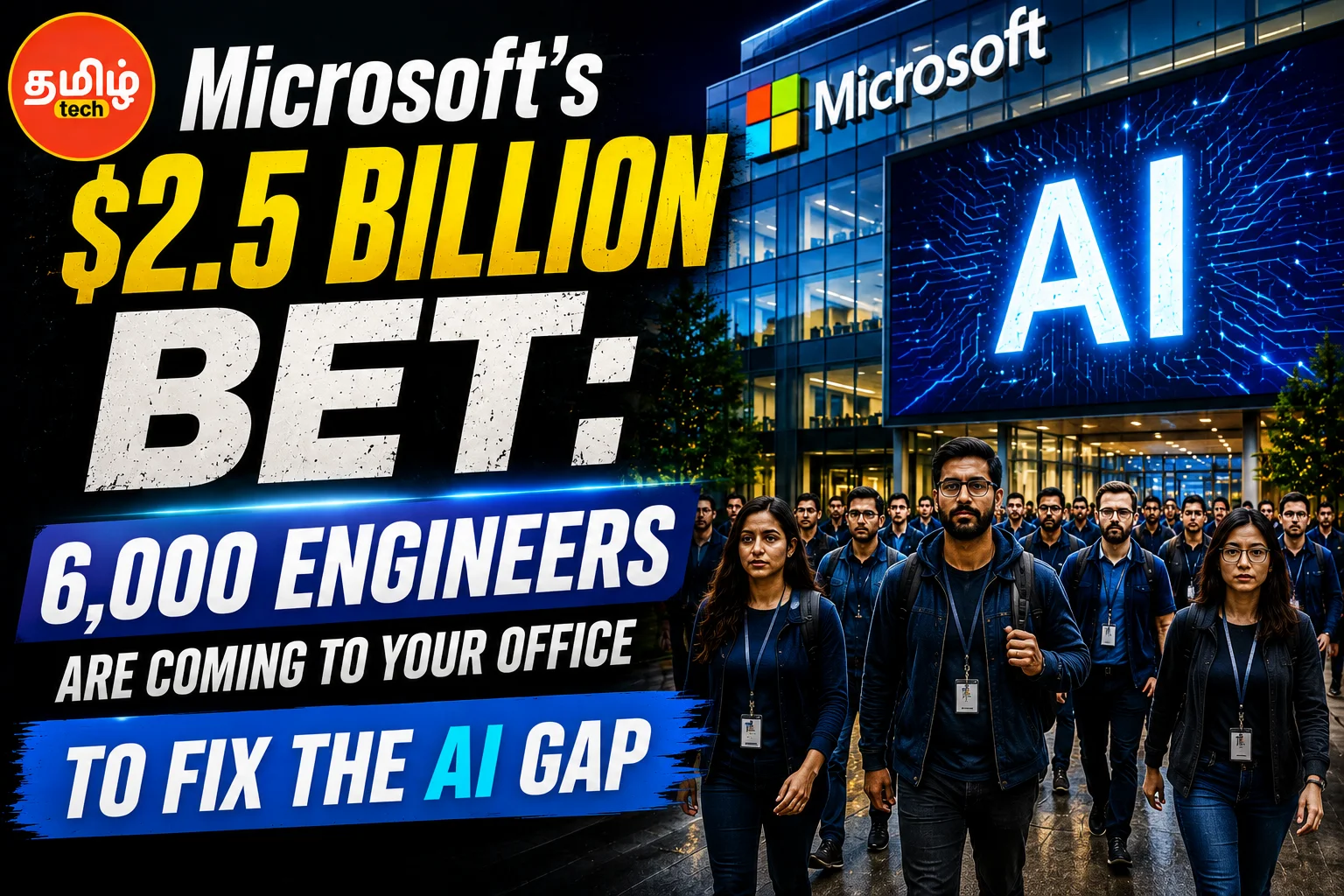
- Microsoft is investing $2.5 billion to form 'Microsoft Frontier Company' (MFC), a dedicated unit for AI deployment.
- The company will hire and deploy 6,000 'forward-deployed engineers' to work physically on-site with corporate clients.
- This move aims to solve the 'AI ROI' problem where companies buy AI licenses but fail to integrate them into their legacy workflows.
- For Indian IT giants like TCS and Infosys, this represents direct competition from their biggest partner in the enterprise services space.
- The strategy shifts Microsoft from a software seller to a hands-on AI implementation partner.
The AI Hype vs. Reality Check in 2026
It is mid-2026, and the honeymoon phase of AI is officially over. For the last three years, we have seen every company from local retail chains to global banks rush to sign up for Copilot and Azure AI. But here is the hard truth: most of these companies are sitting on expensive AI licenses they don't know how to use. They have the tools, but their data is a mess, their legacy systems are decades old, and their internal teams are terrified of breaking things. This 'implementation gap' has become a massive headache for Microsoft. If customers don't see results, they won't renew those billion-dollar contracts.
Microsoft has realized that simply selling the software isn't enough anymore. You can't just give someone a jet engine and expect them to build a plane around it. To fix this, they are making their boldest move yet. They aren't just sending a PDF manual or a support link; they are sending human beings—6,000 of them—to sit in your office, look at your messy spreadsheets, and force AI to actually work for your business. This is the birth of the Microsoft Frontier Company (MFC), and it is backed by a massive $2.5 billion war chest.
What is Microsoft Frontier Company (MFC)?
Microsoft Frontier Company isn't just a new department; it is being structured as a high-speed execution unit within the Microsoft ecosystem. Think of it as a specialized task force. The $2.5 billion investment is going specifically into recruiting, training, and 'forward-deploying' 6,000 elite engineers. These aren't your typical customer support reps. These are 'Forward-Deployed Engineers' (FDEs)—a term popularized by companies like Palantir. These engineers are hybrid beasts: part software architect, part data scientist, and part business consultant.
Their job is simple but incredibly difficult: go to the customer's location, live their problems, and build custom AI 'connectors' that bridge the gap between Microsoft’s frontier models and the customer's specific needs. Whether it's a factory in Germany or a bank in Mumbai, these engineers will be on the ground for months at a time. They will be building the custom plumbing that allows AI to talk to old ERP systems, messy SQL databases, and fragmented cloud environments. Microsoft is essentially admitting that AI is too complex to be 'plug-and-play' for big corporations in 2026.
The Math Behind the $2.5 Billion Move
Why spend $2.5 billion on people when you are a software company? Because in 2026, the bottleneck for AI growth isn't the model's intelligence—it's the data's accessibility. Microsoft’s revenue growth from Azure has started to plateau because companies are struggling to move past the 'Pilot' phase. They do a small demo, it looks cool, but it never goes into production. By hiring 6,000 engineers, Microsoft is effectively building its own internal consulting firm.
Each of these engineers is an expensive asset. When you factor in global salaries, travel, and specialized AI training, that $2.5 billion starts to make sense. Microsoft is betting that by spending this money now, they will unlock tens of billions in recurring cloud revenue that is currently 'stuck' in the pipeline. It is a classic 'loss leader' strategy on a massive scale. They are willing to burn cash on human talent to ensure their software becomes the oxygen that every business breathes.
The India Impact: A Threat to TCS, Infosys, and Wipro?
This is where things get really interesting for us in India. For decades, the business model of Indian IT giants like TCS, Infosys, and Wipro has been 'Implementation and Maintenance.' When Microsoft sold software to a US bank, it was the Indian IT firms that sent the engineers to set it up. Now, Microsoft is cutting out the middleman. By deploying 6,000 of its own engineers through MFC, Microsoft is stepping directly onto the toes of its biggest partners.
If you are a CEO of a Fortune 500 company, would you rather hire a general IT firm to figure out Microsoft’s AI, or would you hire Microsoft’s own 'Frontier' engineers who have direct access to the source code? This move is going to force Indian IT firms to radically upskill their workforce. They can no longer survive just by being 'cheaper.' They have to be 'smarter' than Microsoft’s own engineers, which is a very high bar. We expect to see a massive talent war in Bengaluru and Hyderabad as MFC starts recruiting for its India-based forward-deployed teams.
TamilTech's Take: Desperate Move or Masterstroke?
So, what do we think at TamilTech? Honestly, this feels like a reality check for the entire AI industry. It proves that despite all the talk about 'AI agents' replacing humans, we actually need more humans to make AI useful. Microsoft is realizing that AI is not a product; it’s a service. If they stayed just a software company, they would lose to more agile startups that offer 'AI-as-a-Service' with heavy hand-holding.
However, there is a risk. Managing 6,000 engineers who are scattered across thousands of customer sites is an operational nightmare. It’s a completely different culture from writing code in Redmond. If Microsoft can pull this off, they will own the entire enterprise stack from the chip (Maia) to the model (GPT/Maitree) to the actual implementation. If they fail, it will be a very expensive lesson that even the smartest AI can't fix a broken business process without a human holding its hand. For now, if you are a software engineer, the message is clear: the most valuable skill in 2026 isn't just knowing how to code AI—it's knowing how to make AI work in the real, messy world.






Comments (0)
Be the first to comment!