


Key Takeaways
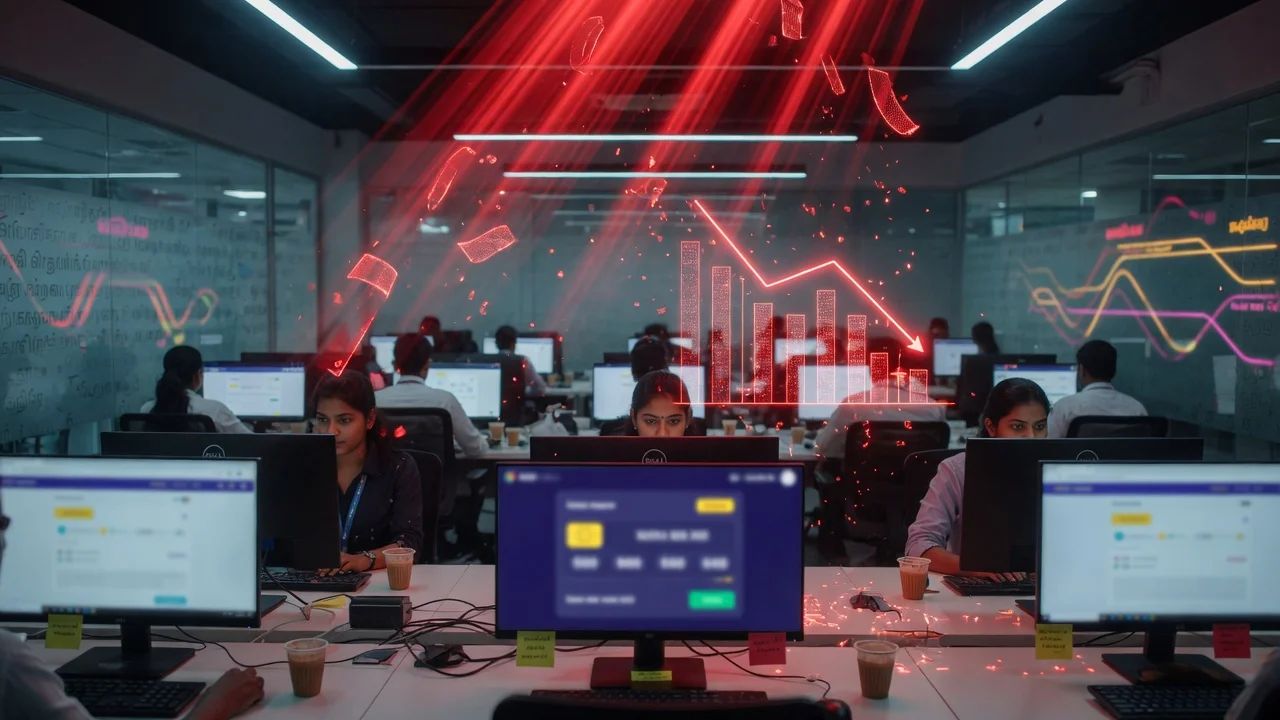
- NPCI's consolidated net profit fell 32.4% year-on-year to ₹989.4 crore in FY26.
- Spike in tax outgo and surging losses from the BHIM app were the main drag on profits.
- UPI volumes stayed strong, but the bottom line took a hit from these cost and investment pressures.
- BHIM continues to burn cash as NPCI pushes adoption against PhonePe, Google Pay and Paytm.
- The numbers show India's payments backbone is investing for scale even when short-term profits suffer.
What's the news
The National Payments Corporation of India just posted a sharp drop in full-year profit. Consolidated net profit for FY26 came in at ₹989.4 crore, down 32.4% from the previous year. That is not a small dip. For an organisation that sits at the centre of India's UPI boom, RuPay cards and a bunch of other rails, a one-third profit cut grabs attention.
Two clear reasons sit behind the slide: a heavier tax outgo and a big jump in losses from BHIM, NPCI's own UPI app. The core payment systems kept processing massive volumes, yet the profit and loss account looked a lot thinner once tax and BHIM costs landed.
This is the kind of result that makes you pause. UPI is still the pride of Indian fintech. Everyday transfers, merchant QR codes, credit on UPI and new features keep rolling out. Yet the company that runs the pipes is showing that growth and profitability do not always move in lockstep, especially when you are also funding your own consumer app and paying a higher tax bill.
Details
NPCI reported the consolidated number for the financial year that ended in March 2026. The 32.4% fall to ₹989.4 crore is the headline. Dig a little and the story splits into two parts.
First, tax. NPCI saw a clear rise in tax outgo. Higher taxable income in earlier periods, changes in effective rates, or one-time adjustments can do that. Whatever the exact mix, more cash left the building as tax, and that directly cut into net profit.
Second, BHIM. The BHIM app has been NPCI's consumer-facing UPI product for years. It never dominated the market the way PhonePe or Google Pay did. Still, NPCI has kept pouring money into features, marketing, merchant tools and reliability. In FY26 those losses surged. Running a free or low-fee app at national scale, competing with deep-pocketed private players, and still trying to stay relevant is expensive. That expense showed up as a bigger loss line and pulled the consolidated profit down.
The rest of the business did not suddenly collapse. UPI transaction counts and values have stayed elevated. RuPay, IMPS, Aadhaar-enabled payments and the newer layers around credit and offline payments continue to run. The profit drop is less about demand drying up and more about cost structure and strategic choices around BHIM plus the tax hit.
NPCI is structured as a not-for-profit company owned by banks and other stakeholders, but it still reports these numbers and is expected to stay financially healthy so it can keep investing in rails that the entire country uses. A 32% profit drop does not mean the lights are going out. It does mean the organisation is absorbing short-term pain while it funds products and pays the taxman.
India impact
For ordinary Indians this is mostly background noise. Your UPI payment to the chaiwala or the rent transfer still goes through. Banks and apps still settle on NPCI rails. The real impact sits with the ecosystem builders.
Banks that own stakes in NPCI watch these numbers because they care about the long-term strength of the shared infrastructure. Fintechs that ride on UPI care because a healthy NPCI keeps fees predictable and capacity expanding. If BHIM losses stay high, NPCI may have to decide how long it wants to keep funding a third or fourth place app versus focusing purely on the pipes.
There is also a policy angle. India has bet big on public digital infrastructure. UPI is the poster child. When the operator of that infrastructure shows lower profits because of tax and a loss-making app, it raises questions about how much commercial pressure should sit on a public-good utility. Should BHIM keep competing head-on with private wallets, or should NPCI lean harder into being the neutral switch?
Merchants and small businesses feel the secondary effects. Stable, low-cost rails help QR adoption. Any future pressure on NPCI's finances could eventually feed into pricing conversations, even if that is not happening tomorrow. For now the bigger story is that India can still grow digital payments aggressively while the central operator takes a temporary earnings hit.
Jio, Flipkart, Amazon Pay and every other big consumer brand that plugs into UPI also sit in this picture. They need the rails to stay cheap and reliable. A profitable, well-capitalised NPCI makes that easier. A stretched one makes everyone a bit more nervous about the next round of fee talks or capacity upgrades.
Use cases
Think about how this result actually touches real life. A kirana store owner in Coimbatore accepts UPI all day. That volume still flows through NPCI. The profit drop does not change the QR sticker on his counter. What it does signal is that NPCI is choosing to spend on BHIM and absorb tax rather than maximise short-term surplus.
For a mid-size bank rolling out UPI credit or RuPay credit cards, the message is mixed. The rails are busy and trusted, yet the operator is showing thinner profits. That bank will keep building products on top of NPCI, but it will also watch whether BHIM keeps soaking up resources that could otherwise go into faster settlement or better fraud tools.
Developers and startups building on UPI APIs care about uptime and documentation more than NPCI's P&L. Still, a company that is investing heavily in its own app while posting lower profits may have less room for experimental sandboxes or fee waivers later. The use case for them is simple: keep shipping, but do not assume infinite free runway.
Everyday users who stick with BHIM get one clear use case. NPCI is still funding the app even when it loses money. That means feature updates, security patches and basic reliability are not being abandoned. Whether that is enough to win share from PhonePe or Google Pay is a different question. For users who prefer a government-backed option, the continued spend is the use case that matters.
Large platforms using UPI for checkout or P2M collections treat NPCI as utility infrastructure. Their use case stays the same: move money fast and cheap. The FY26 numbers just remind them that the utility itself has a cost base and tax bill that can swing.
Honest take
This result is uncomfortable but not shocking. NPCI sits in a weird spot. It is supposed to be the neutral, low-cost backbone of Indian payments. At the same time it runs BHIM, which is a consumer product fighting in a brutal market. Those two jobs pull in different directions. Funding BHIM while keeping UPI fees low and paying higher tax is a recipe for a thinner bottom line. FY26 delivered exactly that.
I do not think this means UPI is in trouble. Volumes are not the problem. The problem is that NPCI is carrying an expensive side project and a bigger tax cheque at the same time. If BHIM losses keep climbing without a clear path to relevance, the smarter move is to shrink the ambition of the app and double down on the rails. Let PhonePe, Google Pay, Paytm, Amazon Pay and the banks fight for consumers. NPCI should own the switch, the standards and the reliability.
Tax is tax. You pay what the rules say. The interesting part is the strategic choice around BHIM. Every rupee that goes into a loss-making app is a rupee that is not going into faster dispute resolution, better offline modes, or capacity for the next wave of UPI growth. India still needs that capacity.
For now the system works. People pay, merchants get money, banks settle. The 32% profit drop is a warning light, not a breakdown. NPCI has the scale and the mandate to fix the mix. Whether it chooses to keep burning cash on BHIM or to act more like pure infrastructure will decide how the next few years look. My bet is that the rails stay strong and the app eventually gets a more realistic budget. That would be the adult decision.
Until then, watch the next set of numbers. If tax normalises and BHIM losses stop surging, profits can bounce. If both stay elevated, expect more questions about what NPCI is really trying to be.



Comments (0)
Be the first to comment!