


What actually happened?
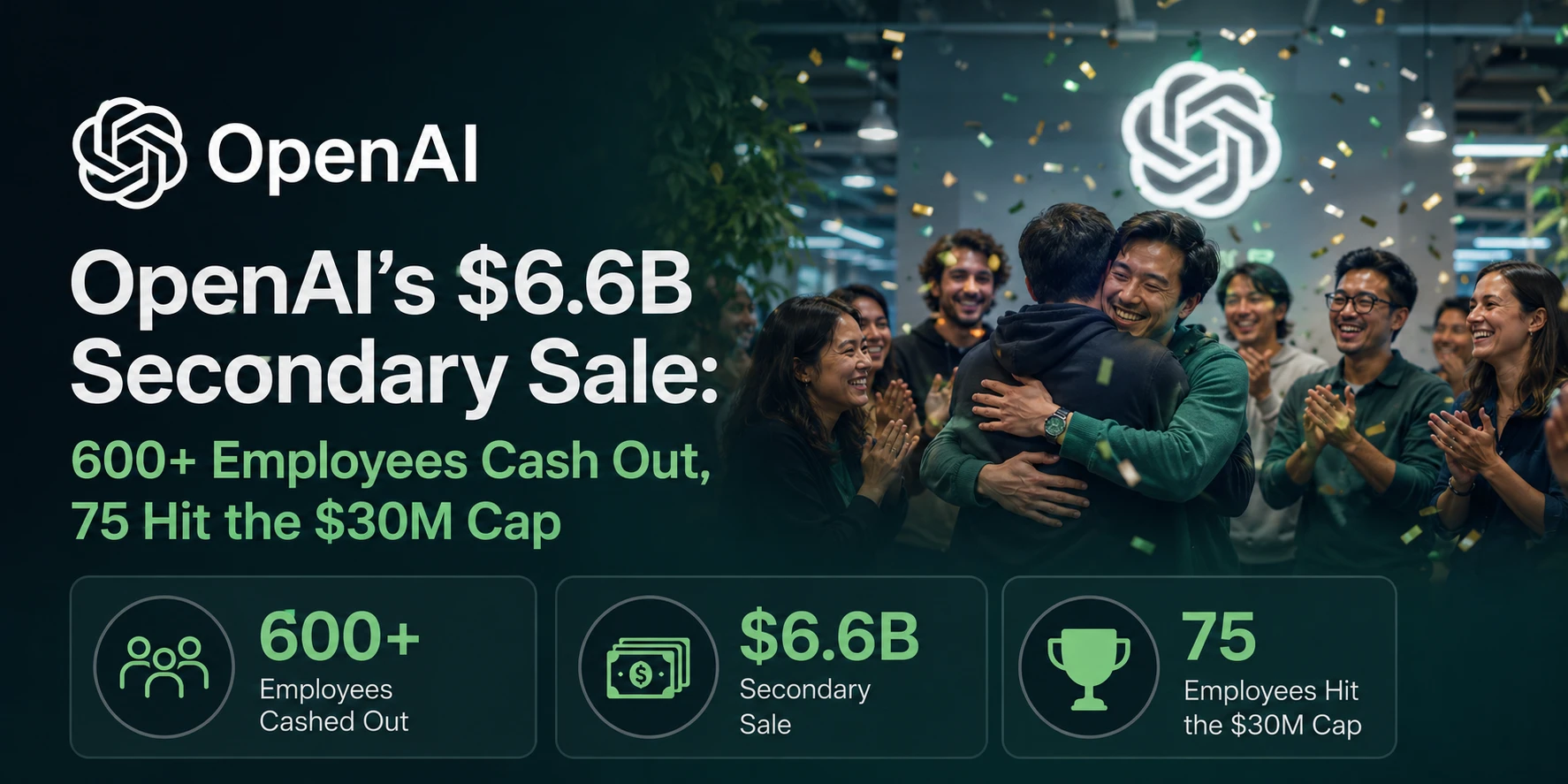
OpenAI, the AI‑research lab behind ChatGPT, organized a massive secondary share sale in October 2025. The company didn’t raise fresh capital; instead it let insiders – current staff, ex‑employees and early contractors – sell a chunk of their holdings to institutional investors. The total transaction size was roughly $6.6 billion.
Who got to sell and how much?
More than 600 people were eligible. The pool included engineers, researchers, product managers and even some of the early business‑development folks who left after the 2022 funding round. Each participant could sell up to a $30 million slice of their equity. In the end, about 75 people hit that ceiling, walking away with the full $30 million.
Why a secondary sale now?
OpenAI’s valuation has been soaring – from $29 billion after the 2023 Series C to an estimated $80 billion at the time of the sale. Early employees who joined on modest stock options suddenly owned paper wealth in the tens of billions. The secondary market gave them a way to lock in cash without waiting for an IPO or a private‑sale event.
How does a secondary sale work?
Think of it like this: the company creates a “share‑sale window” and invites approved investors – usually private‑equity funds, sovereign wealth funds or large tech‑focused venture firms – to buy existing shares directly from insiders. The price per share is set by a third‑party valuation firm, often close to the latest internal valuation. Sellers receive cash, buyers get a stake that will vest under the same terms as the original grant.
Impact on OpenAI’s cap table
Because the shares moved from insiders to outside investors, the overall ownership percentages shifted a bit, but the total number of shares outstanding stayed the same. The move diluted the relative stake of the remaining employees by roughly 1‑2 %, which is hardly noticeable against a $80 billion valuation.
What does this mean for Indian tech talent?
India’s startup ecosystem is buzzing with AI‑first companies. The OpenAI sale sends a clear signal: if you join an AI‑heavy startup early, you could see a similar windfall when the company hits a $50‑$100 billion valuation. For Indian engineers, that translates to a realistic path to becoming a multi‑millionaire without an IPO – just by staying long enough and negotiating a decent option pool.
Is this a good time to join an AI startup?
Our take – yes, but with a caveat. The market is still hungry for talent, but valuations are also inflating fast. A junior engineer at a Series A AI startup today might own 0.02 % of a company that could be worth $30 billion in five years. That’s $6 million on paper, but only if the company survives the next funding round. The OpenAI example shows the upside, but also that the upside is often limited to a small slice of insiders who joined at the very beginning.
What about tax?
In the US, the sale is treated as a capital‑gain event. For Indian NRIs or dual citizens, the tax treaty between India and the US can lower the withholding rate to 15 % on long‑term gains, but you’ll still owe Indian tax on the worldwide income if you’re a resident. Bottom line – cashing out a $30 million slice will involve a multi‑layer tax calculation, so professional advice is a must.
What’s next for OpenAI?
The company hasn’t announced an IPO timeline, but the secondary sale could be a pre‑IPO liquidity event. It also signals confidence from big‑ticket investors who are willing to put billions into a private AI lab. Expect more fundraising rounds, possibly a $100 billion valuation by 2026, and a stronger push into enterprise AI tools for Indian corporates.
TamilTech’s take
We think the headline‑grabbing $30 million payouts are a double‑edged sword. On one hand, they prove that AI startups can create massive wealth quickly. On the other, they set a high bar that only a tiny fraction of employees will ever reach. For most Indian engineers, the realistic goal should be to negotiate a solid vesting schedule, keep the option pool reasonable, and treat any future secondary sale as a bonus, not a guarantee.
Bottom line
OpenAI’s $6.6 billion secondary sale is a landmark liquidity event that validates the “big‑tech‑later‑IPO” model for AI labs. It also reminds us that the real money still lives in the early‑stage equity – and that Indian talent can tap into that pool if they pick the right startup at the right time.




Comments (0)
Be the first to comment!