Key Takeaways#
- OpenAI completed a $7 billion tender offer allowing employees to sell shares back to the company
- This move values OpenAI at approximately $150 billion, making it one of the most valuable private companies globally
- Indian AI startups are watching closely as this signals massive investment appetite for AI talent
- The tender offer could trigger similar moves by Indian unicorns in the AI space
- Indian developers with OpenAI experience are seeing increased demand from local companies
What's the News#
OpenAI just pulled off something massive - a $7 billion tender offer that lets employees sell their shares back to the company. This isn't just some routine financial move; it's a statement about how seriously investors are taking AI talent right now. The tender offer values OpenAI at around $150 billion, putting it in the same league as public tech giants like Goldman Sachs.
For context, tender offers are when a company offers to buy back shares from employees, typically at a premium. OpenAI's move means employees who joined during earlier funding rounds can cash out, while the company retains control. It's essentially OpenAI saying, "We're confident enough in our future to let our team cash out now, but we're not ready to go public yet."
Details of the Move#
The tender offer is reportedly priced at around $300 per share, which is about 20% higher than OpenAI's last funding round valuation. This premium shows how much OpenAI wants to keep its talent happy and prevent key employees from leaving for competitors.
What's particularly interesting is who participated. While exact numbers aren't public, reports suggest most eligible employees took part in the offer. This is unusual - many tech companies struggle to get high participation rates in tender offers. OpenAI's success suggests employees believe the company's valuation will only go up from here.
The timing is also noteworthy. This comes just months after OpenAI's latest funding round, which raised $6.6 billion at a $157 billion valuation. The tender offer essentially allows early investors and employees to realize some gains while keeping the company private.
India Impact#
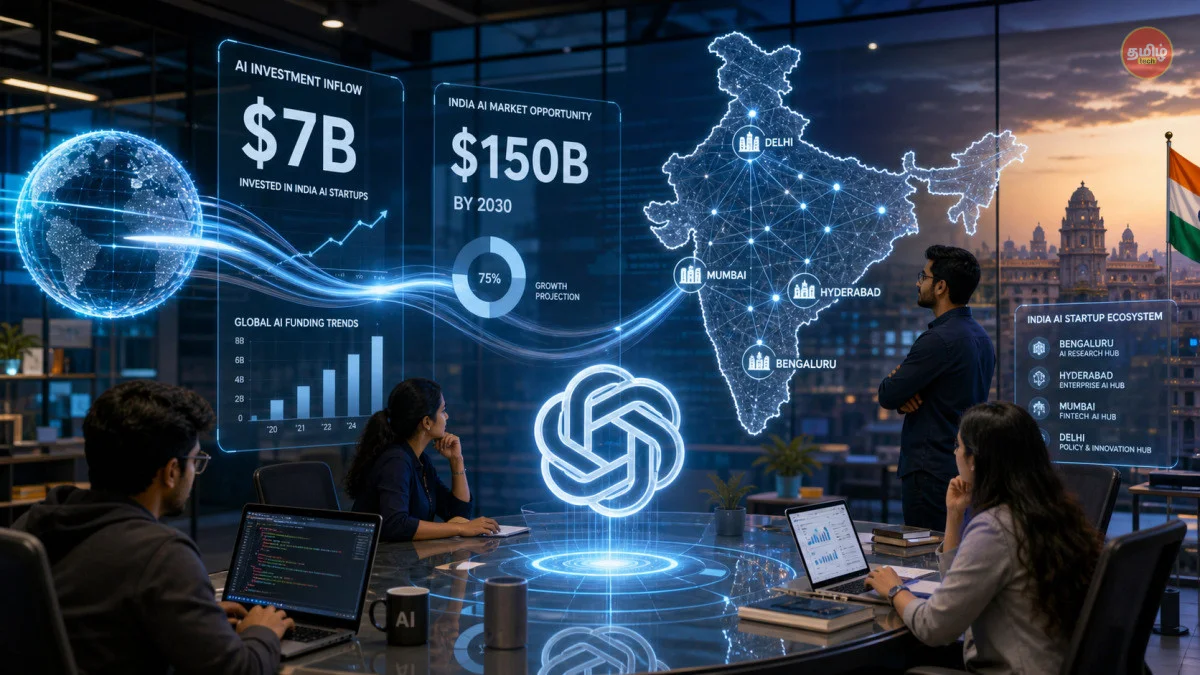
For India's tech ecosystem, this move is both inspiring and concerning. On one hand, it validates the massive potential of AI companies and shows there's serious money to be made in this space. Indian startups and investors are taking notes.
The tender offer signals that AI talent is incredibly valuable - something Indian companies have been realizing through their own hiring sprees. Indian unicorns like Zoho, Freshworks, and even newer AI startups are competing aggressively for talent with OpenAI-level experience.
There's also a ripple effect on India's startup culture. When employees at OpenAI can cash out $7 billion collectively, it creates a new benchmark for what's possible in the Indian context. Indian founders are likely to use this as leverage when negotiating with investors and talent.
Perhaps most importantly, this move could accelerate AI adoption in India. With OpenAI employees potentially having more disposable income and confidence in AI's future, we might see more AI-powered products and services targeting the Indian market.
Use Cases#
The tender offer has several implications for AI development and deployment:
First, it's likely to fuel more AI innovation as employees cash out and potentially start their own ventures. Many OpenAI veterans might spin off their own AI companies, focusing on specific niches or applications relevant to India.
Second, the move validates the
enterprise AI market. Companies seeing OpenAI's valuation will be more willing to invest in AI solutions for their businesses. This is particularly relevant for Indian SMEs looking to adopt AI but hesitant about the cost.
Third, we might see more AI applications tailored for Indian languages and use cases. With experienced developers having more capital and confidence, they're more likely to tackle challenges specific to India - like building AI that understands regional languages, cultural nuances, and local
business practices.
Finally, the tender offer could lead to more open-source AI initiatives. Some employees might choose to contribute to open-source projects rather than joining proprietary companies, which would benefit the broader AI community, including Indian developers.
Honest Take#
Here's my take: OpenAI's $7 billion tender offer is impressive, but it's also a warning sign for the broader tech industry.
On the positive side, it shows that AI companies can create immense value quickly, and that talent is rewarded handsomely. For Indian tech professionals, this is encouraging - it validates that AI skills are among the most valuable in the job market right now.
However, there's a darker side too. Such massive valuations create unrealistic expectations. Indian startups might chase AI valuations without focusing on sustainable business models. We've seen this movie before - remember the dot-com bubble or even the recent crypto craze?
What's most interesting is how this affects the balance between open and closed AI. OpenAI started as a non-profit with a mission to democratize AI, but now it's essentially a closed, proprietary system. The tender offer reinforces this - employees cash out, but the
technology remains locked behind APIs and paywalls.
For India, the real opportunity isn't in chasing OpenAI's valuation but in building something different - AI that's truly open, accessible, and tailored for Indian needs. The tender offer might actually help by showing what's possible, giving Indian entrepreneurs the confidence to build something uniquely Indian.
In the end, this isn't just about money - it's about the future direction of AI. And that's something worth paying attention to, especially if you're part of India's growing tech ecosystem.







Comments (0)
Be the first to comment!