


Key Takeaways
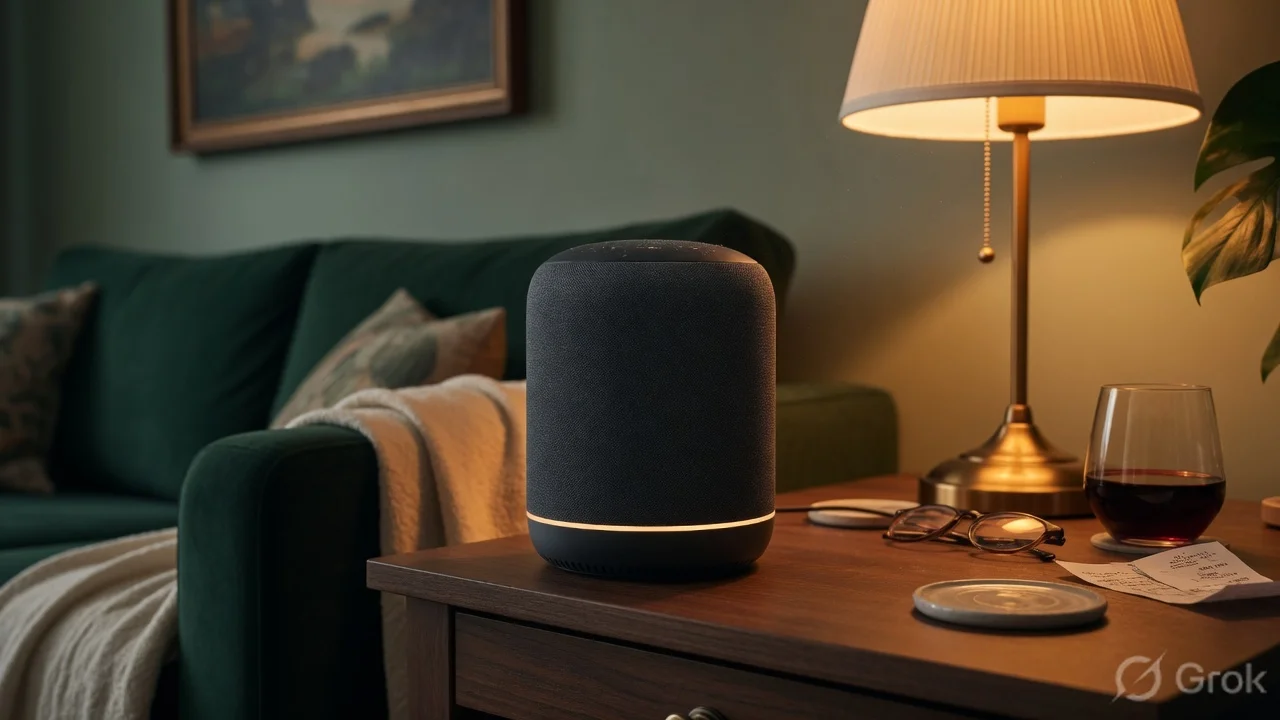
- OpenAI is expected to launch its first-ever standalone ChatGPT smart speaker by late 2026.
- The device will likely feature a custom NPU (Neural Processing Unit) to handle GPT-5 level voice interactions locally with near-zero latency.
- Expected India pricing is between ₹18,000 to ₹24,000, positioning it as a premium competitor to the Apple HomePod.
- The speaker will support full multi-modal capabilities, meaning it can 'see' through an optional camera and 'hear' emotional cues in your voice.
The Big Move: Why OpenAI is Building Hardware Now
For years, we have been using ChatGPT on our phones and laptops, but the experience always felt like it was trapped behind a screen. Even with the advanced Voice Mode we got last year, you still had to unlock your phone, open an app, and wait for the connection. But things are about to change in a big way. It is now mid-2026, and the rumors we have been tracking for months are finally solidifying: OpenAI is building its own smart speaker. This is not just another gadget; it is a dedicated home for the most powerful AI on the planet. If you think your Amazon Alexa or Google Home is smart because it can set a timer or tell you the weather, you are in for a massive reality check. OpenAI wants to put a literal 'brain' in your living room.
We have seen OpenAI experimenting with hardware partnerships before, like the Humane Pin or the Rabbit R1 back in the day, but those were mostly half-baked ideas. This time, it is different. Reports suggest OpenAI has been working with legendary designers to create a device that does not just listen, but actually understands context. Imagine a speaker that does not need a 'wake word' every five seconds and remembers that you were talking about your Goa trip plans from three days ago. That is the level of integration we are looking at. For us in India, this could be the first time an AI truly understands our multilingual households without sounding like a robotic translator from 2015.
The Tech Under the Hood: More Than Just a Speaker
So, what makes this ChatGPT speaker different from a ₹4,000 Echo Dot? The secret lies in the silicon. In 2026, cloud-based AI is fast, but for a truly natural conversation, you need local processing. OpenAI is reportedly using a custom-designed NPU that allows the speaker to handle basic reasoning and 'System 1' thinking directly on the device. This means even if your JioFiber or Airtel Wi-Fi is acting up, the speaker can still talk to you and perform basic tasks. The latency is expected to be under 200 milliseconds—which is essentially the speed of human thought. When you speak to it, it responds instantly, no more 'I'm sorry, I'm having trouble connecting to the internet' nonsense.
The microphone array on this thing is also rumored to be next-level. We are talking about 12-microphone beamforming technology that can isolate your voice even if your kids are screaming in the background or the pressure cooker is whistling in the kitchen. But the real game-changer is the 'Vision' variant. There are talks of a version with a wide-angle camera sensor that uses GPT-V (Vision) to see what you are doing. You could hold up a packet of masala and ask, 'Is this expired?' or show it your outfit and ask, 'Does this tie match?' It is essentially turning your home into a sci-fi movie set. The privacy implications are huge, but OpenAI is supposedly building a physical 'Kill Switch' for the camera and mic to keep users at ease.
India Impact: Pricing and Local Language Support
Let's talk about what matters most to us—the price and the 'Desi' factor. While OpenAI hasn't officially confirmed the India launch date, our sources suggest they are eyeing a Diwali 2026 release. The pricing is expected to be in the premium segment. We are looking at a starting price of around ₹19,999 for the standard version and maybe upwards of ₹35,000 for the 'Pro' version with a screen and camera. This puts it squarely against the Apple HomePod and the high-end Sonos speakers. It is definitely not a budget device, but for early adopters in India who are already paying for ChatGPT Plus subscriptions, this will likely be a bundled offering.
The biggest win for Indian users will be the language support. By 2026, OpenAI's models have become incredibly proficient in Hindi, Tamil, Telugu, and Bengali. Unlike Alexa, which often struggles with our accents or mixed 'Hinglish' and 'Tanglish' sentences, the ChatGPT speaker will treat code-switching as a native feature. You can literally say, 'Ennoda schedule-la check pannittu, evening oru filter coffee order pannu,' and it will understand the context, check your Google Calendar, and potentially trigger a Swiggy or Zomato integration. This level of local ecosystem play is what will determine if it succeeds in the Indian market.
How It Changes Your Daily Routine: Real-World Use Cases
Imagine waking up in the morning and instead of a harsh alarm, your ChatGPT speaker gently tells you the news in a voice that sounds exactly like a human news anchor. As you head to the kitchen, you don't just ask for the weather; you ask, 'What should I make for breakfast with the eggs and spinach I have left?' The speaker remembers your grocery list from your last Blinkit order and suggests a recipe. This is not just a voice assistant; it is a personal concierge. For students, this will be a massive tutor. Instead of searching Google for 'How to solve quadratic equations,' you can have a back-and-forth conversation with the speaker until you actually understand the concept.
For the elderly at home, this could be a lifesaver. We have seen how difficult it is for our parents to navigate complex smartphone apps. A smart speaker that understands natural Tamil or Hindi and can set medication reminders, call a doctor via WhatsApp, or just provide companionship by talking about old movies is a huge deal. The integration with smart home devices in India is also expected to be seamless. With the Matter protocol becoming standard in 2026, this speaker will control your Crompton fans, Havells lights, and your Samsung AC with simple conversational commands like, 'It's getting a bit stuffy in here,' rather than 'Turn on the AC.'
Comparison: ChatGPT Speaker vs. The Competition
If we look at the current landscape, Amazon is trying to revamp Alexa with its own 'Remarkable Alexa' paid tier, and Google is pushing Gemini into every Nest device. However, they are both bogged down by their legacy systems. Alexa is still fundamentally a shopping tool for Amazon, and Google Home is an extension of search. OpenAI has the advantage of starting fresh with a 'Reasoning-First' approach. While a HomePod sounds better for music, it is notoriously 'dumb' when it comes to complex queries. The ChatGPT speaker is expected to bridge that gap—offering decent audio quality with unmatched intelligence.
The main downside? The ecosystem lock-in. If you are heavily invested in the Apple ecosystem, moving to an OpenAI hardware device might feel disjointed. But OpenAI is reportedly working on deep integrations with Spotify, Apple Music, and even Microsoft’s productivity suite. The real battle will be on the privacy front. Google and Amazon have had years of data scandals. OpenAI needs to prove that your living room conversations aren't being used to 'train' the next model without your explicit consent. They are promising on-device encryption, but we'll have to see the final retail units to be sure.
TamilTech's Honest Take: Should You Wait for It?
Here is our take: If you are already using ChatGPT for your work or studies, this speaker is going to be a game-changer. The era of 'dumb' voice assistants is officially over. We have reached a point where AI can actually hold a conversation, and having that in a dedicated hardware form factor is the logical next step. However, don't throw away your Alexa just yet. The first generation of any hardware usually has bugs. We expect the battery life (if it's portable) and the initial setup process to have some hiccups.
For the average Indian household, ₹20,000 is a lot of money for a speaker. But you have to look at it as a 24/7 personal assistant, a tutor for your kids, and a smart home hub all rolled into one. If OpenAI manages to nail the regional language support—especially Tamil and Hindi—this will fly off the shelves during the 2026 festive season. We are closely monitoring the FCC filings and supply chain leaks from Taiwan. As soon as we get a unit in our studio, we will do a full deep-dive review. Stay tuned to TamilTech for more updates!





Comments (0)
Be the first to comment!