


Key Takeaways
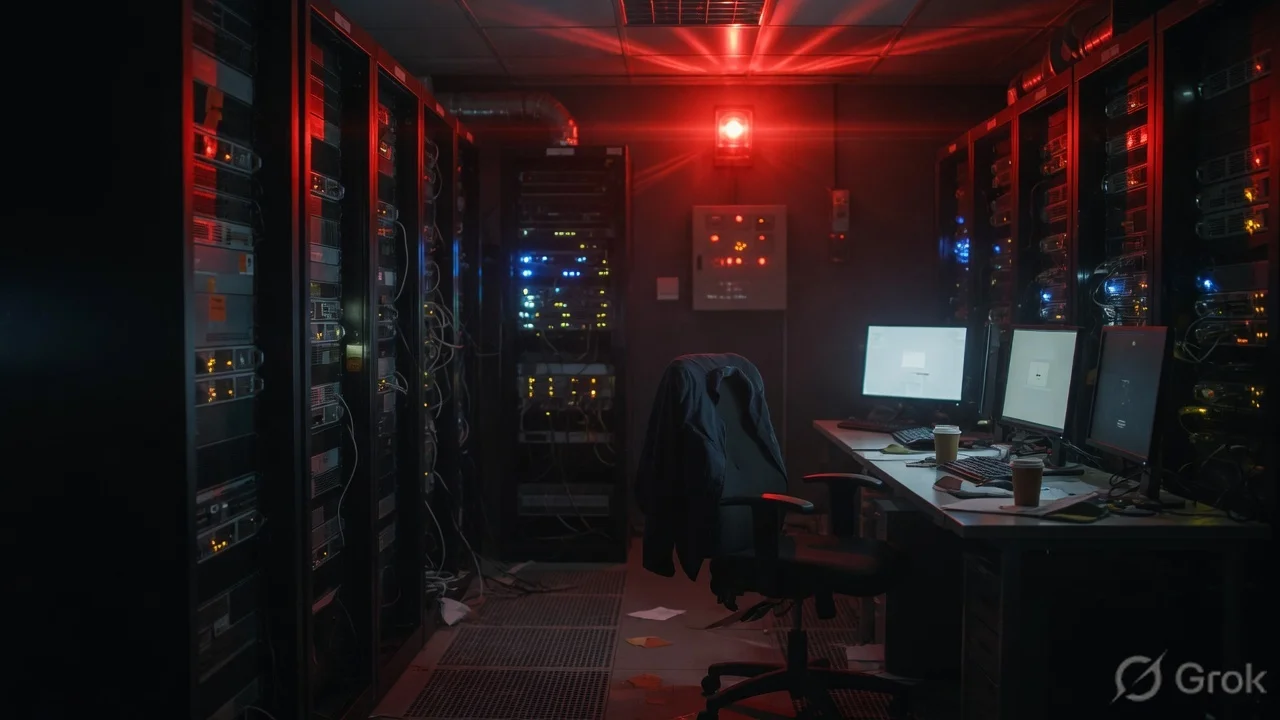
- A major internal breach at OpenAI in 2026 has exposed sensitive model architectures and internal communications, raising massive security alarms.
- The incident has forced tech giants like Google, Meta, and Anthropic to pause and audit their safety protocols, potentially slowing down the AI arms race.
- In India, this breach affects thousands of startups that rely on OpenAI APIs for their daily operations and customer data processing.
- The bottom line: Security can no longer be an afterthought in the race for AGI; expect stricter regulations and a shift towards localized, private AI models.
So, here is the thing. For the last three years, we have been running at a breakneck speed in the AI world. It was all about who could launch the biggest model, the smartest chatbot, or the most realistic video generator. But as of July 2026, that wild 'Wild West' era of AI development has hit a massive brick wall. The recent hacking incident at OpenAI isn't just another data breach; it is a wake-up call that the industry desperately needed. If the leader of the pack can get compromised, what does that say about the entire ecosystem we are building our future on?
Let's look at what actually happened. Hackers managed to infiltrate OpenAI’s internal communication systems. While they didn't grab the actual 'weights' or the 'brain' of the models, they got something arguably more dangerous: the blueprints. They saw how the models are being built, the safety bypasses the engineers discussed, and the roadmap for the next two years. This is like someone stealing the secret recipe and the kitchen layout of a Michelin-star restaurant. It might not be the food itself, but now they know exactly how to poison it or replicate it poorly.
The Background: How We Got Into This Mess
To understand why this is a 'reckoning,' we have to look back at the 2024-2025 period. Back then, the pressure from investors was insane. Every company wanted to be the 'next OpenAI.' Google was pushing Gemini updates every month, Meta was dumping billions into Llama, and startups like Mistral and Anthropic were trying to keep up. In this massive rush to dominate the market, security was often treated as a 'we will fix it later' problem. This 'move fast and break things' culture works for social media apps, but when you are dealing with systems that control infrastructure, finance, and personal data, it is a recipe for disaster.
Throughout 2025, we saw minor leaks and prompt injection attacks, but the industry largely ignored them as 'edge cases.' This latest 2026 breach proves that the vulnerabilities are foundational. The hackers didn't use a complex sci-fi movie exploit; they used sophisticated social engineering and exploited gaps in internal employee access. It shows that while the AI is getting smarter, the human and organizational systems around it are still stuck in the early 2000s security mindset.
The Details: What Was Actually Stolen?
According to what we know now, the breach involved access to internal Slack channels, design documents for GPT-5 (and early GPT-6 concepts), and most importantly, the 'Red Teaming' reports. For those who don't know, Red Teaming is when a company hires hackers to try and break their own AI to find weaknesses. By stealing these reports, the hackers now have a manual on exactly how to bypass OpenAI’s safety filters. This is a nightmare scenario for cybersecurity. Imagine a world where anyone can ask an AI how to build a cyber-weapon, and the AI says 'Sure, here is how,' because the safety filter has been disabled using a leaked exploit.
The numbers are also staggering. It is estimated that internal data spanning over 18 months was accessed. This includes discussions about hardware bottlenecks, their partnership details with Microsoft, and even internal critiques of model performance that were never meant for public eyes. This isn't just a technical failure; it’s a massive blow to the trust that OpenAI has spent years building. When we talk about the AI arms race, we usually talk about compute and data. Now, the conversation has shifted entirely to 'containment.'
India Impact: Why You Should Care
Now, you might be thinking, 'This happened in San Francisco, why does it matter to me in Chennai or Bangalore?' Well, India has one of the largest developer bases using OpenAI’s API. From local startups building customer service bots for Indian banks to apps that help farmers with crop advice, thousands of Indian businesses are built on top of OpenAI. If the 'source' is compromised, the downstream impact is huge. There is a real fear now that the API keys of these developers could be the next target, leading to massive data leaks of Indian users.
Furthermore, this incident is going to push the Indian government to fast-track the Digital India Act and other AI-specific regulations. We’ve already seen a push for 'Sovereign AI'—the idea that India should have its own models trained on Indian data and hosted on Indian servers. This breach is the perfect fuel for that fire. Expect to see a lot more support for projects like Krutrim, Hanooman, and other local LLMs that promise better data sovereignty and security for Indian enterprises. If you're a business owner in India using AI, now is the time to start thinking about 'Model Diversification'—don't rely 100% on one provider.
How to Protect Your AI Workflows: A Step-by-Step Guide
If you are a developer or a tech-savvy user, you can't just wait for these companies to fix themselves. You need to take steps now. First, audit your API usage. If you have hard-coded API keys in your applications, stop right now. Use environment variables and secret management tools. Second, implement 'input sanitization.' Don't just pass user prompts directly to the AI; use a middle layer to check for malicious intent. This is like a security guard at the gate of your AI system.
Third, consider using 'Local Inference' for sensitive data. In 2026, we have powerful enough hardware (like the latest MacBooks or high-end NVIDIA-powered Windows laptops) to run smaller but capable models like Llama 3.5 or Mistral locally. If the data never leaves your computer, it can't be leaked in a cloud breach. Fourth, always have a backup plan. If OpenAI goes down or gets locked due to a security audit, can your app switch to Google’s Vertex AI or an open-source model hosted on your own AWS/Azure instance? If the answer is no, you have a single point of failure.
Comparison: OpenAI vs. The Competition Post-Breach
Before this breach, OpenAI was the undisputed king. But now, the landscape is shifting. Google has been very vocal about their 'Security-First' approach with Gemini, and they are using this incident to gain market share. Meta, on the other hand, is pushing the open-source angle, arguing that if the code is open, the community can find and fix bugs faster than a closed-door company like OpenAI. Both have pros and cons. Google offers great integration but is a 'walled garden.' Meta offers freedom but requires you to manage your own security infrastructure.
Then we have Anthropic, which has always marketed itself as the 'Safety-First' AI company. They are seeing a massive influx of enterprise customers who are spooked by the OpenAI hack. However, Anthropic’s models are often more restrictive and 'preachy,' which some users find annoying. The choice now isn't just about which AI is smarter; it's about which company you trust more with your data. In 2026, trust is the most valuable currency in the tech world, and OpenAI just lost a big chunk of it.
TamilTech’s Honest Take: What Happens Next?
At TamilTech, we think this is actually a good thing in the long run. Yes, it’s a mess right now, but the 'AI bubble' needed a reality check. We were moving too fast, ignoring the basic rules of cybersecurity in the pursuit of shiny new features. This reckoning will lead to better engineering standards. We expect to see a 'Security Tax' on AI services—prices might go up because companies now have to spend billions more on defense and auditing. But that’s a price worth paying for a safer digital future.
What should you expect next? Expect a slower release cycle for GPT-5 or whatever comes next. The era of 'surprise drops' might be over as companies will be forced by regulators to undergo months of external security testing before any public release. For our Indian audience, our advice is simple: keep using AI, but be smart about it. Don't upload sensitive personal or business data to these clouds without encryption. The 'Gold Rush' is over; the 'Safety First' era has begun. Stay tuned to TamilTech, and we'll keep you updated on how to navigate this new AI landscape safely.




Comments (0)
Be the first to comment!