


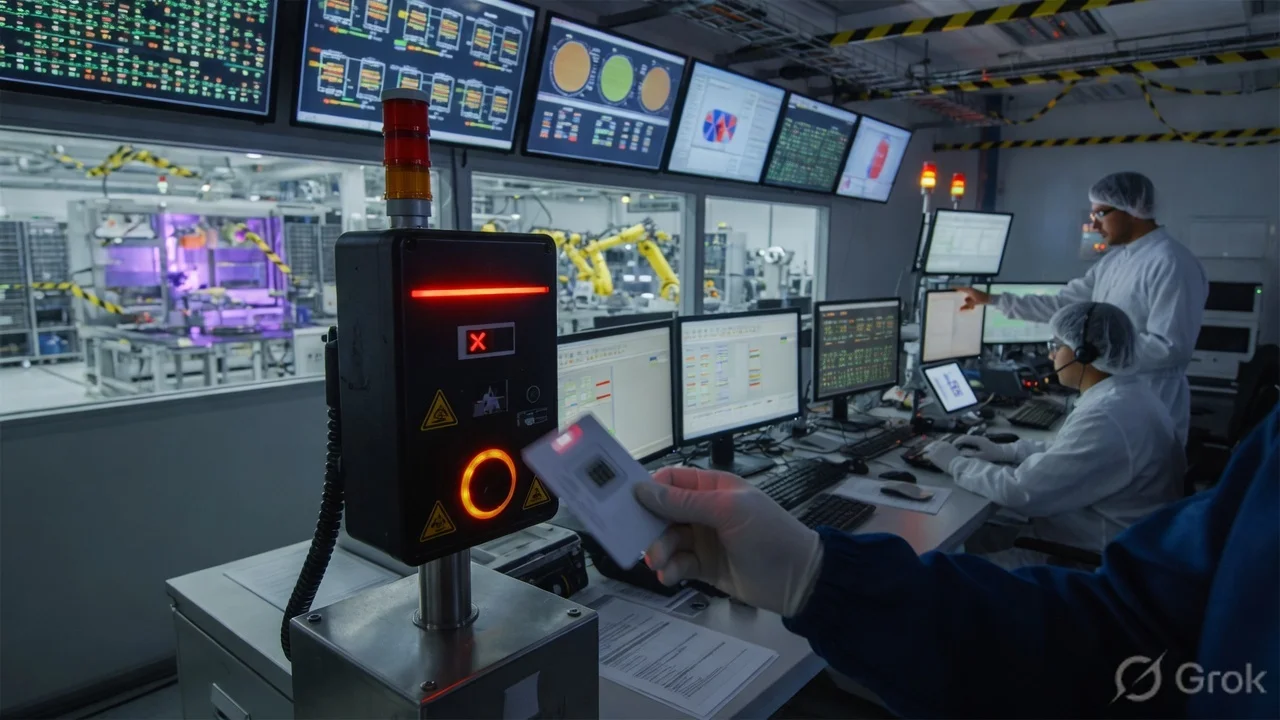
Key Takeaways
- Tata Electronics has successfully completed the implementation of 15+ high-priority security recommendations from Google’s Mandiant.
- The company has shifted to a 'Zero Trust' architecture, requiring strict identity verification for every single device and user on the factory floor.
- This security overhaul directly protects the production of the latest iPhone models and upcoming semiconductor facilities in Gujarat and Assam.
- Enhanced 24/7 Endpoint Detection and Response (EDR) systems are now active across all facilities in Hosur and beyond to prevent future ransomware attempts.
The Wake-Up Call for India’s Tech Giant
In the high-stakes world of electronics manufacturing, data is as valuable as the hardware itself. Earlier in 2026, when Tata Electronics faced a sophisticated cyber threat, it wasn't just a corporate issue; it was a matter of national industrial security. As the primary Indian partner for Apple’s iPhone production and a massive player in the semiconductor space, any downtime or data leak at Tata could ripple through the global supply chain. We’ve seen how hackers target big manufacturing hubs, but the way Tata has bounced back with a massive security overhaul is something every Indian business owner needs to pay attention to. This isn't just about fixing a bug; it's about building a digital fortress.
We at TamilTech have been closely watching this space. The move to bring in Mandiant, which is Google Cloud’s elite cybersecurity arm, shows that Tata wasn't looking for a quick fix. They wanted the gold standard. After months of deep forensic analysis and infrastructure rebuilding, the implementation of these recommendations is now complete. This means the factory floors in Hosur and the upcoming chip plants are now under a level of surveillance that makes previous security measures look like child's play. It’s a bold move that tells the world India is ready for high-end, secure manufacturing.
How We Got Here: The 2026 Breach Context
To understand the fix, we have to look at what happened. While the specific details of the breach were kept under wraps for security reasons, it’s clear that the attackers targeted the operational technology (OT) side of things. In a modern factory, the machines are connected to the internet to track efficiency and quality. This is great for business but a nightmare for security if not handled correctly. Earlier this year, a breach attempted to compromise these systems, potentially threatening production schedules for the latest iPhone models. It was a classic case of hackers looking for a weak link in the supply chain.
Tata Electronics immediately isolated the affected systems, but the real work began when Mandiant stepped in. They didn't just look at the code; they looked at the culture of security within the organization. The investigation revealed that while the perimeter was strong, the internal movement of data needed more friction to stop a hacker from moving from one department to another. This realization led to the massive 2026 security roadmap that has now been fully executed. It’s a classic example of 'learning the hard way' but coming out much stronger on the other side.
The Mandiant Overhaul: What Changed Inside Tata?
The core of the new strategy is a 'Zero Trust' architecture. In simple terms, the system no longer trusts anyone just because they are inside the office or factory network. Whether you are a senior manager or a floor supervisor, the system asks for multiple layers of verification every time you access sensitive data. Mandiant’s experts insisted on this because most modern hacks happen when a single set of credentials is stolen and used to roam freely across the network. Now, that 'lateral movement' is virtually impossible within Tata Electronics' systems.
Another massive update is the deployment of advanced Endpoint Detection and Response (EDR) tools. These aren't your basic antivirus programs. These are AI-driven systems that monitor the behavior of every laptop, server, and industrial machine in real-time. If a machine starts sending data to an unknown server in the middle of the night, the EDR system kills the connection in milliseconds without needing a human to click 'OK.' This level of automation is what separates modern security from the old-school methods. Tata has also revamped its backup and recovery protocols, ensuring that even if a ransomware attack were to encrypt files, the company could restore everything from an offline, 'immutable' backup within hours, not days.
India Impact: Protecting the iPhone Supply Chain and Semiconductors
Why should you care about this? Because your next phone or the chips in your next car are likely tied to these factories. Tata’s Hosur plant is a massive hub for iPhone parts and assembly. With Apple shifting more production to India in 2026, any security risk at Tata is a risk to India’s 'Make in India' reputation. By implementing these Mandiant recommendations, Tata has effectively 'de-risked' the Indian supply chain. This gives global giants like Apple, and even potential semiconductor partners, the confidence that their intellectual property is safe on Indian soil.
Furthermore, Tata’s multi-billion dollar semiconductor fabs in Dholera, Gujarat, and Jagiroad, Assam, are being built with these security principles from day one. Instead of adding security as an afterthought, they are baking it into the foundation. For the Indian economy, this means fewer disruptions in manufacturing and more high-tech jobs staying in the country. When a company like Tata invests hundreds of crores in cybersecurity, it’s a signal to the world that India isn't just a cheap labor destination; it’s a high-tech, high-security manufacturing powerhouse.
How to Protect Your Own Business: A 2026 Checklist
You might not be running a multi-billion dollar factory, but the lessons from Tata apply to every business in India. Hackers are increasingly targeting small and medium enterprises (SMEs) because they know the security is often weak. Based on the Mandiant-Tata playbook, here is what we think you should do right now. First, implement Multi-Factor Authentication (MFA) on everything—email, accounting software, and even your social media. It’s the cheapest and most effective way to stop 90% of attacks.
Second, segment your network. Your office Wi-Fi shouldn't be the same one your guest customers use, and your accounting computers shouldn't be on the same network as your staff's personal phones. Third, have a 'cold backup.' This means a copy of your most important data that is NOT connected to the internet. If you get hit by ransomware, a cloud backup might also get encrypted, but a physical drive sitting in a locker won't. Tata’s experience shows that being prepared for the 'when' rather than the 'if' is the only way to survive in 2026.
Comparison: Tata vs. Global Security Standards
When we compare Tata Electronics' new security posture to global giants like Foxconn or TSMC, they are finally in the same league. For years, Indian manufacturing was seen as slightly behind in digital security compared to the giants in Taiwan or China. However, the 2026 Mandiant implementation has closed that gap. Tata is now using the same 'Threat Intelligence' feeds that top-tier Silicon Valley firms use, allowing them to see a hack coming before it even hits their servers.
The pros of this new system are clear: high uptime, better client trust, and protection of trade secrets. The only 'con' is the increased friction for employees—logins take a bit longer, and access is more restricted. But in TamilTech’s view, this is a very small price to pay for the safety of India’s industrial future. While some smaller competitors might try to save money by skipping these steps, Tata’s approach shows that true scale requires true security. You can't build a global empire on a shaky digital foundation.
TamilTech’s Honest Take: What’s Next for Tata?
So, what do we think? Honestly, this was a necessary evolution. Tata Electronics is no longer just a 'company'; it’s a critical piece of India’s economic infrastructure. The partnership with Mandiant shouldn't be a one-time thing. Cybersecurity is a cat-and-mouse game. Today’s 'unbreakable' system is tomorrow’s target. We expect Tata to continue investing in an in-house 'Red Team'—a group of ethical hackers whose only job is to try and break into Tata’s own systems to find weaknesses before the bad guys do.
Looking ahead, as Tata moves deeper into the semiconductor business, the stakes will only get higher. Chip designs are some of the most guarded secrets in the world. By fixing their house now, Tata has prepared itself for the massive growth coming in 2027 and 2028. For the average user, this means the 'Made in India' tag on your next gadget comes with a guarantee of quality and security. It’s a win-win for everyone involved, and we’re glad to see an Indian brand taking the lead so aggressively.




Comments (0)
Be the first to comment!