


Key Takeaways
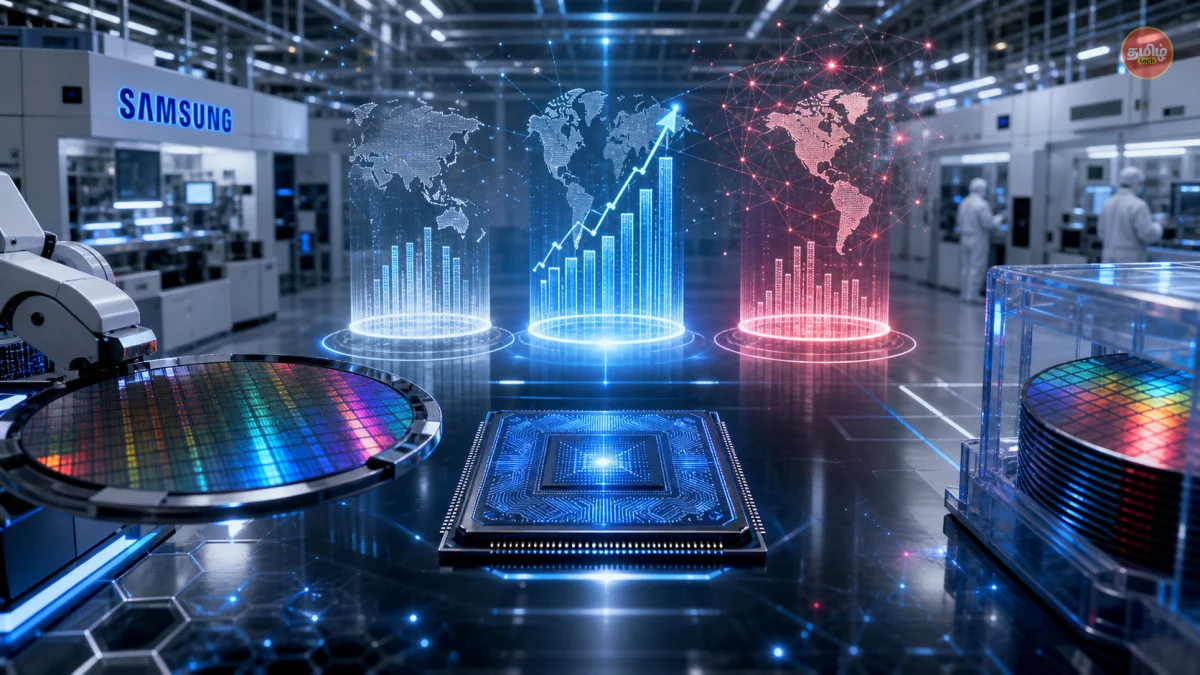
- Samsung Electronics has secured a long-term strategic partnership with Broadcom worth an estimated $200 billion for AI chip production.
- The deal focuses on Samsung's 2nm (nanometer) Gate-All-Around (GAA) process technology, which offers better power efficiency than traditional designs.
- This massive win positions Samsung as a direct threat to TSMC's long-standing dominance in the high-end semiconductor foundry market.
- For India, this could lead to more competitive pricing for AI-driven cloud services as the global supply of AI hardware increases.
- TamilTech Verdict: This is the comeback Samsung needed, but their success depends entirely on maintaining high 'yield rates' for the new 2nm chips.
The Biggest Shakeup in Chip History
Stop whatever you are doing and look at these numbers. Samsung Electronics just pulled off what many thought was impossible in the current market. We are talking about a staggering $200 billion partnership with Broadcom. If you follow tech, you know that for the last few years, TSMC (Taiwan Semiconductor Manufacturing Company) has been the undisputed king, making chips for everyone from Apple to Nvidia. But today, the tide is turning. Samsung hasn't just won a contract; they have secured a future in the AI era.
This isn't just a small order for a few million chips. This is a multi-year massive commitment where Broadcom will rely on Samsung’s foundry to produce high-performance AI processors and networking chips. As of July 2026, the demand for AI hardware is at an all-time high, with every company from startup to giant needing specialized silicon. Samsung’s ability to bag this deal shows that Broadcom finally trusts Samsung's advanced nodes enough to bet billions on them. This is a huge sigh of relief for the industry because, honestly, having only one reliable supplier like TSMC was becoming a massive bottleneck for global innovation.
How Samsung Beat the Odds: The 2nm GAA Secret
You might be wondering, why Broadcom? And why now? The answer lies in a technical term you’ll be hearing a lot this year: GAA or Gate-All-Around. While TSMC stuck with the older FinFET architecture for a bit longer, Samsung took a massive gamble by jumping into GAA technology earlier. In 2026, this gamble is paying off. Samsung’s 2nm process node, which uses this GAA structure, allows the transistors to be controlled more precisely. This means the chips run cooler, consume less power, and perform significantly faster than the 3nm chips we were using just a year or two ago.
Broadcom needs this efficiency. Their chips are the backbone of massive data centers that power everything from ChatGPT-6 to local Indian AI models. When you have thousands of chips running 24/7, even a 10% saving in power consumption translates to millions of dollars saved in electricity bills. Samsung promised Broadcom that their 2nm GAA process could deliver exactly that. By securing this deal, Samsung is proving that their research and development team didn't just spend the last few years sitting idle—they were building the foundation for this exact moment in the AI revolution.
The $200 Billion Breakdown: What’s Really Happening?
Let’s talk about the money because $200 billion is a number that’s hard to wrap your head around. This isn't a one-time payment. This is a projected valuation of the partnership over the next five to seven years. It covers the design, testing, and mass production of custom AI ASICs (Application-Specific Integrated Circuits). Broadcom is essentially saying, "Samsung, you are our primary partner for the next generation of AI infrastructure." This gives Samsung the cash flow they need to build more 'Giga-fabs' (massive chip factories) in South Korea and the United States.
Another secret ingredient in this deal is HBM4. High Bandwidth Memory is the fuel that AI chips run on. Samsung is one of the few companies in the world that can provide both the logic chip (the brain) and the HBM (the memory) in a single package. This 'one-stop-shop' capability is likely what tipped the scales in their favor. Instead of Broadcom going to TSMC for the chip and then to SK Hynix for the memory, they can get the whole package from Samsung. It simplifies the supply chain and, more importantly, reduces the time it takes to get these chips into servers.
What This Means for India: Better AI and Cheaper Services
Now, why should we in India care about a deal between a Korean giant and an American chip designer? It’s simple: Availability. Right now, Indian companies like Reliance, Adani, and Tata are heavily investing in local AI data centers. Up until now, getting your hands on high-end AI chips was like trying to find a needle in a haystack—expensive and with wait times of over a year. With Samsung entering the ring as a major player alongside TSMC, the supply of AI chips is going to explode.
When supply goes up, prices eventually stabilize or come down. This means the cost of running AI workloads in India will drop. Whether it's a student using an AI tutor or a small business using AI for logistics, the backend costs will be lower. Furthermore, Samsung has a massive presence in India, and while these chips aren't made here yet, the strengthening of Samsung’s global foundry business often leads to more R&D investments in their Indian centers, like the ones in Bengaluru and Noida. We expect more high-end tech jobs to open up in India specifically for chip design and verification as a ripple effect of this deal.
Samsung vs. TSMC: The Real Comparison
If we look at the pros and cons, Samsung still has work to do. TSMC's biggest strength has always been their 'yield'—the percentage of working chips they get from a single silicon wafer. In the past, Samsung struggled here, sometimes losing 50% of the chips due to defects. However, reports coming in now suggest Samsung has stabilized their 2nm yield to over 60-65%, which is the 'golden zone' for mass production. TSMC is still slightly ahead in pure numbers, but Samsung’s GAA tech gives them a theoretical edge in power efficiency.
The competition is great for us, the consumers. If TSMC was the only player, they could charge whatever they wanted. Now, they have to innovate faster and keep their prices competitive. We are seeing a 2026 where the monopoly is breaking. Samsung is no longer just the company that makes your phone or fridge; they are becoming the foundry that powers the global AI brain. For Broadcom, this is a strategic move to ensure they aren't 'held hostage' by the geopolitical tensions surrounding Taiwan, diversifying their production to South Korea and Samsung's US plants.
TamilTech’s Honest Take: Can Samsung Hold the Lead?
At TamilTech, we think this is a massive turning point, but we are also staying cautious. Samsung has had 'paper wins' before that didn't translate into market dominance because of production issues. However, the scale of this $200 billion deal with Broadcom is too big to ignore. It’s a vote of confidence from one of the smartest chip companies in the world. If Samsung delivers on the 2nm promise without major delays, they will officially be back in the game.
What should you expect next? Expect a wave of new AI features in your gadgets by 2027 that are powered by these very chips. We might see faster on-device AI in smartphones and much more capable cloud services. The AI war isn't just about who has the best software anymore; it's about who can actually manufacture the hardware. Right now, Samsung just took a massive lead in that race. We'll be keeping a close eye on the first batch of chips coming out of their fabs later this year to see if the performance matches the hype.





Comments (0)
Be the first to comment!