


Key Takeaways
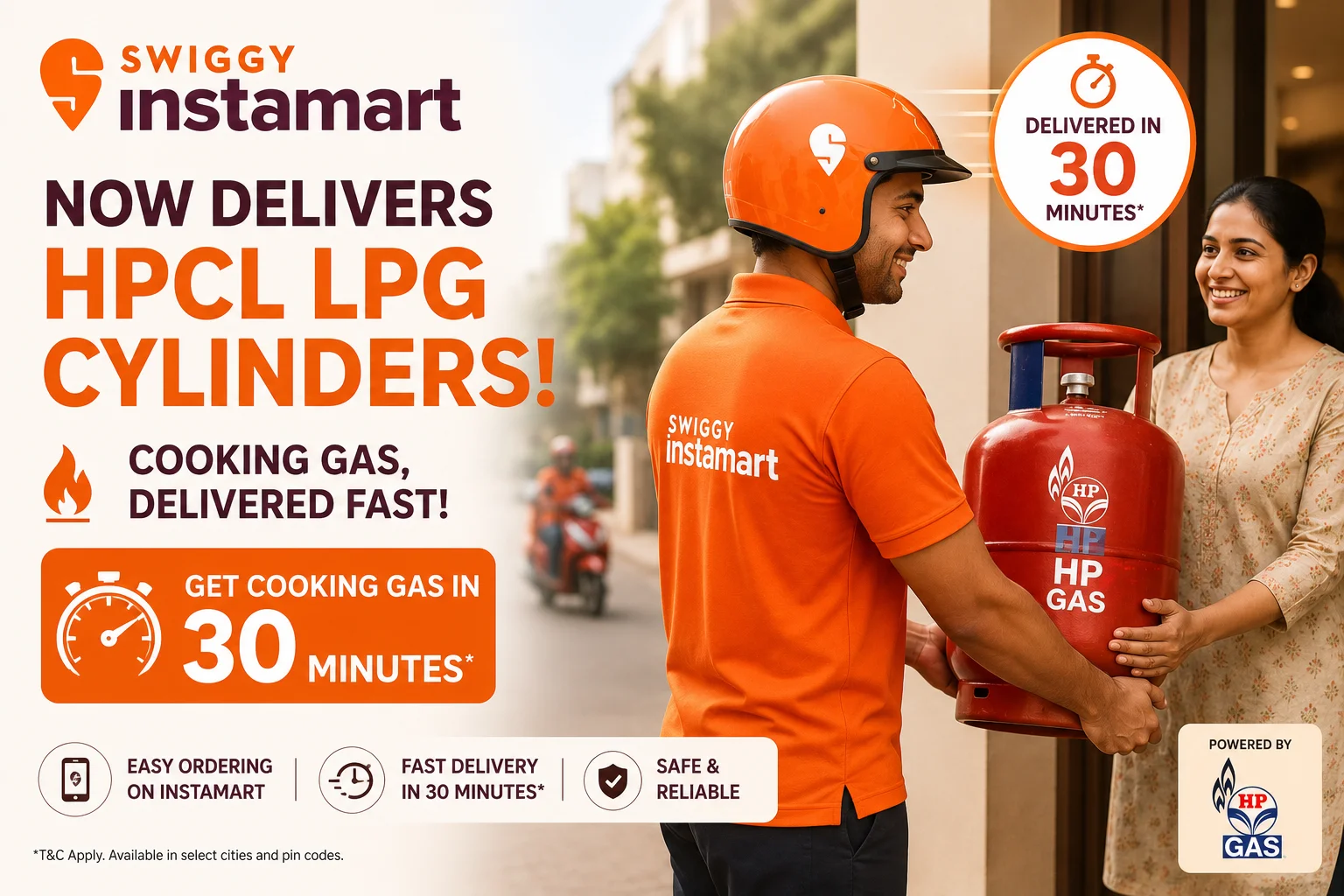
- Swiggy Instamart users can now book and receive HPCL LPG cylinder refills directly through the app.
- The service covers both the standard 14.2kg domestic cylinders and the smaller 5kg 'Chhotu' cylinders.
- Real-time tracking and digital payments via UPI are integrated, eliminating the need for cash-on-delivery hassles with local agencies.
- Initial rollout has begun in major metros like Bengaluru, Mumbai, and Delhi, with a nationwide expansion planned by late 2026.
The Kitchen Emergency is Finally Solved
We’ve all been there. You’re right in the middle of preparing a big Sunday meal, the gravy is simmering, and suddenly—pfft—the flame goes out. The gas is empty. Usually, this means a frantic call to the local gas agency, waiting for an IVRS confirmation, and then hoping the delivery person shows up sometime in the next 48 hours. But it’s 2026, and the way we run our homes is changing faster than ever. Swiggy, which started by delivering your favorite Biryani and then moved to delivering your weekly groceries in 10 minutes, is now taking on the biggest heavyweight in the Indian kitchen: the LPG cylinder.
This isn't just another 'delivery' feature. Swiggy Instamart has officially locked hands with HPCL (Hindustan Petroleum Corporation Limited) to integrate their entire booking and delivery ecosystem. This means your HP Gas connection is now effectively linked to your Swiggy app. If you are an HP Gas customer, you don't need to open any other portal or send a WhatsApp message to a bot. You just open Instamart, tap on the 'Gas' category, and you're good to go. It’s a massive leap in what we call 'Quick Commerce' in India, moving from FMCG goods to essential utility services.
How Did We Get Here? The Evolution of Delivery
A few years ago, if someone told you that a 30kg metal cylinder would be delivered by a quick commerce app, you’d probably laugh. But look at the landscape today in 2026. The infrastructure for hyper-local delivery has matured significantly. Swiggy has been expanding its fleet, moving from small bikes to heavy-duty electric three-wheelers and specialized delivery vehicles. HPCL, on the other hand, has been looking for ways to modernize its distribution network, which has traditionally relied on localized dealerships that aren't always the most tech-savvy.
The partnership bridges the gap between a massive public sector undertaking and a modern tech giant. For HPCL, this solves the 'last-mile' visibility problem. They can now see exactly when a cylinder leaves the godown and when it reaches the customer’s kitchen. For Swiggy, it adds a high-frequency, high-value service that keeps users locked into their ecosystem. It’s a win-win, but the real winner is the Indian consumer who no longer has to deal with the 'gas agency blues'.
The Tech Behind the Torch: How It Actually Works
So, how does this magic happen? It’s all about the API integration. When you enter your Consumer ID or linked mobile number in the Swiggy app, it pings the HPCL database in real-time. It checks your eligibility (since domestic gas is regulated) and shows you the current government-mandated price. Once you place the order, the request is routed to the nearest HPCL distributor, but the delivery logistics are managed through Swiggy’s optimized routing algorithm.
One of the coolest features we noticed is the 'Refill Reminder'. Based on your previous usage patterns, the app can actually predict when your gas might run out and send you a notification to book a refill in advance. No more shaking the cylinder to guess how much is left! Payments are handled seamlessly through UPI, credit cards, or Swiggy Money. The delivery person also carries a digital weighing scale to ensure you’re getting exactly what you paid for, which has been a long-standing complaint with traditional delivery men.
India Impact: Pricing and Availability
Now, let’s talk numbers. You might be wondering if this costs significantly more. The actual price of the LPG refill remains the same as the government-notified rate for your city. However, there is a 'convenience fee' or 'delivery charge' that Swiggy applies. In our testing, this ranges from ₹25 to ₹70 depending on the time of day and your distance from the distributor. For many urban professionals, paying an extra 50 rupees to ensure the gas arrives exactly when they are home is a small price to pay.
Currently, the service is live in Bengaluru, Hyderabad, Mumbai, Pune, and Delhi-NCR. We expect the rollout to hit Tier-2 cities like Coimbatore, Jaipur, and Lucknow by the end of this year. If you use the 5kg 'Chhotu' cylinders—which are popular among bachelors and small families—the delivery is even faster, sometimes arriving in under 45 minutes because these are often stocked in Swiggy's own 'Dark Stores' in partnership with HPCL.
Safety First: Can We Trust This?
Safety is the elephant in the room. Carrying LPG cylinders requires training. Swiggy has stated that only a specialized segment of their delivery fleet, who have undergone HPCL-certified safety training, will handle these deliveries. They use reinforced carriers for bikes and specialized brackets for their electric delivery vans. The delivery partners are also trained to help the customer check for leaks and properly connect the regulator if requested. This isn't just about dropping a box at the door; it's a specialized service.
Moreover, the app includes a 'Safety Checklist' that pops up as soon as the delivery is marked as complete. It reminds users to check the seal, look for the expiry date (test due date) on the cylinder stay plate, and ensure no inflammable materials are nearby. This level of digital hand-holding is something the traditional system lacked.
TamilTech’s Honest Take: Is This the Future?
Look, we think this is a game-changer for urban India. The traditional gas booking system, while improved over the years with WhatsApp and apps, still feels like a chore. Integrating it into an app we already use daily for food and groceries makes perfect sense. The ability to track the delivery person on a map—just like you track your pizza—removes a lot of anxiety.
However, there are challenges. What happens during a heavy rain or a strike? Will the delivery fee surge during peak hours? And most importantly, how will local gas agency workers react to this shift? We’ve seen friction between traditional players and tech startups before. But overall, if you’re an HP Gas user, this is a massive upgrade to your lifestyle. It’s one less thing to worry about in your busy schedule. We expect Zomato and Indane to follow suit very soon, making 2026 the year the Indian kitchen truly went digital.


Comments (0)
Be the first to comment!