Key Takeaways#
- Finance Ministry confirms future UPI MDR will target select merchants only, not consumers
- Digital payments ecosystem in India remains consumer-friendly with zero MDR for users
- Select large merchants and e-commerce platforms may face MDR charges if implemented
- This move maintains UPI's dominance in India's digital payments landscape
- Consumer trust in digital payments remains protected from additional costs
What's the News#
Breaking news from the Finance Ministry has put an end to the ongoing debate about potential UPI Merchant
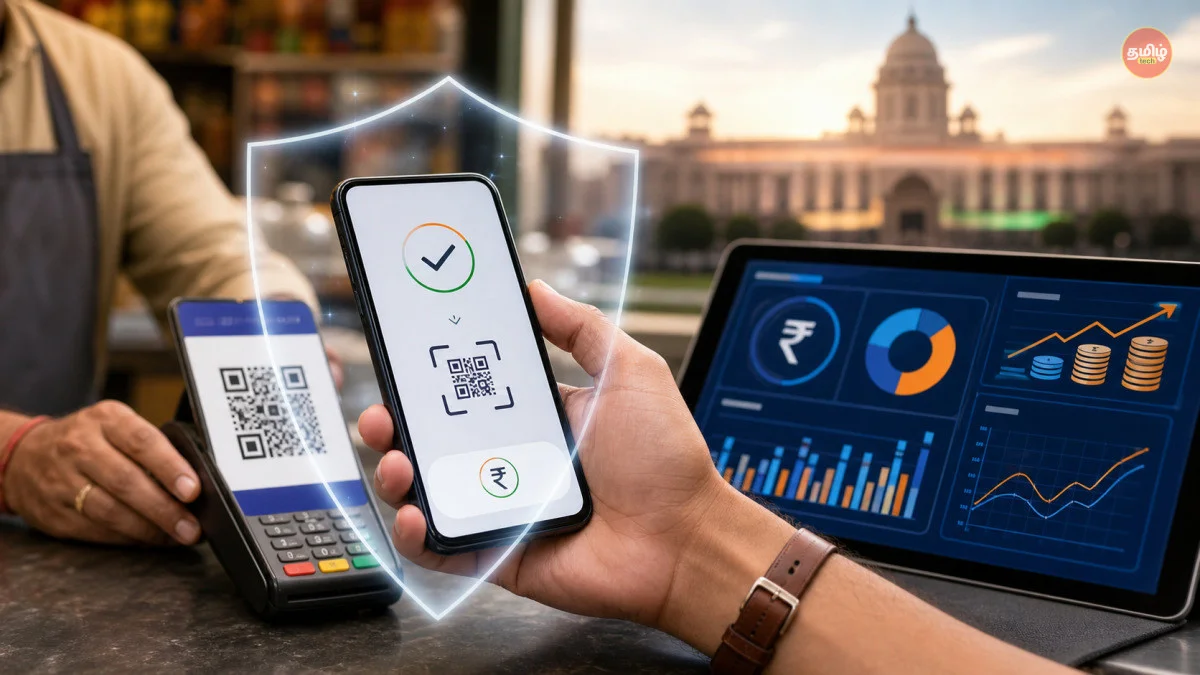
Discount Rate (MDR) charges. According to recent statements, any future implementation of MDR on Unified Payments Interface transactions will specifically target select merchants rather than everyday consumers. This clarification comes as a relief to millions of Indians who use UPI daily for everything from chai purchases to bill payments.
The ministry's stance ensures that the revolutionary digital payment system that transformed India's fintech landscape remains free for users. While the exact criteria for which merchants might face MDR charges haven't been specified, the focus appears to be on larger businesses and e-commerce platforms that benefit significantly from UPI's infrastructure.
Details#
For those unfamiliar with the terminology, MDR is essentially a fee that merchants pay to payment processors and banks for facilitating digital transactions. Currently, UPI transactions are completely free for both consumers and merchants, which has been a key factor in its massive adoption across India. The Finance Ministry's clarification suggests that if MDR is introduced, it will be carefully calibrated to avoid disrupting the delicate balance that has made UPI the world's most successful digital payments system.
The decision to potentially charge only select merchants makes strategic sense. Large corporations and e-commerce giants like Flipkart,
Amazon India, and major retail chains have the financial capacity to absorb MDR costs, while small businesses and individual merchants might be exempted to maintain the grassroots adoption of digital payments.
India Impact#
This development has significant implications for India's digital payments ecosystem. UPI has become the backbone of India's digital economy, processing billions of transactions monthly. The
government's decision to protect consumers from MDR charges while potentially targeting larger merchants strikes a careful balance between revenue generation and maintaining financial inclusion.
The move also reinforces India's position as a global leader in digital payments innovation. By keeping UPI free for consumers, the government ensures that financial services remain accessible to all segments of society, from urban tech professionals to rural farmers using UPI for agricultural transactions.
Use Cases#
In practical terms, this means your daily UPI transactions for groceries, auto-rickshaw rides, or street food will likely remain free. However, large-scale merchants might see MDR charges applied to their transactions. For example, a major e-commerce platform processing lakhs of transactions daily might face MDR, while your local kirana store using UPI for payments might not.
This selective approach could also encourage more businesses to adopt UPI, knowing that smaller merchants won't be burdened with additional costs. The strategy aligns with the government's vision of a
digital India where financial inclusion is prioritized over revenue generation from essential services.
Honest Take#
As someone who's been following India's fintech revolution since the early days of mobile banking, I see this as a smart political and economic move. The government has recognized that UPI's success lies in its simplicity and accessibility. By protecting consumers from MDR charges, they're ensuring that the digital payments revolution continues to benefit the common person.
The selective targeting of larger merchants is also a pragmatic approach. These businesses have the resources to handle MDR costs and can potentially pass on minimal amounts to consumers without significantly impacting adoption. Meanwhile, small businesses and individual merchants continue to benefit from zero-cost digital payments.
This strategy could serve as a model for other countries looking to develop their own digital payment systems. It demonstrates how governments can balance commercial interests with public welfare, ensuring that digital financial services remain inclusive and accessible to all.
While the exact implementation details are still pending, this clarification provides much-needed certainty to the fintech ecosystem. It allows businesses to plan their digital payment strategies with confidence, knowing that the core consumer experience will remain unchanged.
In conclusion, the Finance Ministry's stance on UPI MDR is a welcome development that prioritizes consumer interests while maintaining the system's
sustainability. It's a testament to how India's digital payments ecosystem continues to evolve in ways that benefit the broader population rather than just commercial interests.





Comments (0)
Be the first to comment!