


Key takeaways
- MDR on UPI merchant (P2M) payments starts from 15 October 2026 across India.
- Person-to-person UPI stays completely free. Only merchants face the fee.
- Most micro and small merchants stay at zero MDR if they sit under the usual turnover slabs.
- Banks, NPCI players and apps like PhonePe, GPay and Paytm finally earn from UPI volume.
- You won’t see a direct cut. Some bigger stores and platforms may quietly tweak prices or offers.
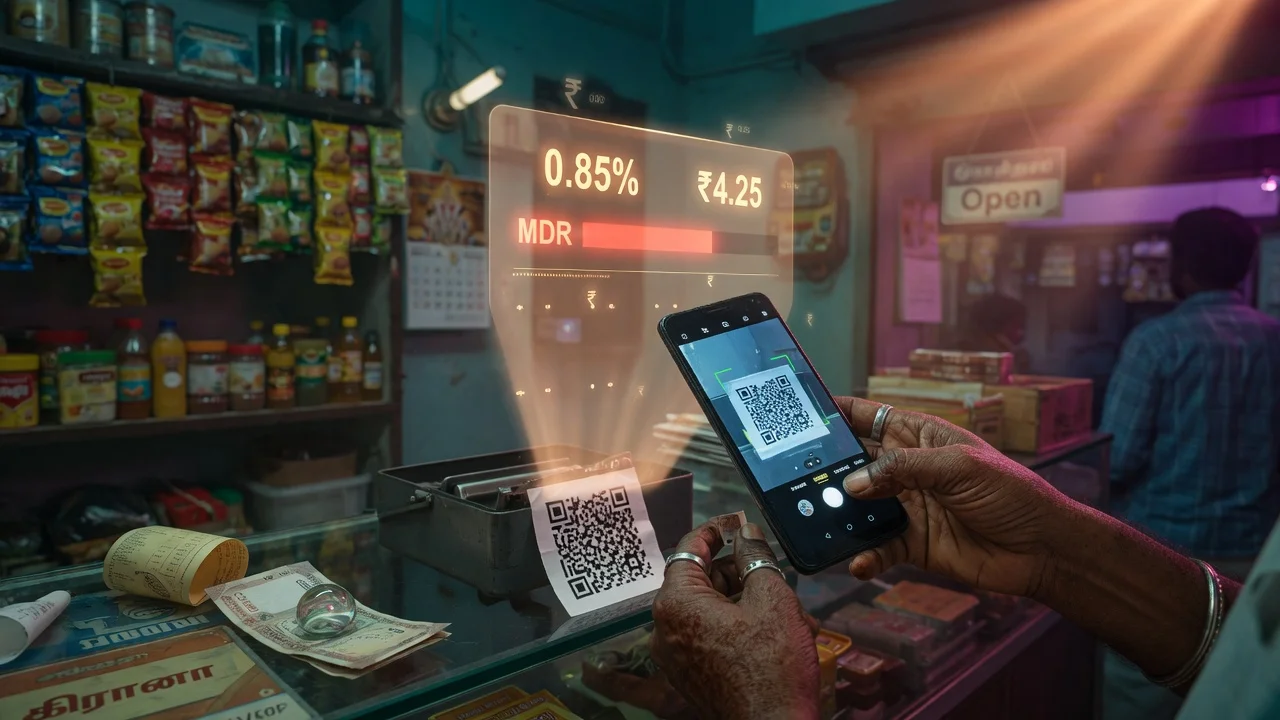
You scan a QR at the chai stall. Money moves. Shopkeeper smiles. No cut. That story has run for years.
From 15 October 2026, the merchant side of that story changes.
What just happened?
India’s UPI ran on a near-zero merchant fee model for a long time. Government and the RBI–NPCI setup kept P2M free so QR codes could flood every street.
Billions of scans at kiranas, tea stalls, autos and Flipkart checkouts happened without the shopkeeper losing a slice. Banks and payment firms ate the cost or got reimbursed.
That subsidy is winding down for larger players. UPI volumes are huge now. The rails need real revenue. From mid-October, merchant settlements pick up an MDR fee.
You still scan and pay free. Merchants — especially the big ones — start sharing a cut.
How does this actually work?
MDR is Merchant Discount Rate. Simply: the percentage a merchant pays to accept a digital payment.
On credit cards it has always been around 1–2% plus GST in many categories. On UPI, P2M was held at zero to push adoption. That free ride ends for covered merchants on 15 October.
Here’s the flow. You pay a merchant via UPI. The amount settles to their bank account minus the applicable MDR. That fee is shared among the merchant’s bank, your bank, NPCI and the app or PSP in the middle.
Exact slabs depend on category, turnover and transaction type under the new guidelines. Micro and small merchants usually stay at zero or near-zero. Larger retailers, e-commerce, fuel pumps, big QSRs and organised retail move into paid territory.
P2P stays untouched. Split a bill, send rent, pay your maid — still zero. MDR kicks in only when money goes to a merchant VPA or a business-linked QR.
Prepaid instruments and some wallet top-ups may see related tweaks. Core UPI P2P and small-shop QR remain the free zone most of us live in.
One hard rule: MDR is cut from the merchant, never added as a surcharge on you at the QR. RBI already frowns on “UPI convenience fee” on the customer. Any cost recovery happens through product pricing or thinner offers behind the scenes.
What changes for people in India?
UPI is the default rail now — street food to Swiggy to electricity bills. Putting MDR on merchants touches millions of shops and the whole fintech stack built on zero-fee volume.
Kiranas and street vendors are the bulk of acceptance points. Most sit under the small-merchant umbrella and should stay at zero MDR. That protects the last-mile push. If a chaiwala paid 0.5% on every scan, many would drift back to cash.
Organised retail and online platforms feel it more. Think Reliance Retail, DMart, big pharmacy chains, Flipkart, Amazon India, Zomato, large fuel stations. Their UPI flow is massive. A percentage fee becomes a real cost line.
Some will absorb it. Others will trim cashback, bank offers or margins. Jio-linked payments and other wallets riding UPI will recalibrate merchant pricing too.
Banks and PSPs finally get recurring money from the UPI monster they helped build. That’s healthier than endless subsidy. Apps update merchant dashboards and settlement reports — clearer MDR line items after 15 October.
For a Flipkart-scale player, the monthly MDR bill is real money. For the neighbourhood vegetable vendor on Bharat QR, it should stay free if they fall under the exemption slab.
What should you do now?
As a customer: nothing special. Keep using UPI. Your P2P and merchant QR payments stay free on your side.
Watch for quiet price tweaks or thinner offers at big platforms and organised stores. If a shop tries to add a UPI surcharge on the bill, that’s not how the rules are meant to work — push back or pay another way.
If you run a small shop: check which turnover and category slab you fall under. Most micro merchants stay protected. Ask your bank or payment app for the settlement note after mid-October so you know exactly what’s deducted.
If you run a larger store or online checkout: budget for MDR from 15 October 2026. Talk to your PSP early. Settlement reports will show the cut — plan margins and offers around it.
Bottom line for daily life: your next chai QR still costs you the chai price, not a fee. The change sits on the merchant ledger, not your phone screen.

Comments (0)
Be the first to comment!