


Key Takeaways
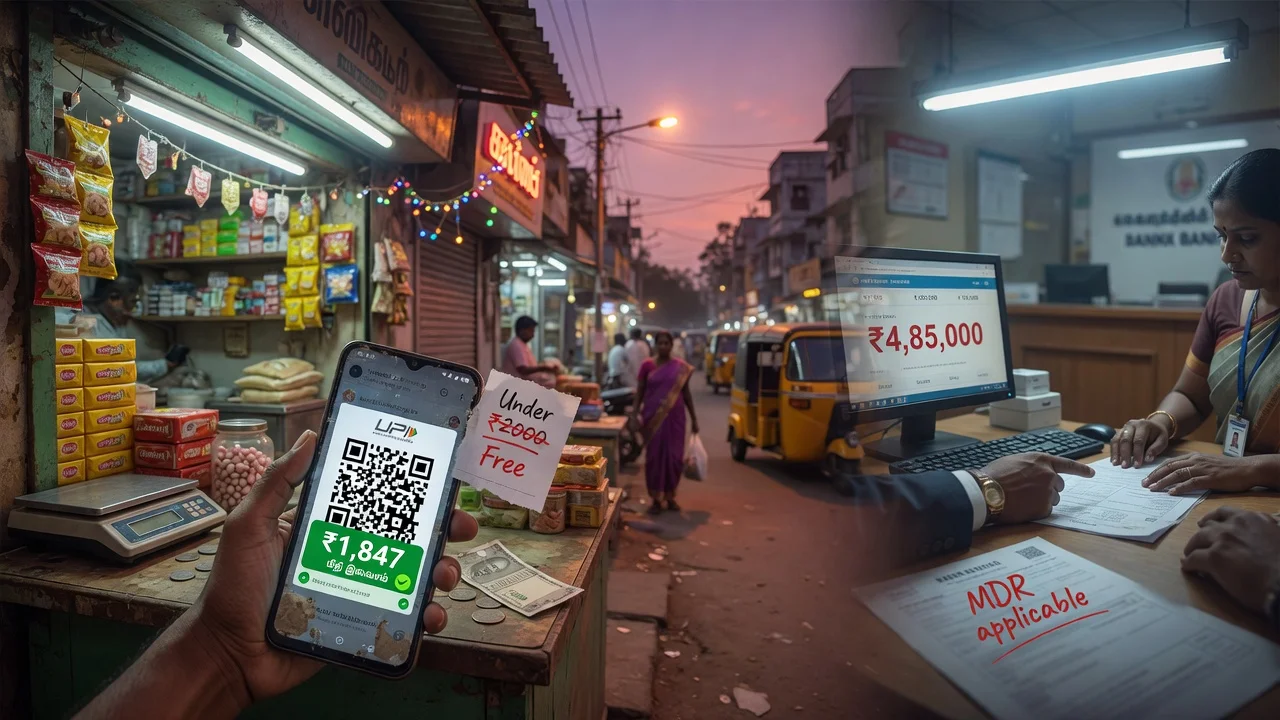
- Finance ministry notified that UPI transactions under ₹2,000 stay free of Merchant Discount Rate (MDR).
- The same notification opens the door for MDR to be charged on higher-value UPI payments.
- Small-ticket spends at kiranas, tea stalls and local shops remain zero-cost for merchants on the MDR front.
- Payment apps, banks and large merchants now have clearer room to price high-value UPI differently.
- Everyday Indian users keep free UPI for most daily spends while bigger purchases may see cost shifts.
What's the news
The finance ministry has notified new rules that lock in zero Merchant Discount Rate for UPI transactions below ₹2,000. In plain words: if you pay a merchant ₹1,999 or less over UPI, that merchant does not have to pay MDR on the deal.
The same notification does something bigger. It opens the door for the reintroduction of MDR on high-value UPI payments. For years India ran UPI as a near-zero-MDR highway to push digital adoption. That experiment worked. Now the government is drawing a clear line at ₹2,000. Under that line, free. Above that line, MDR can come back into the picture.
This is not a sudden ban on free UPI. It is a calibrated split. Daily micro and small payments stay frictionless. Larger merchant payments get room for the fee structure that banks and payment service providers have long wanted.
Details
MDR is the fee a merchant pays when a customer pays digitally. On cards it has always existed. On UPI it was largely waived or reimbursed so that PhonePe, Google Pay, Paytm, BHIM and bank apps could grow without merchants feeling the pinch. That waiver helped UPI become the default way Indians pay for chai, groceries, auto rides and online orders.
The new notification keeps that protection intact for anything under ₹2,000. A kirana owner accepting ₹350 for milk and biscuits still faces no MDR hit from that UPI ping. A restaurant bill of ₹1,800 stays in the free zone too.
Cross ₹2,000 and the picture changes. The rules now allow MDR to be applied on those higher-value UPI transactions. Exact rates, who sets them, and how the money is shared between acquiring banks, issuing banks and payment apps will play out through existing NPCI and RBI frameworks. The key policy signal is clear: the free ride for big-ticket UPI is no longer automatic.
Merchants who sell phones, appliances, furniture, hotel stays or bulk wholesale goods are the ones most likely to feel this first. Many already absorb card MDR or push customers toward UPI precisely because it was cheaper. That math is about to get a fresh look.
Nothing in the notification forces every merchant to start charging MDR tomorrow on a ₹5,000 UPI payment. It simply removes the blanket zero-MDR shield above ₹2,000 and lets the ecosystem price those flows. Payment companies and banks have been asking for a sustainable model for years. This is the government drawing the line where that conversation can restart without killing the small-ticket magic that made UPI explode.
India impact
UPI is not a side payment rail anymore. It is how a huge chunk of India moves money every single day. Keeping MDR at zero under ₹2,000 protects the use cases that matter most to ordinary people and small businesses. The chaiwala, the vegetable vendor, the neighbourhood chemist and the local salon stay in the free zone. That matters for financial inclusion and for keeping digital payments sticky at the bottom of the pyramid.
Larger merchants and platforms sit in a different bucket. Flipkart, Amazon, big electronics chains, travel platforms and high-end restaurants process plenty of UPI payments well above ₹2,000. They now have official room to negotiate or accept MDR on those tickets. Some will absorb it. Some will nudge customers toward other rails. Some will quietly bake a small cost into pricing. Watch how the big apps and banks communicate this to merchants over the coming months.
For payment apps themselves the news is mixed but mostly constructive. Zero MDR on the long tail of small transactions keeps volume humming and keeps users loyal. The ability to earn or share MDR on high-value flows gives them a path to better unit economics without breaking the daily habit that made UPI a national utility.
Banks that issue UPI handles and acquire merchant payments get breathing room too. Running free rails forever was never going to be a forever business model. A clean ₹2,000 threshold is easier to explain to merchants than a sudden full return of MDR across the board.
One quiet risk: if merchants start treating anything above ₹2,000 as "costly UPI," they may push cash or cards again for big bills. That would be a step backward. The smart play for the ecosystem is to keep MDR modest, transparent and worth it for the speed and settlement UPI already delivers.
Use cases
Daily life under ₹2,000 barely changes. Pay ₹120 for lunch with GPay? No MDR drama. Send ₹800 to the electrician? Same. Split a ₹1,500 group dinner? Still clean. The notification protects exactly these high-frequency, low-value flows that made UPI feel free and instant.
Cross the line and scenarios shift. Buying a mid-range phone for ₹18,000 on UPI at a local store? The merchant may now face MDR and could prefer a card offer, a cash discount, or a slight price tweak. Booking a hotel stay or paying a college fee above ₹2,000? Expect the institution or platform to look at the cost of accepting that UPI payment more carefully than before.
Online checkouts will be interesting. Many Indian e-commerce and food apps already push UPI hard because it converts well and used to be cheap for them. Above ₹2,000 they may start differentiating offers, cashback or even preferred payment badges between UPI and other methods. Watch the fine print on big-ticket carts.
For freelancers and small service providers who receive ₹5,000 or ₹10,000 payments over UPI, the conversation with their bank or payment aggregator may include MDR talk that simply did not exist in the zero-MDR era. Some will shrug and absorb. Others will ask clients to pay a bit differently.
Businesses that do high volume of mid-to-large UPI transactions should talk to their payment partners now. Understanding the exact MDR slab, if any, and whether it can be negotiated will matter more than it did last year.
Honest take
This is a grown-up move. India needed UPI to go free and viral. That phase succeeded beyond most expectations. Keeping every UPI payment permanently free of MDR was never realistic once volumes hit the levels we see now. Drawing the line at ₹2,000 is pragmatic. It shields the payments that keep the country moving day to day while letting the commercial layer breathe on bigger tickets.
The danger is execution. If MDR on high-value UPI is set too aggressively, merchants will route around it and users will feel the friction. If it stays reasonable and transparent, UPI keeps its crown while the rails finally get a sustainable revenue story. Payment apps and banks should resist the urge to treat this as a sudden cash grab. The trust UPI enjoys is worth more than a short-term MDR spike.
For regular users the advice is simple. Keep paying small amounts on UPI without worry. On bigger purchases, glance at whether the merchant is nudging you toward another method or adding a surcharge. Most will not, at least not overnight. But the incentive structure has changed, and incentives eventually show up in behaviour.
Overall this notification feels like the government saying: UPI stays the people's payment system under ₹2,000. Above that, welcome to the adult pricing table. That balance is worth getting right.


Comments (0)
Be the first to comment!