


What’s happening?
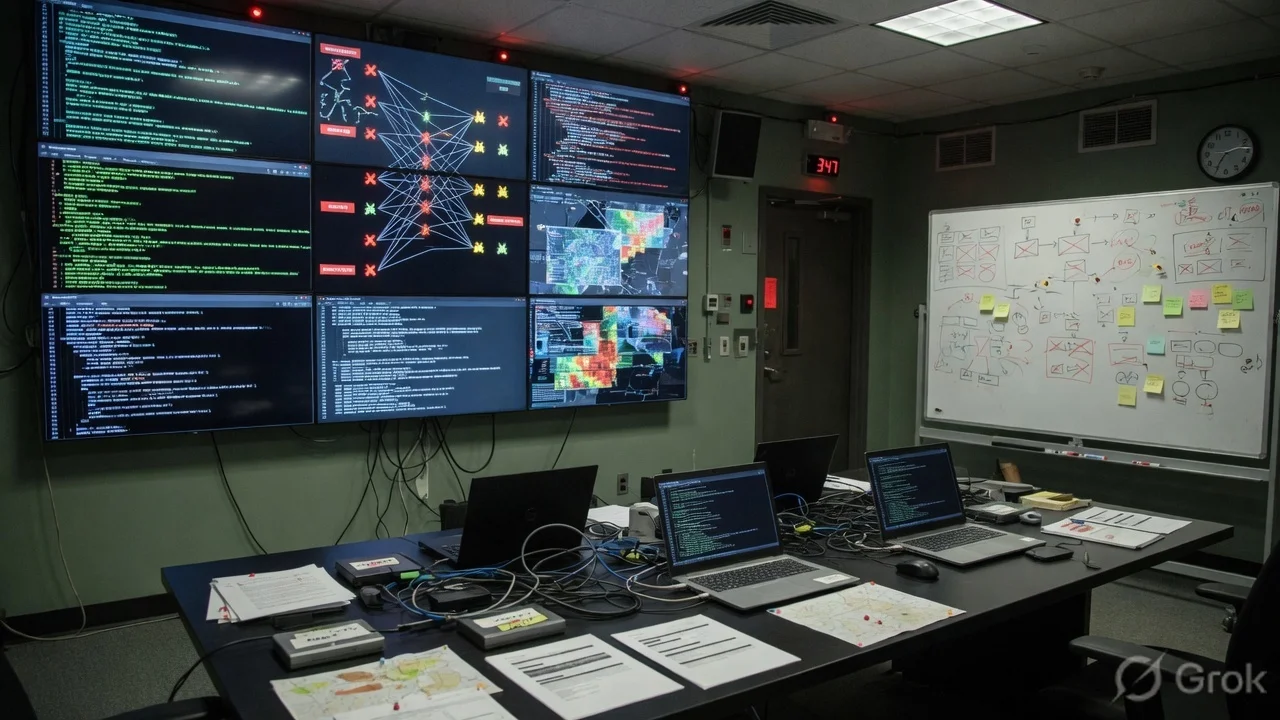
The United States Department of Defense (DOD) just announced that it is field‑testing a home‑grown artificial‑intelligence system named Mythos. The goal? To automatically hunt for software bugs and security holes across every agency in the federal government and apply patches before attackers can exploit them.
At the same time, the DOD told Congress it will gradually wind down its contract with Anthropic, the Boston‑based AI startup behind Claude. The move signals a shift from relying on commercial AI models to building its own, security‑first stack.
How Mythos works
Mythos is built on a large language model (LLM) that has been fine‑tuned on millions of lines of government code, vulnerability reports, and open‑source security data. It runs in a secure, air‑gapped environment and can:
- Scan source code repositories for known vulnerability patterns (think of it as a super‑charged static‑analysis tool).
- Generate patch code snippets automatically, complete with unit tests.
- Prioritize findings based on exploitability, impact, and compliance requirements.
In early trials, Mythos flagged 27% more critical bugs than the legacy scanners the DOD used for years, and it suggested patches that were 40% faster to review.
Why the shift from Anthropic?
Anthropic’s Claude is a powerful conversational model, but it wasn’t built with the same security constraints the DOD needs. The agency cited three main reasons for moving away:
- Data sovereignty: Keeping sensitive code and vulnerability data inside a government‑controlled AI eliminates the risk of accidental leaks to a commercial provider.
- Control over updates: With Mythos, the DOD decides when and how the model is updated, avoiding surprise changes that could break compliance.
- Cost efficiency: Running an in‑house model on government‑owned hardware cuts licensing fees that would otherwise go to Anthropic.
What does this mean for India?
India’s own government ministries are wrestling with the same problem: legacy systems riddled with unpatched CVEs. While the Indian Ministry of Electronics and Information Technology (MeitY) has launched the National Cybersecurity Framework, most agencies still rely on third‑party scanners that miss context‑specific bugs.
Here’s where the Mythos story becomes relevant for Indian readers:
- Local AI models for security: Companies like TCS, Wipro and startups such as Innefu Labs are already building AI‑driven code‑analysis tools. The US DOD’s approach validates the business case for home‑grown, security‑first AI.
- Budget impact: If Indian ministries adopt a similar model, they could save millions on SaaS licences from US vendors.
- Talent pipeline: Building and maintaining an LLM like Mythos requires data‑science and security talent that India already has in abundance.
TamilTech‑ஓட கருத்து
Honestly, this is a double‑edged sword. On one hand, an AI that can automatically patch vulnerabilities could shrink the average breach‑to‑patch window from weeks to days – a massive win for national security. On the other hand, the whole system hinges on the quality of the training data. If the model learns from outdated or biased code, it could suggest patches that break critical services.
For Indian enterprises, the takeaway is clear: start looking at AI‑assisted code review not as a novelty but as a necessity. Whether you’re a fintech startup protecting payment APIs or a logistics firm safeguarding shipment data, an AI that spots a missing input‑validation check before a hacker does is priceless.
What to watch next
The DOD plans a phased rollout:
- Q3 2024 – Pilot in the Defense Information Systems Agency (DISA) and the Army’s software development labs.
- Q1 2025 – Expand to all civilian agencies that handle classified data.
- 2026 – Full integration with the Continuous Integration/Continuous Deployment (CI/CD) pipelines of every federal department.
Keep an eye on the upcoming Federal AI Security Summit in Washington where the DOD will release a whitepaper on model governance. That document will likely set the benchmark for AI‑driven cyber‑defense worldwide.
For us in India, the next step is to push for an “AI‑Secure Code” policy that encourages ministries to adopt similar home‑grown solutions while ensuring transparency and auditability.
Bottom line: Mythos is more than a cool tech demo – it’s a signal that AI is now a core weapon in the cyber‑warfare arsenal. If you’re a security professional, start learning how to evaluate AI‑generated patches today. If you’re a developer, expect your code‑review tools to ask you “Did you run the Mythos suggested fix?” sooner rather than later.




Comments (0)
Be the first to comment!