


Key Takeaways
- The US Department of Justice (DOJ) has officially filed to dismiss an NAACP lawsuit against xAI regarding unauthorized gas turbine usage in Memphis.
- The government claims xAI's 'Colossus' supercomputer is now integral to US military operations, specifically supporting tactical simulations for the Iran War.
- Environmental concerns raised by local communities are being sidelined in favor of 'national security' priorities, setting a massive precedent for AI companies.
- This move effectively grants xAI sovereign immunity-like protection, making it nearly impossible for local regulators to shut down their power-hungry infrastructure.
- For India, this highlights the growing 'Military-AI Complex' where tech giants become untouchable due to their role in national defense.
Imagine building a massive, noisy, and polluting engine room in your neighborhood without a permit, and when the neighbors sue you, the government steps in and says, "Leave them alone, they are helping us win a war." That is exactly what is happening right now with Elon Musk’s xAI. In a move that has shocked both the tech and legal worlds this June 2026, the US Department of Justice has stepped into a courtroom to protect xAI from a lawsuit filed by the NAACP. The reason? Apparently, xAI’s massive data center in Memphis isn't just training a chatbot anymore; it is a critical piece of military hardware supporting US operations in the Iran conflict.
The Background: Why the NAACP Sued xAI
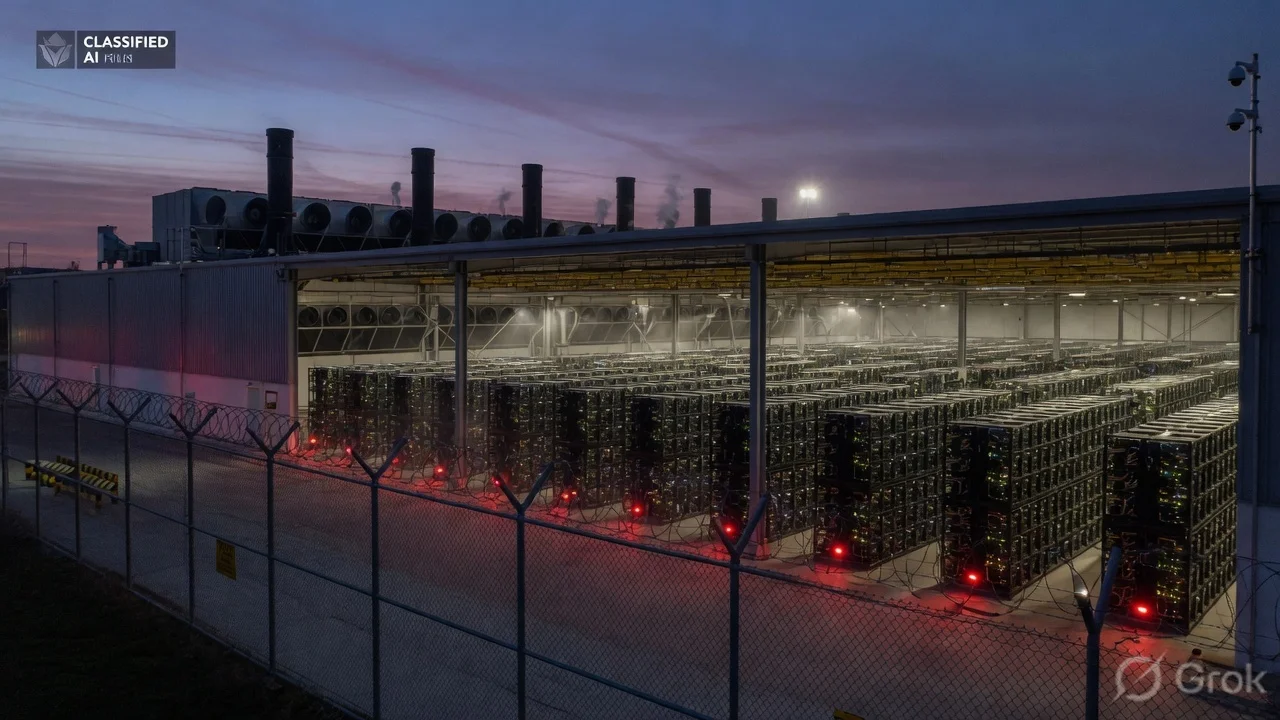
To understand how we got here, we have to look at what xAI has been doing in Memphis. Last year and into early 2026, xAI rapidly expanded its 'Colossus' supercomputer cluster. To power this beast, which houses hundreds of thousands of Nvidia Blackwell B200 chips, they needed an insane amount of electricity. Instead of waiting for the local grid to upgrade—which would take years—Elon Musk’s team installed massive gas turbines to generate their own power on-site. The problem? They allegedly did this without the proper environmental permits. The NAACP, representing the local community, filed a lawsuit claiming these turbines were causing significant air pollution and noise in a predominantly Black neighborhood, violating civil rights and environmental laws. They wanted the turbines shut down until proper checks were done.
For months, it looked like a standard legal battle between a tech giant and local activists. The community argued that their health shouldn't be sacrificed for the sake of training an AI model. However, the game changed completely this week. The US DOJ didn't just offer an opinion; they asked the court to dismiss the case entirely. Their argument is that any disruption to xAI’s operations would directly harm the United States' ability to conduct military operations. This is the first time we are seeing a private AI company being shielded so aggressively by the federal government under the banner of national security.
The Iran War Connection: AI as a Weapon
The most startling revelation in the DOJ filing is the mention of the Iran War. As of mid-2026, the geopolitical situation has escalated, and the US military is heavily reliant on advanced AI for logistics, predictive modeling, and autonomous drone coordination. According to the filing, xAI has been providing 'unique computational capabilities' that are currently being used to simulate battlefield scenarios and decode encrypted communications in real-time. The DOJ argues that xAI is 'integral' to these operations. This suggests that xAI is no longer just a competitor to OpenAI or Google; it has become a specialized defense contractor.
The 'Colossus' supercomputer is reportedly being used to run high-fidelity simulations that help the Pentagon predict enemy movements. If the gas turbines are shut down, the supercomputer loses power, and according to the DOJ, the military loses its edge. This puts the court in a nearly impossible position. On one side, you have the clear environmental and health rights of the Memphis citizens. On the other, you have the 'national security' of the United States during a hot war. Usually, in the US legal system, national security wins every single time. This sets a terrifying precedent where tech companies can bypass local laws as long as they have a military contract in their pocket.
What This Means for the Future of AI Regulation
This development marks the birth of the 'Military-AI Complex.' Much like Boeing or Lockheed Martin, xAI is now becoming 'too big to sue.' If every time a tech company breaks a local regulation, the DOJ can claim it’s for a war effort, then environmental and safety laws basically become optional for the rich. We are seeing a shift where compute power is being treated like oil or ammunition. In 2026, the most valuable resource a nation has isn't just its soldiers, but its FLOPs (Floating Point Operations per Second). By tying xAI so closely to the Iran War, the US government is ensuring that Elon Musk’s infrastructure remains untouched by local bureaucracy.
At TamilTech, we’ve been following the growth of these data centers closely. The sheer scale of power they require—often exceeding the needs of small cities—was always going to lead to conflict. But we didn't expect the resolution to be a government-mandated 'get out of jail free' card. This move effectively silences the NAACP’s concerns. How can a local judge rule against a company when the DOJ is claiming that doing so could cost lives on the battlefield? It’s a power move that redefines the relationship between Silicon Valley and Washington D.C.
The India Angle: Could This Happen Here?
You might be wondering, why should we in India care about a lawsuit in Memphis? Well, the logic being used here is universal. India is currently seeing a massive boom in data center construction by players like Adani, Reliance, and Google. As India ramps up its own AI mission and integrates AI into its defense systems (like the latest updates to our border surveillance systems in 2026), we could see similar scenarios. If a massive data center in Hyderabad or Navi Mumbai is found to be violating local environmental norms, will the Indian government step in and say it's vital for national security?
We have already seen 'Special Economic Zones' (SEZs) get various exemptions, but this is a step further. This is 'National Security Exemption' for private AI training. As Indian startups and giants start building sovereign AI models, the line between private enterprise and national defense will blur. The xAI case is a warning. It shows that in the race for AI supremacy, the rights of local communities are often the first thing to be sacrificed. If you live near a mega-data center, your right to clean air might soon be secondary to the country's need for faster AI processing.
TamilTech’s Verdict: A Dangerous Precedent
So, what do we think? Honestly, this is a scary turn of events. While we understand the importance of national security, using it as a blanket shield to protect a company from basic environmental permits feels like a massive overreach. Elon Musk has always been known for 'moving fast and breaking things,' but breaking the health of a local community and then hiding behind a war is a new low. It effectively makes xAI a wing of the military without the oversight that actual military branches have.
What to expect next? The court will likely grant the DOJ’s request, or at the very least, stay the lawsuit indefinitely. This will give xAI the green light to keep those turbines running 24/7, regardless of the pollution. Other AI companies like OpenAI and Anthropic will likely seek similar 'essential' status from the government to protect their own infrastructure. We are entering an era where AI isn't just tech—it's the backbone of the state, and that makes it very hard to regulate. Stay tuned to TamilTech, as we will keep you updated on how this legal battle reshapes the global tech landscape.





Comments (0)
Be the first to comment!