


Key Takeaways
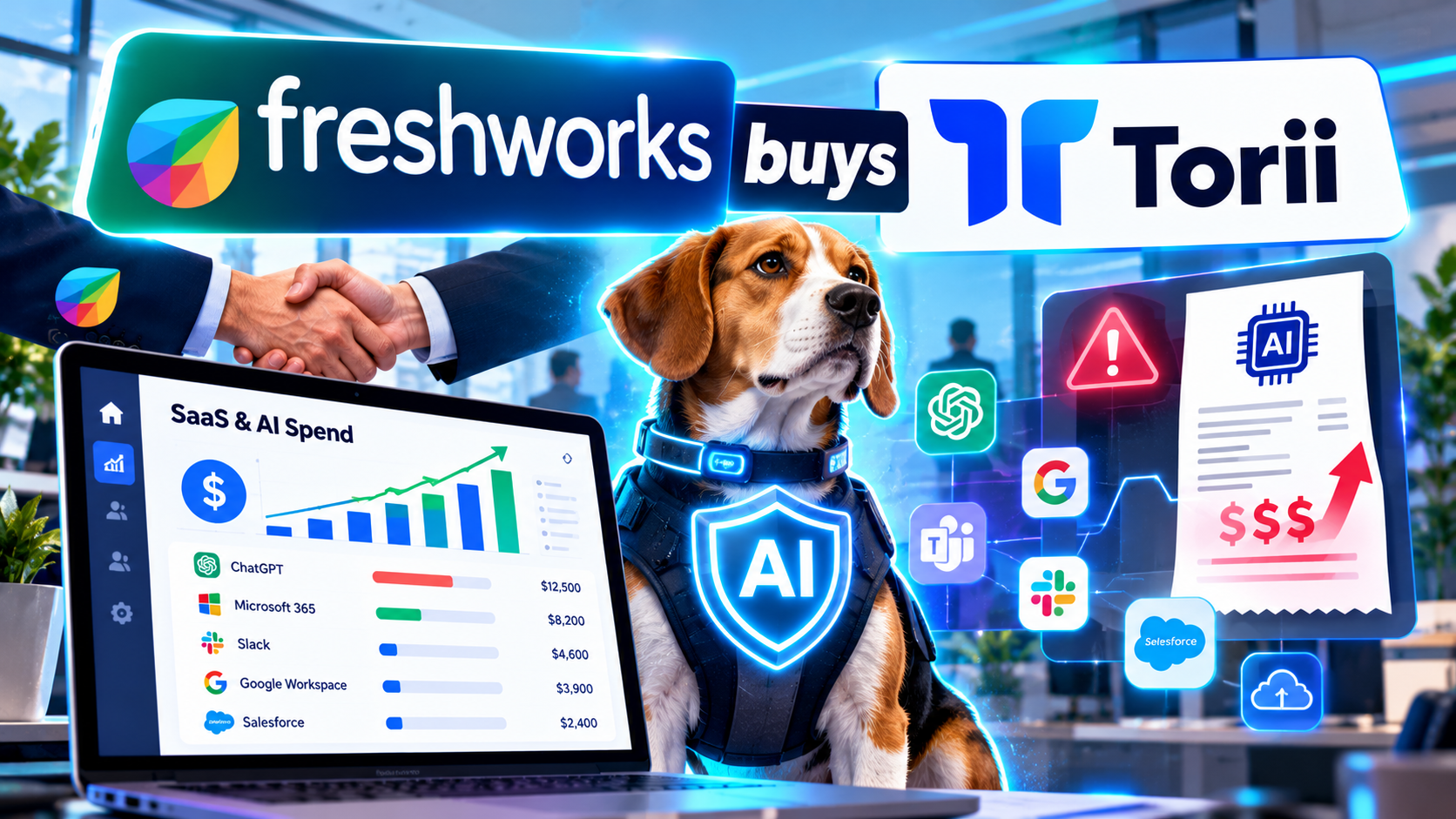
- Freshworks is acquiring Torii, a SaaS management startup, to beef up its Freshservice product.
- The goal: help companies track who's using what software and AI tools, and how much it's all costing.
- This is being called "AI spend governance" — basically a financial CCTV camera for your company's AI subscriptions.
- Freshworks is the Chennai-origin company co-founded by Girish Mathrubootham, now listed on Nasdaq.
- Expect Indian IT and HR teams to lean on this heavily as AI tool sprawl becomes a real headache.
What just happened?
Picture this. Your office marketing team signs up for one AI writing tool. The sales team quietly starts paying for another. Someone in design is running three different AI image generators on a company card nobody tracks properly.
Multiply that across a company with a few thousand employees, and you've got a mess. Dozens of subscriptions, nobody knows the total bill, and worse, nobody knows which of these tools have access to sensitive company data.
This exact mess is what Freshworks wants to fix. The company has announced plans to acquire Torii, a startup that specialises in tracking and managing SaaS subscriptions across an organisation. The plan is to fold Torii's tech into Freshservice, Freshworks' IT service management product.
Freshworks itself isn't some random Silicon Valley name. It's the company Girish Mathrubootham built out of Chennai, which eventually listed on Nasdaq — one of the rare Indian-origin SaaS success stories that actually made it to a US stock exchange. So this isn't a tiny footnote; it's a company with Indian roots making a fairly important strategic bet.
How does this actually work?
Let's break down the term first — "AI spend governance". Sounds fancy, but it's simple once you strip the jargon.
Governance here just means control and visibility. Spend means money going out. So AI spend governance is basically a system that tells a company: here's every AI and software tool being used right now, here's who's using it, here's what it costs, and here's whether it's a security risk.
Torii's existing tech already does a version of this for regular SaaS tools — things like Slack, Zoom, or random project management apps that employees sign up for without IT even knowing. Freshworks wants to extend that same tracking logic specifically to AI tools, which have exploded in number over the last couple of years.
Think about it like this: if your family had five different OTT subscriptions and nobody remembered cancelling the free trials, your monthly bill would quietly balloon. Now imagine that happening with 50 different AI subscriptions across a company, where each one also has access to internal documents, customer data, or code. That's the real problem Freshservice is trying to solve — cost control plus security, bundled together.
Once this integration is live, an IT admin should ideally be able to open one dashboard and see every AI tool in use company-wide, flag the unused ones, cut the wasteful subscriptions, and spot any tool that's a potential data leak before it becomes a headline.
What changes for people in India?
India has a massive IT services and startup ecosystem, and almost every mid-size to large company here has been experimenting with AI tools over the past year — chatbots for customer support, AI coding assistants, AI-powered HR tools, the list keeps growing.
The problem is that this adoption has mostly happened without proper tracking. An HR manager in Bengaluru might not know that three different teams are paying for three different AI resume-screening tools. A CFO in Mumbai might be staring at a software spend line item that's crept up 30% and has no idea why.
This is exactly the gap Freshworks is betting Indian (and global) IT teams will pay to close. Given how price-sensitive Indian businesses are, a tool that shows exactly where money is leaking on unused or duplicate AI subscriptions is genuinely useful, not just a nice-to-have dashboard.
There's also a security angle that matters more in India than people realise. With data protection rules tightening and companies handling sensitive customer information — think banks, fintech apps, even e-commerce platforms — knowing which random AI tool has access to customer data is no longer optional. It's a compliance necessity.
What should you do now?
If you're an employee, this is a good moment to be upfront with your IT team about which AI tools you're actually using for work. Shadow subscriptions tend to get flagged and cut once these governance tools roll out, so better to be on record than surprised later.
If you're in IT, procurement, or finance at an Indian company already using Freshservice, keep an eye on this rollout. It's likely to show up as a feature update rather than a separate product, and early movers usually get to clean up their software spend before the next budget review.
If you run a small business, you probably don't need enterprise-grade AI governance tools yet — but the underlying lesson applies regardless of company size. Keep a simple list of every AI subscription your team pays for. You'll be surprised how much that one-page spreadsheet can save you by the end of the year.
Deal terms, pricing details, and the exact timeline for when this shows up inside Freshservice haven't been spelled out in detail yet. As with most acquisitions, the real test will be how smoothly Torii's tech gets stitched into the existing product rather than just sitting as a marketing bullet point.
What's still unclear about this deal?
Freshworks hasn't put out exact numbers on the acquisition — no confirmed deal value, no confirmed closing date, and no detailed pricing for how this AI spend governance layer will be sold inside Freshservice. That's fairly normal at this stage of an announcement, but it does mean businesses planning their 2027 software budgets shouldn't assume this feature lands fully baked by the next quarter. Integrations like this usually take a few product cycles before they're genuinely enterprise-ready, so treat the early rollout as a beta phase rather than a finished dashboard.
There's also the practical question of overlap. Freshservice already does IT asset management to some extent, so the real work is making sure Torii's SaaS and AI-tracking engine doesn't just become a duplicate feature sitting next to something that already half-exists. Companies evaluating this should ask their account manager directly what's net-new versus what's a rebrand of an existing capability, because that difference decides whether it's worth paying extra for.
Worth watching too is whether Freshworks keeps Torii as a standalone product for companies not on Freshservice, or folds it in completely and retires the separate brand. Startups that get acquired by larger SaaS players often go one of two ways — either they get absorbed quietly into the parent's roadmap, or they're kept running independently to capture a different customer base. For Indian IT teams already juggling Freshworks tools, the smarter move is to wait for the first real product update before switching any existing SaaS-tracking workflow over to this, rather than reorganising processes around a feature that's still on paper.




Comments (0)
Be the first to comment!