


Key Takeaways
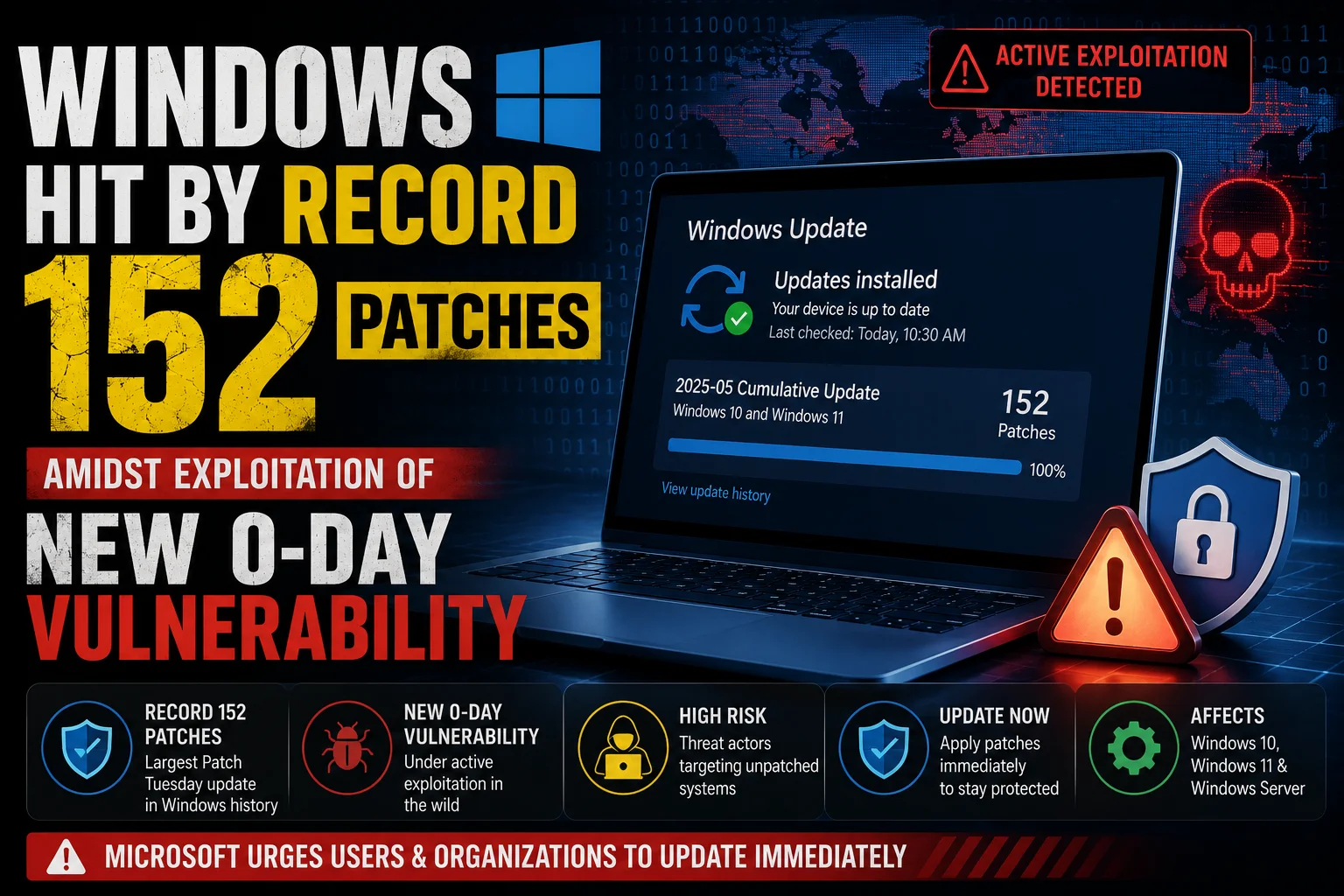
- Microsoft released a record 152 security patches on July 16, 2026, the highest single-day count in the company's history.
- A critical 0-day vulnerability involving Remote Code Execution (RCE) was discovered and exploited on the same day the patches went live.
- Over 40% of the patches address vulnerabilities rated as 'Critical' or 'High' which could lead to complete system takeover.
- Indian government and banking sectors are on high alert as the 0-day specifically targets legacy Windows systems still common in local offices.
- The bottom line: Update your Windows OS immediately via Settings, but stay cautious as a secondary emergency patch is expected soon.
The Patch Tuesday Chaos of 2026
If you are a Windows user, today is not the day to click 'Remind me tomorrow' on that update notification. We are seeing something unprecedented in the world of cybersecurity. Microsoft has just released a staggering 152 patches in a single go. To put that in perspective, that is almost double what we used to see just a couple of years ago. But here is the kicker—while the engineers at Redmond were busy pushing out fixes for over a hundred bugs, a brand-new 0-day vulnerability was spotted being exploited in the wild. It is like fixing a hundred leaks in a dam only to find a massive new crack appearing the moment you put your tools down.
This isn't just another routine update. The sheer volume of fixes suggests that the complexity of Windows 12 and the new AI-integrated features we have been using throughout 2026 have opened up more doors for hackers than ever before. We have been tracking these monthly updates for a long time, and we have never seen a 'Patch Tuesday' quite this heavy. The situation is evolving rapidly, and if you value your data, you need to understand what is happening under the hood of your PC right now.
How Did We Get Here? The Evolution of the 0-Day
For those who might not be familiar with the term, a '0-day' or Zero-day vulnerability is a security hole that the software creator (in this case, Microsoft) has had 'zero days' to fix because hackers found it first. Usually, Microsoft learns about a bug, creates a patch, and then tells the world. With a 0-day, the hackers are already inside the house before the owner even knows the lock is broken. This specific 0-day discovered today is particularly nasty because it involves Remote Code Execution. This means someone sitting in a different country could potentially run commands on your computer without you ever knowing.
Looking back at the first half of 2026, the integration of 'Copilot Pro Max' and other deep-level AI system services into the Windows kernel has made the OS incredibly powerful but also incredibly complex. Complexity is the enemy of security. Every time a new AI feature is added to help you organize your files or automate your emails, it creates a new pathway that a clever attacker can exploit. This record-breaking number of patches is a direct result of Microsoft's internal 'Red Teams' and independent researchers finding these pathways before the bad guys do—but clearly, they missed one big one.
The Nitty-Gritty: What is Actually Being Fixed?
Out of the 150+ patches, about 60 are related to privilege escalation. This is a common tactic where a hacker gets into your system with limited access and then 'escalates' themselves to become the Administrator. Once they are the Admin, they own your machine. They can see your saved passwords, access your webcam, and even encrypt your files for ransom. Another 40 patches are for the aforementioned Remote Code Execution (RCE) flaws. These are the 'Red Alerts' of the tech world. If your PC is connected to the internet and you haven't updated, you are essentially leaving your front door wide open in a storm.
The specific 0-day that dropped today targets the Windows Win32k component. This is a core part of how Windows handles graphics and user input. Because this component has been around for decades, even the most modern Windows 11 and Windows 12 systems still carry legacy code from the Windows 7 era. Hackers love legacy code because it wasn't built with 2026-level security in mind. This vulnerability allows an attacker to bypass all the fancy 'Sandbox' security layers Microsoft has built over the years. It is a direct hit to the heart of the operating system.
The Impact on India: Why You Should Care
Now, why does this matter so much for us in India? Well, India has one of the largest Windows user bases in the world, and more importantly, a huge chunk of our critical infrastructure—from local banks to government offices—runs on Windows. We have seen a massive surge in cyberattacks targeting Indian users in 2026, especially with the rise of AI-driven phishing. If a government office's PC gets hit by this 0-day, it could expose the Aadhaar data or banking details of thousands of citizens. For the average user, this means your UPI linked accounts and personal photos are at risk.
We also need to talk about the 'Update Gap' in India. Many users here tend to turn off automatic updates to save mobile data or because they find the restarts annoying. In a scenario like today, that delay is dangerous. If you are using a laptop on a Jio or Airtel 5G hotspot, don't worry about the 2GB or 3GB the update might take. That data cost is nothing compared to the cost of losing your bank balance to a hacker. We are seeing reports that some Indian IT firms have already started blocking external internet access for their employees until these patches are fully deployed.
Step-by-Step: How to Secure Your PC Right Now
Don't wait for the automatic prompt. You need to be proactive today. Here is exactly what you should do: First, go to your Start menu and type 'Check for updates.' Click on the Windows Update settings and hit that 'Check for updates' button manually. You will likely see a long list of downloads starting. Let them finish. Second, while that is happening, make sure you back up your most important documents to an external drive or a secure cloud service like Google Drive or OneDrive. If something goes wrong during the update or if the 0-day hits you, you won't lose your life's work.
Third, check your browser. Most Windows updates also include security fixes for Microsoft Edge (which is based on Chromium). If you use Chrome or Brave, make sure those are updated to the latest version too. Hackers often use a 'chain' of vulnerabilities—they might use a browser bug to get into your system and then use the Windows 0-day to take full control. By keeping everything updated, you break that chain. Finally, restart your computer as soon as the updates are done. A patch isn't fully active until the system reboots and replaces the old, buggy files with the new, secure ones.
Windows vs the Competition: Is it Time to Switch?
Every time a massive security crisis like this hits, people ask: 'Should I just buy a Mac or switch to Linux?' It is a fair question. macOS and Linux certainly have fewer 0-day attacks compared to Windows, but that is largely because Windows is the biggest target. If you are a gamer or someone who needs specific software for work (like Tally or specialized Indian tax software), Windows is often your only choice. However, the security gap is closing. Apple has had its fair share of 0-days in 2026 too, especially with their new M5 chips.
The real difference is how the companies respond. Microsoft's 'Patch Tuesday' is a double-edged sword. It is great that they fix 150 things at once, but it also gives hackers a 'roadmap' of what to attack next. When Microsoft says 'we fixed this bug in the Print Spooler,' hackers immediately go and look at the Print Spooler code to see if they can find a slightly different way in. Linux, being open-source, often gets fixes faster, but it requires a level of technical knowledge that most Indian users don't have. For now, staying on Windows is fine, provided you are disciplined about your security hygiene.
TamilTech's Honest Take: What We Really Think
At TamilTech, we think Microsoft is in a bit of a tough spot. On one hand, they are pushing AI features faster than anyone else to compete with Google and Apple. On the other hand, they are struggling to keep the foundation of Windows secure. Releasing 152 patches in one day isn't a sign of 'great support'—it is a sign that the software was released with far too many holes to begin with. We feel that the rush to integrate AI into every corner of the OS has compromised the core security that users expect in 2026.
Our advice? Don't be a 'beta tester' for new Windows features. If a new 'AI Explorer' or 'Smart Shell' update comes out, wait a week or two before installing it. Let others find the bugs first. But for security patches like the ones released today, there is no waiting. You must install them immediately. We expect Microsoft to release an 'Out-of-Band' (emergency) patch for the specific 0-day within the next 48 to 72 hours. Keep an eye on our channel and website; we will alert you the moment that emergency fix drops.
What to Expect Next in the Cyber War
The rest of 2026 is going to be a bumpy ride for PC users. As AI gets better at writing code, it also gets better at finding vulnerabilities. We are entering an era where 'AI vs AI' security is the norm. Microsoft is already using AI to find bugs, but hackers are using their own 'Black Hat AI' to find them faster. This record of 152 patches will likely be broken again before the year ends. It is the new normal. The best thing you can do is stay informed and never ignore those little 'Update' icons in your taskbar.
We are also seeing a shift in how malware works. It is no longer about just stealing your files; it is about 'Identity Theft 2.0'—where hackers use your PC's processing power to run their own AI models or deepfake your voice and face using your saved data. The stakes have never been higher. Stay safe, stay updated, and remember: your digital security is only as strong as your last update. We will keep you posted on any further developments regarding this Windows crisis.




Comments (0)
Be the first to comment!