


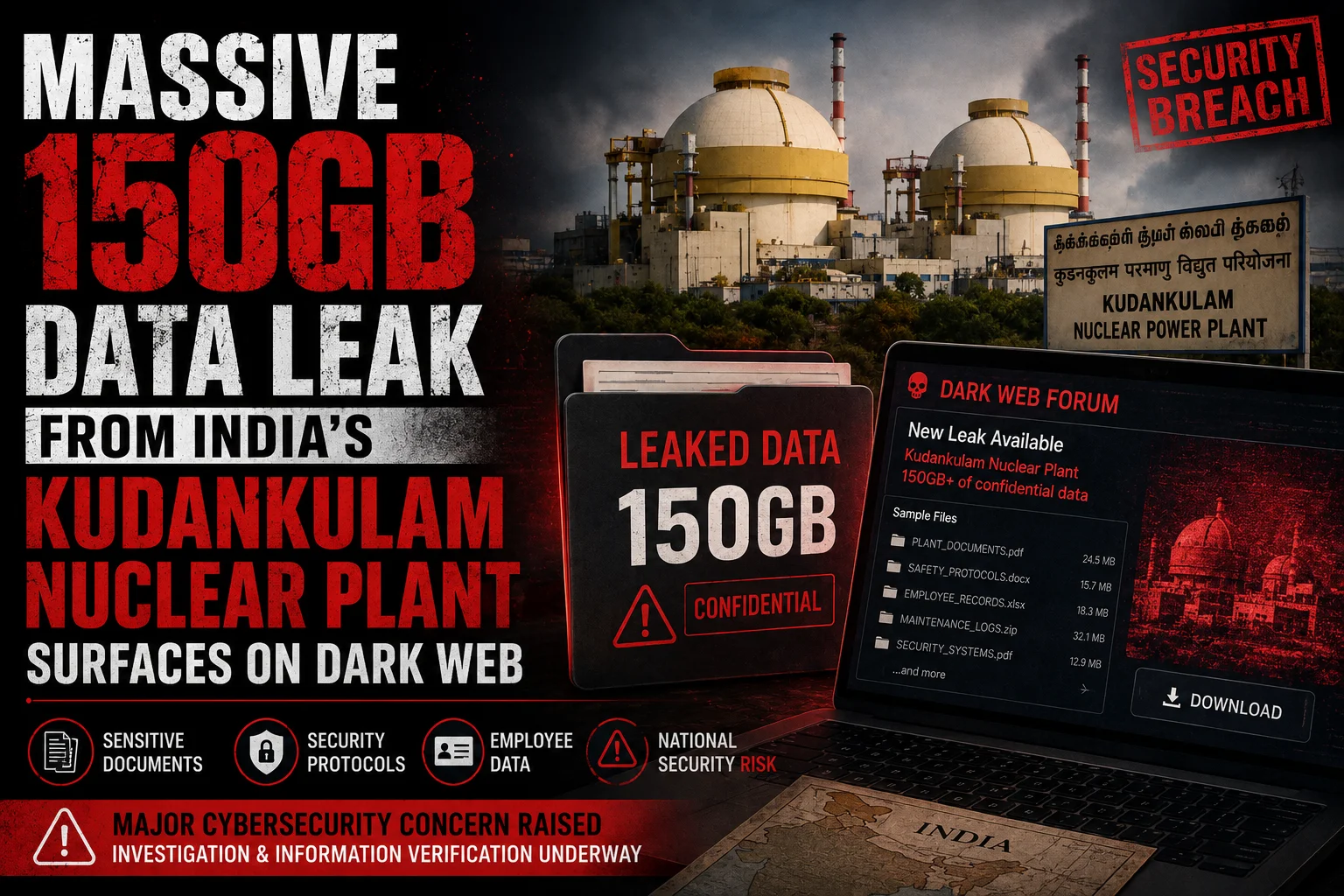
Key Takeaways
- Over 45GB of internal documents, including network diagrams and employee credentials, were reportedly exposed in a fresh 2026 data breach.
- The breach targeted the administrative network, raising fears of lateral movement into the mission-critical control systems.
- This incident marks the most significant security lapse since the 2019 Dtrack malware attack on the same facility.
- Security experts suggest that zero-day vulnerabilities in legacy hardware were exploited by sophisticated APT groups.
The Nightmarish Reality of Nuclear Cyber-Threats
Imagine a scenario where the digital keys to India's most powerful energy hub fall into the wrong hands. This isn't a plot for a Hollywood thriller anymore; it is the reality we are facing in July 2026. The Kudankulam Nuclear Power Plant (KKNPP), which is the crown jewel of India's nuclear energy program, has reportedly suffered a massive data leak. For those who don't know, Kudankulam is massive—it's located in Tamil Nadu and supplies a huge chunk of power to the southern states. When we talk about a breach here, we aren't just talking about some leaked email addresses or passwords. We are talking about the potential exposure of sensitive blueprints, internal network structures, and personnel data that could be used for far more sinister purposes than simple identity theft.
Now, why should you care? Because nuclear plants are classified as Critical Information Infrastructure (CII). If the systems governing these plants are compromised, it's not just a website going down; it's a matter of national security and public safety. In this 2026 breach, the reports suggest that hackers managed to bypass several layers of security to exfiltrate data that was supposed to be behind an 'air-gap'. While the government and NPCIL are working on damage control, the tech community is buzzing with questions about how such a high-profile target could be hit again after the lessons we were supposed to learn back in 2019. Let's break down exactly what happened and why this is a massive deal for every Indian citizen.
The History of Vulnerability: From 2019 to 2026
To understand the gravity of the current situation, we have to look back. In late 2019, it was confirmed that a malware named 'Dtrack' had infected the administrative network of the Kudankulam plant. Back then, the official word was that the actual reactor control systems were safe because they were 'air-gapped'—meaning they weren't connected to the internet. But as we've seen in the years leading up to 2026, the concept of an air-gap is becoming a myth. Hackers have found ways to bridge that gap using infected USB drives, supply chain attacks, or even social engineering. The 2019 incident was supposed to be a wake-up call, leading to a total overhaul of the cybersecurity protocols at all NPCIL facilities.
Fast forward to today, July 15, 2026, and it seems the ghosts of the past have returned. This new breach appears to be much more extensive than the 2019 incident. While the previous attack was mostly about reconnaissance and data gathering, the 2026 leak includes high-resolution network maps and detailed logs of system configurations. This suggests that the attackers didn't just knock on the door; they lived inside the system for months, observing everything before making their move. This kind of persistence is the hallmark of State-Sponsored actors who have the time, money, and technical expertise to crack even the toughest nuts in the digital world.
What Exactly Was Leaked? A Technical Deep Dive
According to the latest reports circulating in the cybersecurity circles, the leaked data includes sensitive PDFs, internal memos, and Excel sheets containing the PII (Personally Identifiable Information) of hundreds of employees. But that’s just the tip of the iceberg. The real danger lies in the technical documents. Sources indicate that internal IP addresses, server configurations, and even details about the SCADA (Supervisory Control and Data Acquisition) systems were part of the dump. SCADA is the software that actually talks to the hardware—the pumps, the valves, and the cooling systems of the nuclear reactor. If an attacker knows the exact version of the SCADA software and the network path to reach it, they are halfway to causing a physical malfunction.
Furthermore, the breach includes 'credential dumps'—usernames and encrypted passwords of high-level administrators. Even if these passwords are changed now, the hackers have a blueprint of how the plant's digital hierarchy is structured. They know who has the authority to bypass certain safety protocols. In the world of cybersecurity, information is the most dangerous weapon. With these network diagrams, a future attack could be targeted with surgical precision, bypassing the administrative network entirely and heading straight for the industrial control systems. This is why the 2026 breach is being treated with such extreme urgency by the Ministry of Electronics and Information Technology (MeitY).
The 'Air-Gap' Myth and Modern Cybersecurity
For years, the standard defense for nuclear plants has been the 'Air-Gap'. The logic is simple: if the computer controlling the reactor isn't connected to the internet, it can't be hacked. However, in 2026, this logic is dangerously outdated. Modern nuclear plants require constant updates, data logging, and remote monitoring to function efficiently. Even if the core system is air-gapped, there are always 'bridge' systems that move data from the secure zone to the administrative zone. These bridges are the primary targets. A simple infected firmware update or a compromised laptop of a maintenance engineer can act as a carrier for malware to jump the air-gap.
We’ve seen this happen globally with attacks like Stuxnet. In the case of Kudankulam, the 2026 breach proves that the administrative network—the one used for emails and daily operations—is still the weakest link. Once hackers get into the admin network, they can sit and wait for a 'pivot point' to appear. This could be a technician connecting a work tablet to both networks or a misconfigured router that accidentally bridges the two worlds. The reality is that no system is 100% unhackable, and relying solely on a physical gap in 2026 is like bringing a sword to a drone fight. We need proactive, AI-driven threat hunting that looks for anomalies in real-time.
Impact on India: National Security and Energy Stability
The impact of this breach goes far beyond the walls of the Kudankulam facility. India is currently pushing for a massive expansion of its nuclear energy capacity to meet its 2030 climate goals. Any sign of weakness in our existing plants can lead to public distrust and international pressure. If the world sees that India's largest nuclear plant can be repeatedly targeted, it raises questions about our ability to manage even more complex facilities in the future. Moreover, there is the risk of 'Energy Terrorism'. In a hypothetical conflict, a cyber-attack that shuts down Kudankulam could plunge entire states like Tamil Nadu, Karnataka, and Kerala into darkness within minutes, crippling the economy and causing chaos.
From a financial perspective, the cost of remediating such a breach is astronomical. We aren't just talking about hiring a few security consultants. It involves a complete forensic audit of every single server, replacing compromised hardware, and retraining thousands of staff members. For the average Indian citizen, this could eventually reflect in higher power tariffs or delayed infrastructure projects. The 2026 breach is a reminder that in the modern era, the front lines of war are not just at the borders but also in the server rooms of our power plants and dams.
How to Protect Critical Infrastructure: The Path Forward
So, what should the government do next? First and foremost, we need a 'Zero Trust' architecture for all critical infrastructure. In a Zero Trust model, the system assumes that every user and every device is a potential threat, even if they are inside the network. Every single action must be authenticated and authorized. Secondly, we need to move away from legacy systems. Many of our power plants still run on old software versions because 'if it ain't broke, don't fix it.' But in cybersecurity, if it's old, it's vulnerable. Regular patching and hardware-level security (like TPM chips) should be mandatory.
Another crucial step is the creation of a dedicated Cyber-Defense Command specifically for energy and water infrastructure. While we have CERT-In, we need a more specialized unit that understands the nuances of Industrial Control Systems (ICS). These systems don't behave like your Windows PC or MacBook; they use different protocols and have different fail-safes. Training a new generation of 'Cyber-Warriors' who are experts in both nuclear engineering and high-level hacking is the only way India can stay ahead of the curve in 2026 and beyond.
TamilTech's Honest Take: Is it Time to Panic?
Here’s what we think at TamilTech. No, it’s not time to panic, but it is definitely time to be worried and demand accountability. We often see these news reports, read them, and forget them a few days later. But when it involves a nuclear plant, the stakes are too high for complacency. The 2026 Kudankulam breach isn't just a technical glitch; it's a systemic failure. We need more transparency from NPCIL. While they can't reveal everything for security reasons, the public deserves to know that the core reactor safety systems are truly isolated and that a 'remote meltdown' is technically impossible.
As tech enthusiasts, we also need to understand that cybersecurity is a collective responsibility. Many of these breaches start with a simple phishing email sent to a low-level employee. If that employee isn't trained to spot a fake login page, the whole multi-billion dollar facility is at risk. This incident should serve as a lesson for all Indian companies and government bodies: stop treating cybersecurity as an afterthought. It needs to be the foundation upon which everything else is built. We'll be keeping a close eye on the forensic reports coming out of this breach. Stay tuned to TamilTech for more updates on this developing story.





Comments (0)
Be the first to comment!