


Key Takeaways
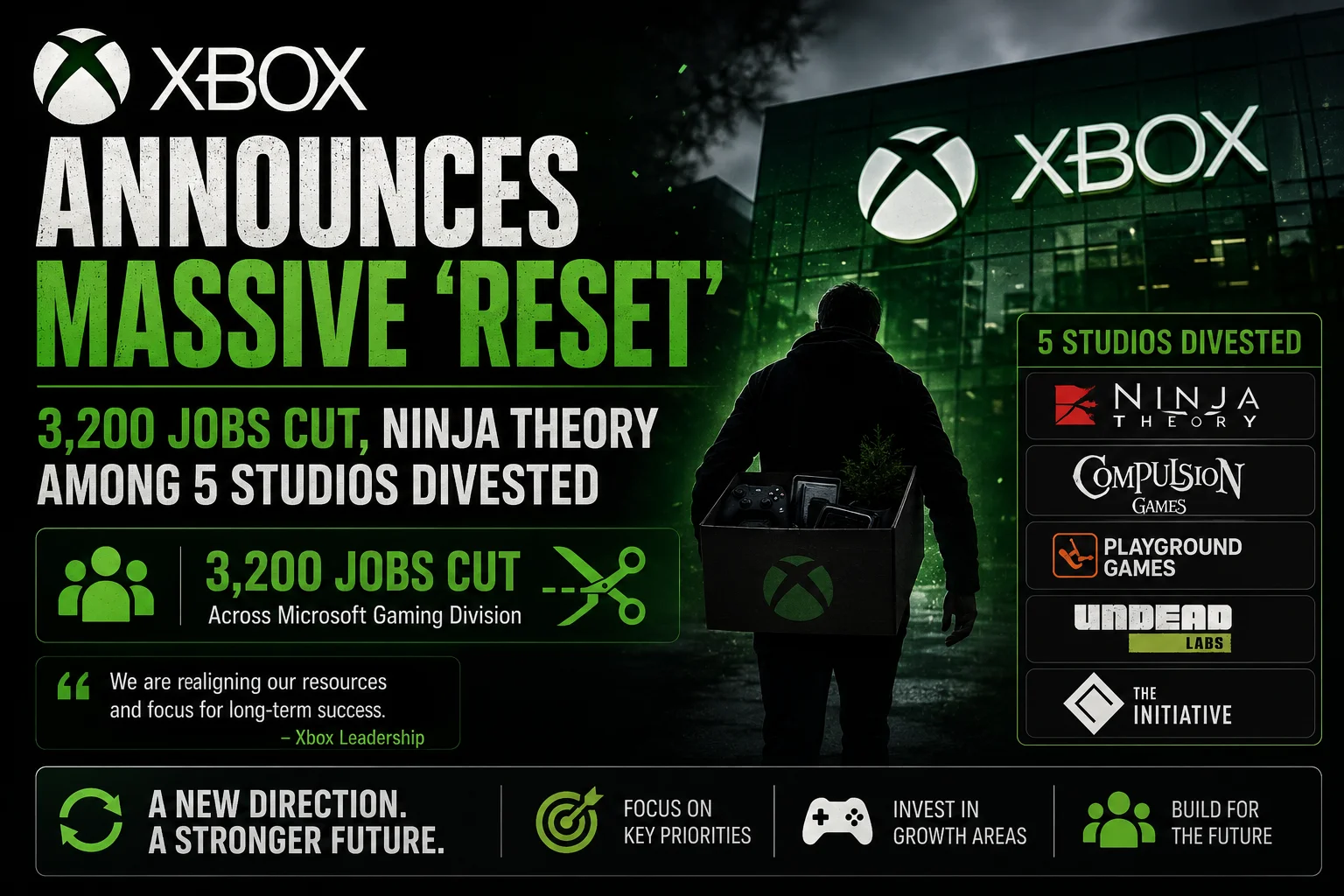
- Xbox CEO Asha Sharma confirmed a massive 'reset' involving 3,200 job cuts across the gaming division in July 2026.
- Five major development studios, including the renowned Ninja Theory (creators of Hellblade), are being divested to streamline the business.
- The move aims to pivot Xbox towards a leaner, cloud-first and mobile-integrated ecosystem rather than traditional hardware dominance.
- In India, this may lead to shifts in local Game Pass pricing and regional marketing support as the company consolidates its global footprint.
- The bottom line: Xbox is aggressively cutting costs to justify the massive Activision-Blizzard acquisition debt and focus on high-margin services.
The Bombshell Memo: Xbox Enters a New Era
The gaming world woke up to a massive shock this Monday morning. Xbox CEO Asha Sharma has officially sent out an internal memo that is now rippling through the entire industry. As of July 2026, Microsoft’s gaming arm is entering what she calls a "fundamental reset." This isn't just a minor tweak or a seasonal adjustment; it is a surgical overhaul of how Xbox operates. For years, we’ve seen Xbox on a buying spree, gobbling up studios like Bethesda and Activision Blizzard. But now, the bill has come due, and the strategy has flipped 180 degrees. The focus is no longer on how many studios Xbox owns, but how profitable and lean the remaining ones can be.
We have been tracking the rumors of a shakeup for months, but the scale of this announcement is unprecedented. Cutting 3,200 jobs is a devastating blow to the creative talent that builds the games we love. These layoffs are hitting hardware engineering, marketing, and even core development teams. Asha Sharma’s memo suggests that the current path was unsustainable in a 2026 economy where cloud infrastructure costs are soaring and hardware sales for the Series X/S successors haven't hit the projected targets. This is a clear signal that the 'growth at all costs' era of the 2020s is officially over.
The Divestment List: Why Ninja Theory?
Perhaps the most shocking part of the memo is the divestment of five internal studios. To "divest" basically means Xbox is selling them off or spinning them out as independent entities. The headline name here is Ninja Theory. After the critical success of the Hellblade series, fans expected Ninja Theory to be a permanent pillar of the Xbox Game Studios family. Seeing them on the chopping block alongside four other mid-sized studios is a sign that Xbox is moving away from 'prestige' single-player experiences that take years to develop and don't necessarily drive long-term Game Pass subscriptions.
The other four studios haven't been fully named yet, but insiders suggest they include smaller teams focused on experimental titles. This move is about focus. Xbox wants to double down on 'evergreen' franchises—the ones that people play for years, like Call of Duty, Minecraft, and Halo. By letting go of studios like Ninja Theory, Xbox is essentially saying they no longer want to fund the high-risk, high-reward cycle of AAA single-player development for studios that aren't hitting massive commercial numbers. It’s a cold, hard business move that values the balance sheet over creative legacy.
The 3,200 Job Cuts: A Human Cost
While the corporate jargon uses words like "streamlining" and "optimizing," the reality is that 3,200 families are being affected today. This follows the previous rounds of layoffs we saw in 2024 and 2025, making this one of the largest cumulative workforce reductions in gaming history. The memo states that these cuts are necessary to "align our resources with our 2027-2030 roadmap." It seems Xbox over-hired during the post-acquisition integration of Activision, and now they are trimming the fat—except in this case, the 'fat' includes talented developers, testers, and community managers.
The impact will be felt across the globe, from the Redmond headquarters to satellite offices in Europe and Asia. We are hearing reports that entire departments related to physical disc production and retail logistics are being gutted. This confirms our long-standing theory that Xbox is moving toward an all-digital future. If you’re a fan of physical media, this news is the final nail in the coffin. The 2026 Xbox is a service-oriented company, not a box-selling company.
Impact on the Indian Gaming Market
What does this mean for us in India? Currently, Xbox has a dedicated following here, primarily due to the affordability of Game Pass. However, with 3,200 jobs being cut and five studios leaving the fold, the localized support for Indian languages and regional pricing might be at risk. We’ve already seen Game Pass Ultimate prices creep up to nearly ₹850 per month in 2026. If the goal is "streamlining," don't be surprised if we see further price hikes to offset the loss of hardware revenue.
Furthermore, the divestment of studios means fewer 'day one' exclusives from diverse creative voices. If Ninja Theory goes independent or gets bought by another publisher (like Sony or Tencent), their future games might not land on Game Pass at launch. For the Indian gamer who relies on Game Pass to play expensive AAA titles, the value proposition is starting to look a bit shaky. On the flip side, if Xbox focuses more on mobile gaming through their new unified store, it might actually benefit the millions of mobile gamers in India who use high-end devices but don't own a console.
TamilTech’s Verdict: A Risky Gamble
Honestly, we think this is a massive gamble by Microsoft. They spent over $70 billion to acquire the biggest names in gaming, and now they are shrinking the very foundation that was supposed to support that growth. Asha Sharma is playing a dangerous game. By cutting 3,200 people and losing studios like Ninja Theory, they risk losing the 'soul' of Xbox. Gamers buy consoles and subscribe to services for the games, not for the corporate efficiency reports.
However, from a business perspective, it's clear what they are doing. They are transforming Xbox into the "Netflix of Gaming" in the truest sense—focusing on a few massive hits and a platform that works on every screen (TVs, phones, handhelds) without needing a ₹50,000 box. If you are an Xbox fan, the next two years are going to be a rollercoaster. Our advice? Don't get too attached to the hardware. The future of Xbox is in the cloud, and this 'reset' is the painful transition to that reality. Expect more news on which studios are being sold in the coming weeks.





Comments (0)
Be the first to comment!