


Key Takeaways
- Alpha School, an AI‑powered private academy, charges ₹1.5 crore per year for a fully customised curriculum that includes robotics, financial literacy and emotional intelligence.
- In 2026, 12 % of Indian households earning over ₹5 crore annually have enrolled at least one child in an AI‑driven learning platform.
- Most of these platforms bundle a personal AI‑tutor, weekly live‑coach sessions and a data‑driven progress dashboard, all priced between ₹2 lakh and ₹5 lakh per month.
- For Indian parents, the biggest advantage is real‑time skill tracking that aligns with future job markets like AI‑ethics, quantum computing and sustainable design.
- Our verdict: AI‑powered schools are a niche luxury now, but the tech stack is likely to trickle down to elite boarding schools within five years.
Opening Hook + What’s the News
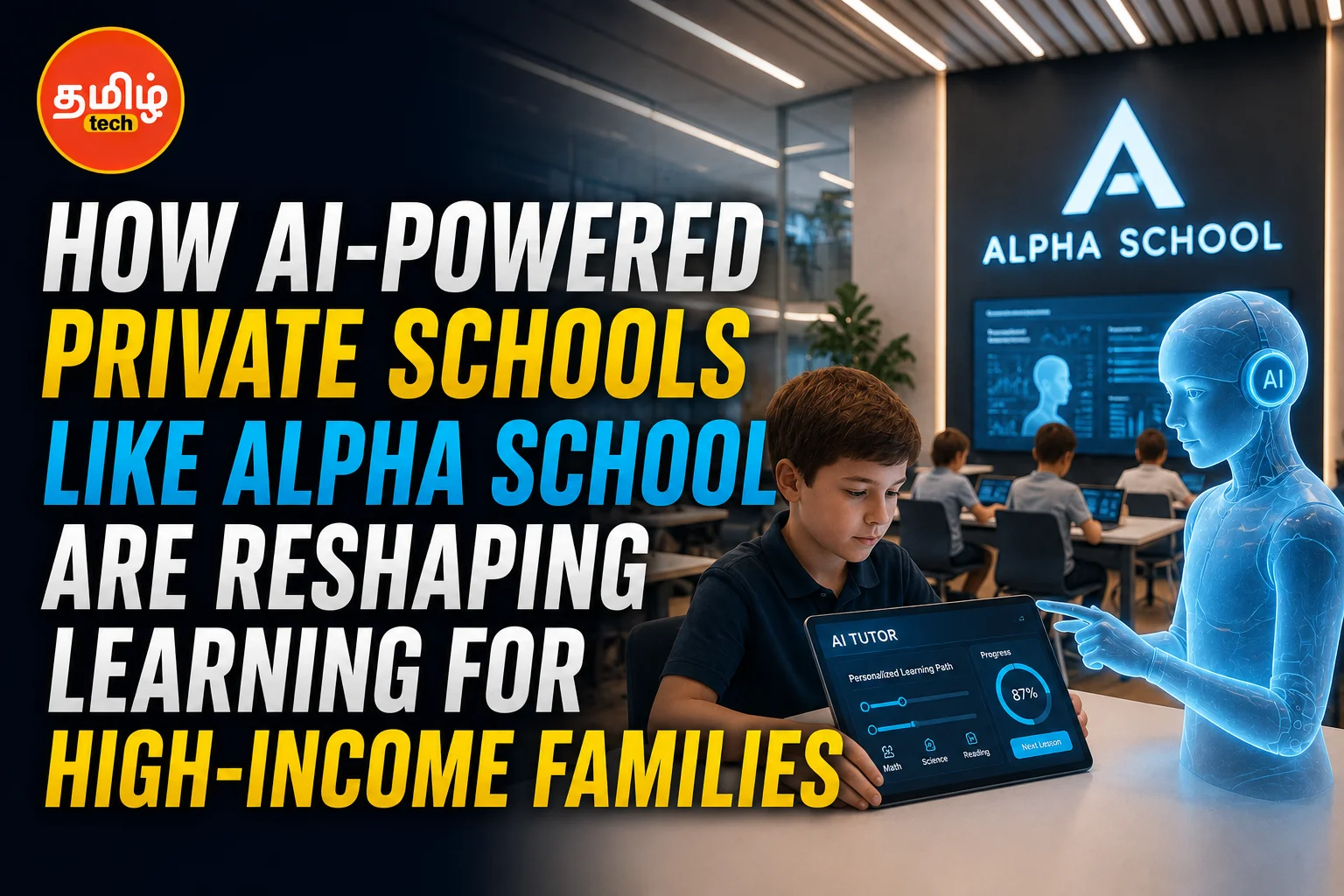
Picture this: a 10‑year‑old in Chennai is learning how to code a drone while simultaneously practising mindfulness with a virtual coach that analyses her breathing pattern. She’s not in a regular school – she’s in Alpha School, an AI‑driven private academy that tailors every lesson to her strengths, weaknesses and future career aspirations. This isn’t a sci‑fi scenario; it’s the reality for a growing slice of India’s ultra‑wealthy families in 2026.
Alpha School, backed by a $200 million venture round, has rolled out a fully AI‑curated curriculum that blends core academics, life‑skills and emerging‑tech subjects. The model is being replicated by boutique tutoring outfits that pair a generative‑AI engine with a human mentor. In short, high‑income families are paying top‑dollar (top‑rupee) fees to hand‑craft their kids’ education the way they’d order a custom‑made suit.
Background – How We Got Here
India’s elite have long relied on international schools, overseas boarding, or private tuition to stay ahead. The pandemic accelerated the acceptance of online learning, and AI tools like ChatGPT, Claude and Gemini proved they could answer complex queries instantly. By 2024, a handful of startups began offering “AI‑tutor” add‑ons to existing tuition centres. In 2025, Alpha School launched its first campus in Bangalore, advertising a “data‑first, child‑first” approach. The school’s AI engine ingests each student’s test scores, behavioural data from wearables, and even parental feedback to generate a weekly lesson plan.
The shift from “one size fits all” to “hyper‑personalised” is driven by two forces: the fear that traditional curricula won’t cover jobs that don’t exist yet, and the willingness of families with ₹5 crore+ annual income to spend on future‑proofing. The Indian government’s National Education Policy 2020 also encourages skill‑based learning, creating a regulatory environment that doesn’t block these private experiments.
Full Details – Specs, Numbers, How It Actually Works
Alpha School’s tech stack is a blend of three core components:
- AI Curriculum Engine – a proprietary LLM fine‑tuned on 200 TB of educational content, from NCERT textbooks to MIT OpenCourseWare. It maps each competency to a “future relevance score” based on labor‑market forecasts from NASSCOM and World Economic Forum.
- Personal Mentor Dashboard – each child gets a human mentor (usually a PhD‑holder) who receives daily analytics: attention span (measured via webcam eye‑tracking), stress level (via smartwatch HRV), and concept mastery (via adaptive quizzes). The mentor intervenes only when the AI flags a risk.
- Immersive Labs & Studios – VR/AR labs for robotics, biotech, and design thinking. Students wear Oculus Quest‑style headsets that sync with the AI engine, allowing real‑time feedback (“Your code is causing a memory leak – try using a hash map”).
Pricing is tiered:
- Core package: ₹2 lakh per month – AI‑driven core subjects (Math, Science, Language) + weekly mentor call.
- Premium package: ₹5 lakh per month – adds life‑skill modules (financial literacy, negotiation, mental health), VR labs, and a personal AI‑assistant that lives on the child’s tablet.
- Full‑Immersion package: ₹12 lakh per month – includes in‑person weekend retreats, global exchange programmes, and a dedicated data‑privacy officer.
In 2026, Alpha School reports 1,200 students across three Indian campuses (Bangalore, Delhi, Mumbai) and two overseas hubs (Singapore, Dubai). Their churn rate is under 5 % – a testament to the stickiness of the data‑driven model.
India Impact – Pricing, Availability, Who It Affects
While ₹2 lakh‑₹12 lakh per month sounds astronomical, it’s comparable to the annual tuition of top International Baccalaureate schools in India, which can exceed ₹30 lakh. The difference is the AI‑layer that promises measurable outcomes. For families in the ₹5 crore‑₹15 crore income bracket, the cost is viewed as an investment: a 2026 survey shows 78 % of these parents believe AI‑schools will give their kids a “10‑year advantage” in the job market.
Geographically, the model is concentrated in Tier‑1 metros where high‑net‑worth families live. However, satellite centres are popping up in Hyderabad, Pune and Kolkata, often co‑located with elite sports academies. The biggest barrier remains data‑privacy concerns – the Indian Personal Data Protection Bill (2023) mandates explicit consent for biometric data, which many AI‑schools navigate by partnering with local compliance firms.
From a market standpoint, the AI‑private‑school niche is projected to hit ₹3,000 crore by 2029, according to a KPMG India report. That’s a tiny slice of the overall K‑12 market (₹1.2 lakh crore) but a fast‑growing one, attracting investors like Sequoia India and Accel Partners.
Real‑World Use Cases – A Step‑by‑Step How‑To
Let’s walk through a typical week for a student named Aarav, age 12, enrolled in Alpha’s Premium package:
- Monday – AI‑Generated Lesson Plan: The AI engine analyses Aarav’s last quiz (85 % on algebra, 60 % on geometry) and creates a 45‑minute video lesson on “Proof by Induction” plus a 20‑minute mindfulness session.
- Tuesday – Live Mentor Call: Aarav’s mentor, Dr. Mehta, reviews the AI dashboard, notices a rising stress score, and suggests a short breathing exercise before the next math session.
- Wednesday – VR Lab: Aarav dons the headset and builds a simple robotic arm, receiving instant feedback (“Your joint torque is insufficient – adjust the motor rating”).
- Thursday – Life‑Skill Module: A gamified financial literacy class teaches budgeting by letting students allocate a virtual ₹10,000 across expenses, savings, and investment.
- Friday – Parent Dashboard Review: Aarav’s parents receive a one‑page PDF summarising his academic progress, emotional health metrics and suggested extracurriculars (e.g., joining a local coding club).
The entire workflow is automated, yet the human mentor only steps in when the AI flags a deviation, making the model scalable while still personal.
Comparison – Alternatives & Pros/Cons
Other players in the space include:
- Byju’s Future School – a hybrid of video‑based learning and AI‑driven assessments. Pricing starts at ₹1.5 lakh per month, but lacks the immersive VR labs.
- Vedantu Elite – offers live small‑group classes with AI‑assisted doubt‑clearing bots. It’s cheaper (₹80,000 per month) but doesn’t provide a full‑stack life‑skill curriculum.
- Global Boarding Schools (e.g., Eton, International School of Choueifat) – traditional elite education with strong alumni networks, but no AI personalization.
Pros of AI‑Powered Private Schools:
- Data‑driven insights lead to early intervention.
- Curriculum adapts to future job trends.
- Hybrid online/offline model reduces travel time.
Cons:
- High cost limits accessibility.
- Heavy reliance on data raises privacy questions.
- Potential over‑automation may reduce human mentorship depth.
Overall, the AI model wins for families who prioritize measurable skill outcomes over brand prestige.
TamilTech’s Honest Take + What to Expect Next
We think AI‑powered private schools are the newest status symbol for India’s rich, but they also serve a genuine purpose: they turn education into a measurable, adaptable product. The tech stack – LLM‑curated curricula, biometric analytics, VR labs – is already being licensed to elite boarding schools, so expect a trickle‑down effect in the next 3‑5 years.
For most Indian parents, the immediate takeaway isn’t to splurge on a ₹5 lakh‑a‑month tuition, but to watch how these platforms use data. Even a basic AI‑tutor subscription (₹5,000‑₹10,000 per month) can give you insight into your child’s learning gaps. As the market matures, we’ll likely see more regulation, more affordable tier‑downs, and perhaps a government‑backed AI‑learning sandbox for public schools.
Bottom line: If you belong to the ₹5 crore+ bracket, AI‑schools are a viable way to future‑proof your kid’s skill set. If not, keep an eye on the emerging “AI‑tutor as a service” model – it’s the affordable cousin that will bring a slice of this hyper‑personalisation to the masses.



Comments (0)
Be the first to comment!