


Key Takeaways
- Zepto is raising ₹1,000 crore in a pre-IPO round, valuing the company at $4.5 billion in July 2026.
- The company has decided to delay its initial public offering (IPO) to late 2026 or early 2027 to focus on sustainable profitability.
- Zepto’s expansion plans involve increasing dark store density in Tier-1 cities and moving into high-margin categories like electronics and beauty.
- The India quick commerce market is now a three-way battle between Zepto, Zomato's Blinkit, and Swiggy Instamart.
The Quick Commerce King is Doubling Down
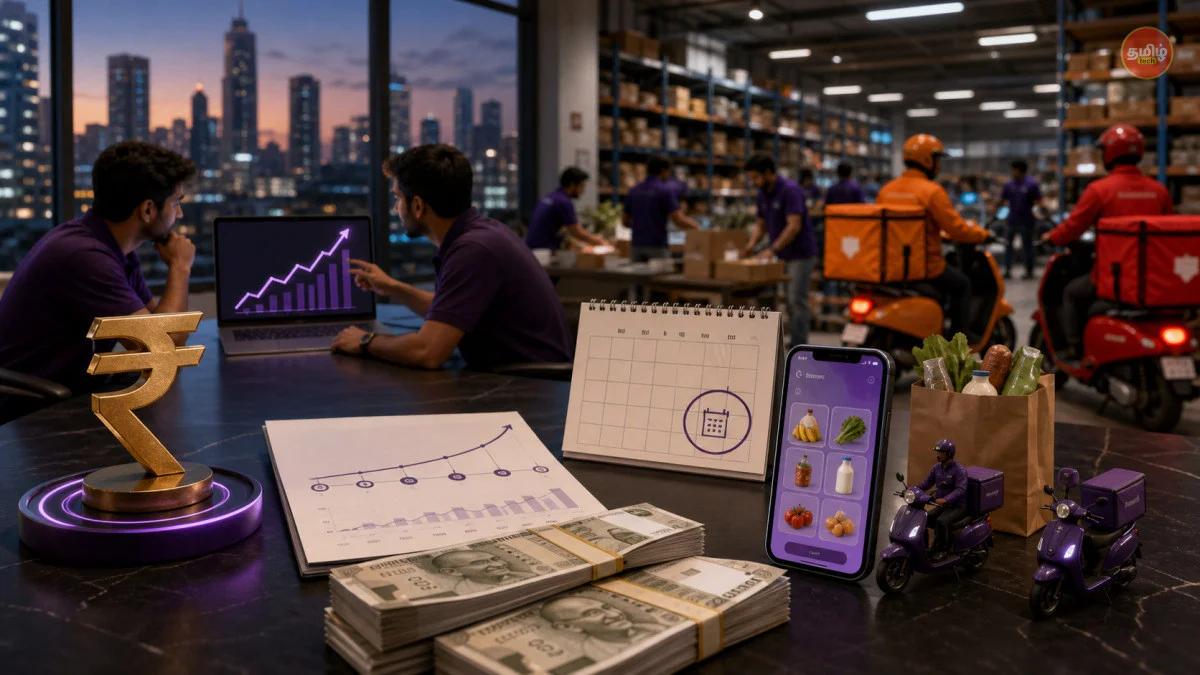
So, here is the big news in the Indian startup ecosystem today. Zepto, the company that basically pioneered the 10-minute delivery craze in India, is back in the headlines. As of July 2026, they are in the final stages of closing a massive ₹1,000 crore funding round. What is even more mind-blowing is the valuation. We are looking at a $4.5 billion valuation for a company that started just a few years ago. If you have been following the tech space, you know that Zepto has been on a fundraising spree, but this pre-IPO round is different. It is not just about survival anymore; it is about absolute market dominance before they finally hit the stock market.
I have been watching Aadit Palicha and his team for a while now, and honestly, the way they have executed their dark store strategy is nothing short of a masterclass. While everyone thought 10-minute delivery was a 'cash-burning' gimmick that would die out after the pandemic, Zepto proved them wrong. In 2026, quick commerce is no longer a luxury; it is a utility for the Indian middle class. Whether it is a packet of milk at 6 AM or a new iPhone launched at midnight, Zepto wants to be the one delivering it to your doorstep before you even finish your coffee. This new round of funding is essentially the war chest they need to fight off the heavyweights like Blinkit and Swiggy.
Why the IPO Delay Makes Perfect Sense
Now, you might be wondering, 'Wait, weren't they supposed to go public by now?' You are right. The original plan was to hit the Dalal Street early this year. However, Zepto has officially pushed its IPO plans to late 2026 or potentially early 2027. Some might see this as a sign of weakness, but if you look at the numbers, it is actually a very smart move. The Indian stock market in 2026 has become very unforgiving towards loss-making tech companies. Investors are no longer buying into 'growth at any cost' stories. They want to see PAT—Profit After Tax. By delaying the IPO, Zepto is giving itself a few more quarters to turn completely profitable at a company-wide level.
Another reason for the delay is the competitive landscape. With Zomato’s Blinkit turning EBITDA positive and Swiggy’s successful IPO last year, the bar has been set very high. Zepto doesn't want to enter the public market as the 'underdog' that is still burning cash. They want to enter as a profitable machine. This ₹1,000 crore cushion allows them to ignore the short-term market noise and focus on optimizing their supply chain. They are currently working on a 'Project Farm-to-Fork' initiative that aims to source perishables directly from farmers, which could significantly boost their margins. If they can show two or three quarters of consistent profit before filing their DRHP, their IPO valuation could easily soar past $6 billion.
The Dark Store Economics of 2026
Let's talk about how Zepto actually makes money, because this is where most people get confused. How can a company survive by delivering a ₹50 bread packet with a ₹15 delivery fee? The secret lies in the 'Dark Store' density. In 2026, Zepto has mastered the art of micro-warehousing. They don't have massive warehouses on the outskirts of the city. Instead, they have hundreds of small 2,000 sq. ft. stores tucked away in the basements of apartments and back alleys of busy markets in cities like Chennai, Bangalore, and Mumbai. This reduces the 'last-mile' distance to less than 2 kilometers, which means a delivery partner can complete 3-4 deliveries in an hour.
Furthermore, Zepto has shifted its focus from just groceries to high-ticket items. If you open the app today, you will see everything from Sony headphones to high-end skincare brands like Minimalist and Plum. The margins on a bottle of face serum are significantly higher than the margins on a kilo of onions. By mixing these high-margin items with daily essentials, Zepto is increasing its Average Order Value (AOV). In 2024, the AOV was around ₹450; in 2026, it has crossed ₹800 in major metros. This shift is what makes the $4.5 billion valuation look realistic to the private equity investors who are pumping in this ₹1,000 crore.
India Impact: What This Means for You and Me
For the average Indian consumer, this funding war is actually great news in the short term. It means more discounts, better availability, and even faster delivery times. Zepto is planning to use a portion of this ₹1,000 crore to expand into Tier-2 cities like Coimbatore, Jaipur, and Lucknow. Until now, quick commerce was mostly a 'Big City' phenomenon, but Zepto believes that the convenience of 10-minute delivery will find takers in smaller cities too, especially among the working youth. We are also seeing a massive push towards EV (Electric Vehicle) fleets. Zepto aims to have 90% of its delivery fleet on electric scooters by the end of 2026 to cut down on fuel costs and meet ESG goals.
However, there is a flip side. As Zepto moves towards profitability, we might see a slow increase in 'Platform Fees' and 'Handling Charges.' We have already seen this with Zomato and Swiggy. Don't be surprised if your 'free delivery' starts requiring a higher minimum order value or a monthly subscription like 'Zepto Pass.' Also, the pressure on delivery partners is immense. In a city like Chennai or Bangalore, navigating traffic to meet a 10-minute deadline is risky. While Zepto claims they don't penalize riders for late deliveries, the algorithm-driven nature of the job keeps the pressure high. As a community, we need to keep an eye on the labor practices of these billion-dollar giants.
TamilTech’s Honest Take: Is Zepto a Good Bet?
So, what do we think about this? Zepto is essentially playing a high-stakes game of poker. By raising more money at a higher valuation and delaying the IPO, they are betting that they can outlast the competition. My honest opinion? Zepto has the best tech stack in the business. Their app is faster, their inventory management is superior, and their 'Zepto Cafe' (ready-to-eat snacks) is a genius move to capture the evening hunger pangs. But, and this is a big but, the competition is not sitting idle. Blinkit has the backing of Zomato’s massive ecosystem, and Swiggy has a loyal user base from its food delivery business.
If you are an investor waiting for the Zepto IPO, my advice is to wait and watch the next two quarterly reports. If they can prove that they can grow without burning a hole in their pocket, Zepto could be the 'Multibagger' of 2027. For the rest of us, let's enjoy the convenience while the venture capital money lasts. The quick commerce landscape in India is changing every single day, and Zepto is right at the center of it. What started as a Stanford dropout's experiment is now a $4.5 billion powerhouse that is redefining how 1.4 billion people shop. Stay tuned to TamilTech for more updates on this!


Comments (0)
Be the first to comment!