


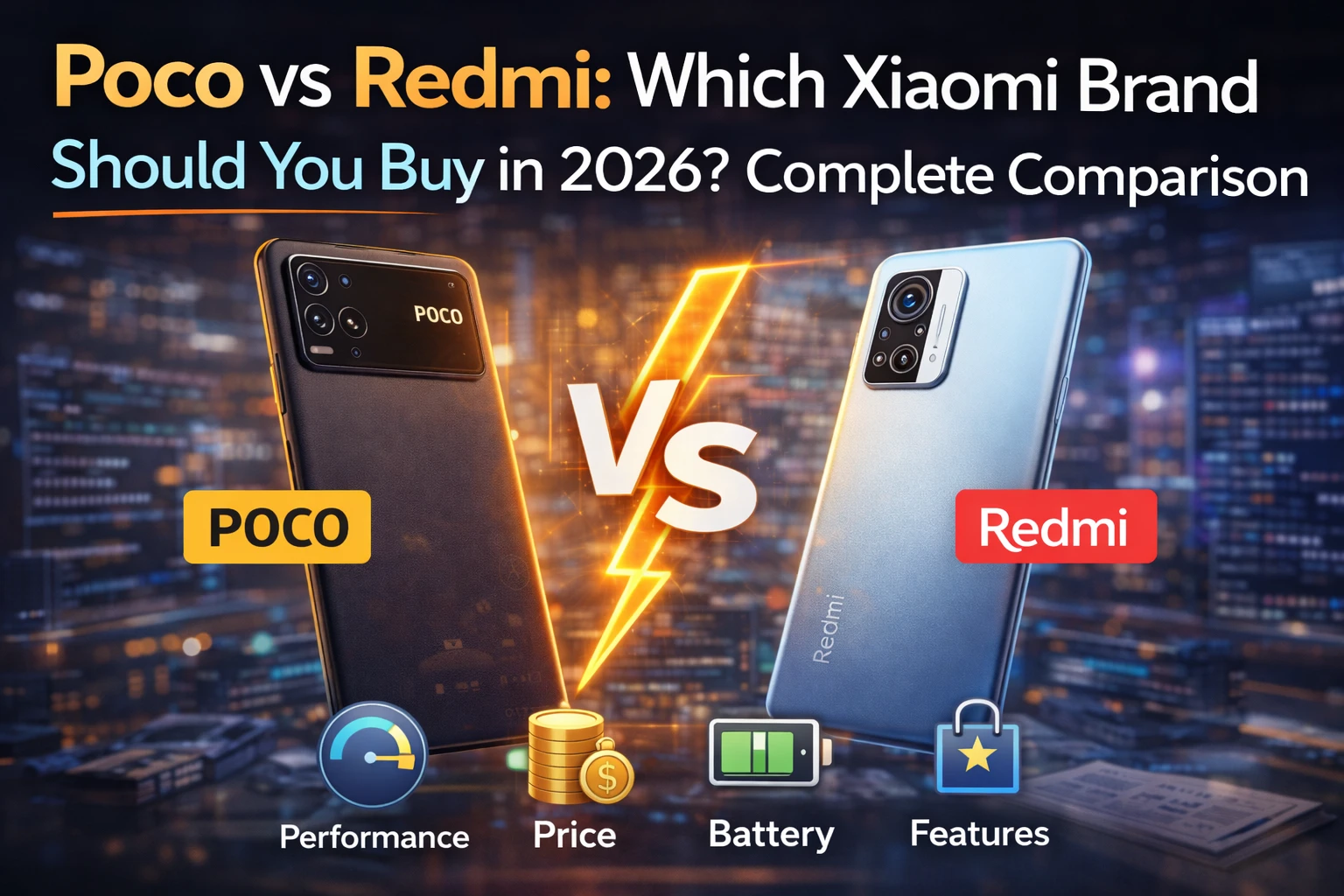
Poco vs Redmi: Xiaomi குடும்ப மோதல்
ஒவ்வொரு வருடமும் லட்சக்கணக்கான Indian phone buyers-ஐ confuse செய்யும் கேள்வி: Poco-வும் Redmi-யும் இரண்டும் Xiaomi-தான் செய்கிறது என்றால், ஏன் separate brands-ஆக இருக்கின்றன? உண்மையில் வேறுபாடு இருக்கிறதா, அல்லது Flipkart-ல் அதிக shelf space dominate செய்ய Xiaomi artificial competition create செய்கிறதா?
Answer நீங்கள் நினைப்பதை விட nuanced-ஆக இருக்கிறது. Poco-வும் Redmi-யும் manufacturing facilities, supply chains, HyperOS software platform-ஐ share செய்தாலும், genuinely different design philosophies, target audiences, product strategies இருக்கின்றன. இந்த differences புரிந்துகொண்டால் பணம் save ஆகும், உங்கள் needs-க்கு fit ஆகும் phone pick செய்யலாம்.
History: ஏன் இரண்டு Brands?
Redmi: Original Budget King
Redmi 2013-ல் Xiaomi-ன் budget sub-brand-ஆக ஆரம்பித்தது. விரைவில் India-வின் bestselling smartphone brand ஆனது. Redmi Note series மட்டும் globally 300 மில்லியனுக்கும் மேல் sell ஆகியிருக்கிறது. Redmi-ன் DNA mass-market appeal — reliable phones, good cameras, big batteries, attractive designs, competition-ஐ விட குறைந்த price.
Poco: Frustration-ல் இருந்து பிறந்தது
2018-ல் Pocophone F1 launch ஆனது — flagship Snapdragon 845 performance ₹20,999-க்கு. Competing flagships-ன் half price. Young, tech-savvy Indian buyers raw performance-ஐ camera specs-ஐ விட அதிகம் care செய்கிறார்கள் என்ற insight-ல் இருந்து இந்த brand பிறந்தது. Fastest chip possible, lowest price — plastic body-யும் average camera-வும் accept செய்ய ready.
2020-ல் Poco independent brand ஆனது (Xiaomi umbrella-க்கு கீழ் இருந்தாலும்), own product team, marketing, sales channels-உடன்.
Brand Philosophy Comparison
| Aspect | Poco | Redmi |
|---|---|---|
| Target User | Performance-focused, gamers, tech enthusiasts | Mass market, camera-focused, general consumers |
| Design | Function over form — performance first | Balanced — attractive design + good specs |
| Camera Strategy | Good enough primary sensor, fewer lenses | Best possible camera at each price |
| Chipset Choice | Budget-ல் fastest chip always | Balanced chip — fast enough, power efficient |
| Pricing | Aggressive — ₹1,000-2,000 cheaper | Competitive ஆனால் always cheapest அல்ல |
| Build | Functional — plastic frames | Premium-feeling — glass backs, metal frames |
Build Quality and Design
இந்த category-ல் Redmi decisively win செய்கிறது. Redmi Note 14 Pro-வில் Gorilla Glass Victus 2, glass back panel textured finish-உடன், IP64 dust and water resistance. Poco X7 குறைந்த price-ல் Gorilla Glass 5, polycarbonate frame, IP54 splash resistance கொடுக்கிறது.
Case போடுபவர்கள் (பெரும்பாலான Indian buyers அப்படிதான்) — இந்த difference largely irrelevant. Case இல்லாமல் phone use செய்பவர்களுக்கு Redmi phones consistently more premium feel தரும்.
Camera Quality
Redmi-ன் biggest advantage இது. Redmi Note 14 Pro-வில் 200MP Samsung HP3 sensor + OIS. Poco X7-ல் 50MP Sony IMX882. Daylight-ல் Redmi dramatically more detail capture செய்கிறது — photo-வை zoom செய்து 3 meters தூரத்தில் இருக்கும் மரத்தின் individual leaves பார்க்கலாம். Poco excellent 50MP shots தரும், ஆனால் resolution advantage-ஐ match செய்ய முடியாது.
Low light-ல் gap significantly narrow ஆகிறது. IMX882-ன் larger individual pixels (2.0μm binned) more light capture செய்கிறது, cleaner night shots less noise-உடன் வரும். HP3-ன் 200MP advantage shrink ஆகும் — low light-ல் 12.5MP-க்கு bin down ஆகிறது.
Verdict: Photography enthusiasts-க்கு Redmi, "good enough" shooters-க்கு Poco.
Performance and Gaming
இங்கே Poco hard-ஆக fight back செய்கிறது. Poco consistently fastest available chipset pick செய்கிறது, better processor squeeze செய்ய மற்ற features sacrifice செய்கிறது. Poco X7-ன் Dimensity 7300 Ultra higher sustained performance-க்கு tune செய்யப்பட்டுள்ளது — எங்கள் 30-minute Genshin Impact test-ல் 58fps average maintain செய்தது, Redmi Note 14 Pro 54fps.
Poco phones-ல் gaming-க்கு better thermal management இருக்கிறது. X7 larger vapor chamber use செய்கிறது, extended gaming sessions-ல் phone noticeably cooler-ஆக இருக்கும். 30 minutes-க்கு மேல் game செய்பவர்களுக்கு — less frame drops, less throttling.
Verdict: Gaming-ம் sustained heavy workloads-ம் Poco win.
HyperOS Experience
இரண்டு brands-ம் HyperOS 2.0 run செய்கின்றன, Android 15 based. Core experience identical — same settings app, same notification shade, same app drawer. Subtle differences:
- Bloatware: Poco phones-ல் slightly more pre-installed apps (GetApps, Mi Video, Mi Browser, ShareMe). Redmi phones-ல் fewer pre-installs ஆனால் more system-level ads.
- Updates: Redmi Note series HyperOS updates-ஐ equivalent Poco model-ஐ விட 2-4 weeks முன்னதாக receive செய்கிறது — higher sales volume காரணமாக testing priority கிடைக்கிறது.
Verdict: Essentially tied. இரண்டிலும் bloatware இருக்கிறது, இரண்டிலும் disable செய்யலாம்.
After-Sales Service
இரண்டு brands-ம் same Xiaomi service centers share செய்கின்றன — India முழுவதும் 2,000+ authorized service centers. Spare parts, repair costs, warranty terms identical.
ஒரே difference: Poco phones-க்கு parts-க்கான turnaround time occasionally longer — lower-volume components use செய்வதால். Redmi Note 14 Pro screen crack ஆனால் same-day replace ஆகலாம் (service centers stock வைக்கும்). Poco X7 screen-க்கு 2-3 days ஆகலாம் — order செய்ய வேண்டியிருக்கும்.
Price-Tier Matchups
Budget: Poco M7 (₹10,999) vs Redmi 14 (₹10,499)
| Spec | Poco M7 | Redmi 14 |
|---|---|---|
| Processor | Dimensity 7025 Ultra | Helio G100 |
| Display | 6.67" 120Hz LCD | 6.67" 90Hz AMOLED |
| Camera | 50MP | 108MP |
| Battery | 5,500mAh, 33W | 5,160mAh, 33W |
Poco M7 choose செய்யுங்கள்: Faster processor-ம் bigger battery-ம் வேண்டும் என்றால்.
Redmi 14 choose செய்யுங்கள்: AMOLED display-ம் higher-resolution camera-வும் வேண்டும் என்றால்.
Mid-Range: Poco X7 (₹15,999) vs Redmi Note 14 Pro (₹17,999)
Poco X7: Gaming performance முக்கியம், ₹2,000 save செய்ய வேண்டும், "good enough" cameras போதும்.
Redmi Note 14 Pro: Camera quality top priority, better build quality வேண்டும், small premium pay செய்ய okay.
Flagship: Poco F7 (₹27,999) vs Redmi K80 (₹29,999)
| Spec | Poco F7 | Redmi K80 |
|---|---|---|
| Processor | Snapdragon 8s Gen 4 | Snapdragon 8 Gen 3 |
| Display | 6.67" 1.5K 120Hz | 6.67" 2K 120Hz |
| Camera | 50MP Sony LYT-900 | 50MP LYT-808 + 50MP telephoto |
| Battery | 5,800mAh, 90W | 6,550mAh, 120W |
Poco F7: Newer Snapdragon 8s Gen 4 chip வேண்டும், ₹2,000 save செய்ய வேண்டும்.
Redmi K80: Bigger battery, 2K display, telephoto camera, 120W charging வேண்டும்.
Final Recommendation
Poco வாங்குங்கள்: Performance per rupee முக்கியம், regularly game செய்வீர்கள், best camera வேண்டாம், fastest chip lowest price-ல் வேண்டும், functional-over-premium design okay.
Redmi வாங்குங்கள்: Camera quality important, premium look and feel வேண்டும், build quality-ம் water resistance-ம் value செய்வீர்கள், balanced overall experience prefer செய்வீர்கள், faster software updates வேண்டும்.
இரண்டு brands-ம் excellent value தருகின்றன. இங்கே "wrong" choice கூட very good phone தான். ஆனால் இந்த differences புரிந்துகொண்டால் — நீங்கள் actually buy செய்யும் phone-ல் happier-ஆக இருப்பீர்கள்.





கருத்துகள் (0)
Be the first to comment!