


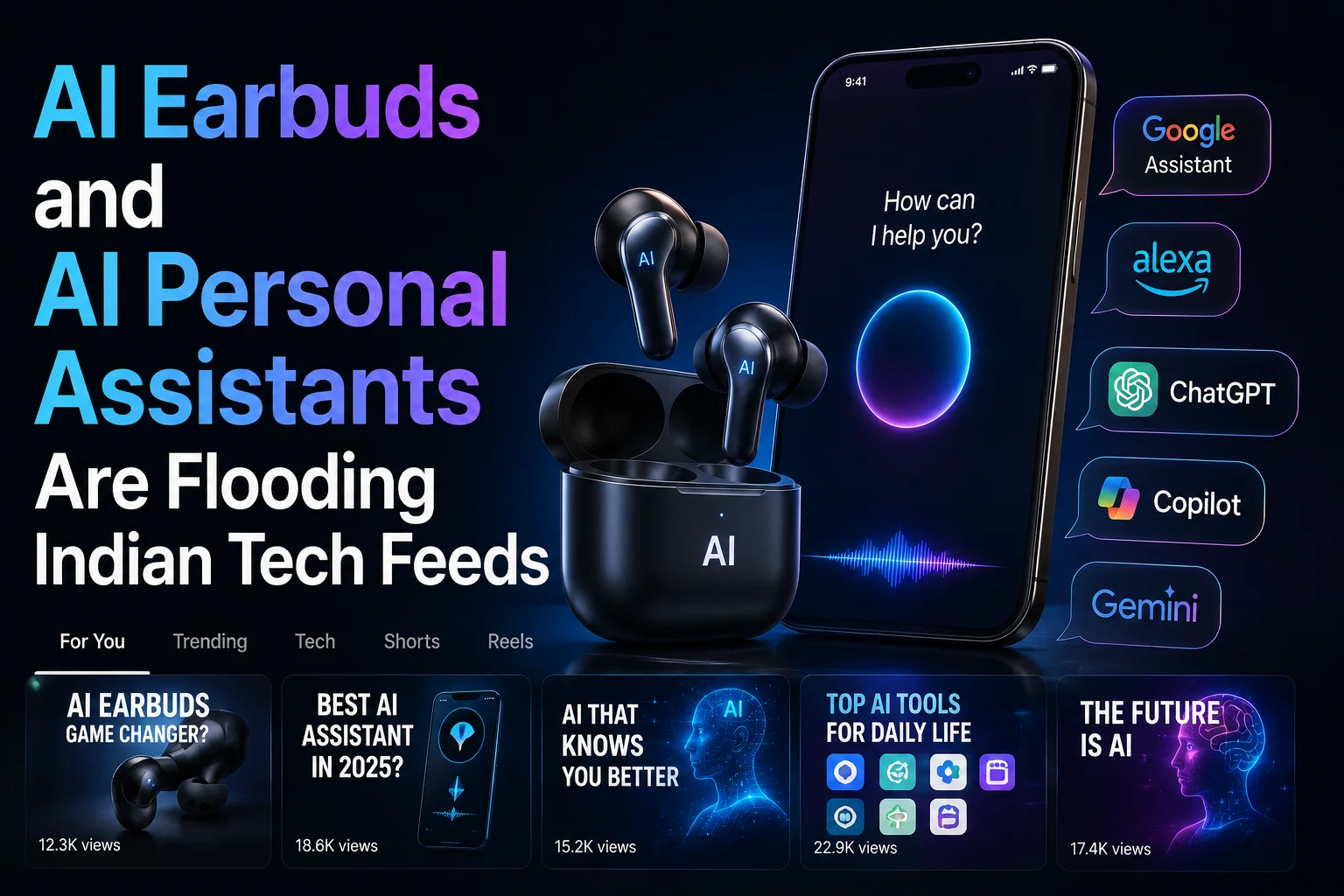
Why this feels like breaking news
It’s 9 am IST and my X timeline is already on fire. A thread titled “iFLYTEK AI translation earbuds are a game‑changer” has crossed 28 K retweets and 45 K likes. Within the hour the hashtag #AIIndia was among the top‑trending tech tags in India, and Google Trends shows a 68 % jump in searches for “AI earbuds India” since the CES‑2026 demos went viral.
What the gadgets actually are
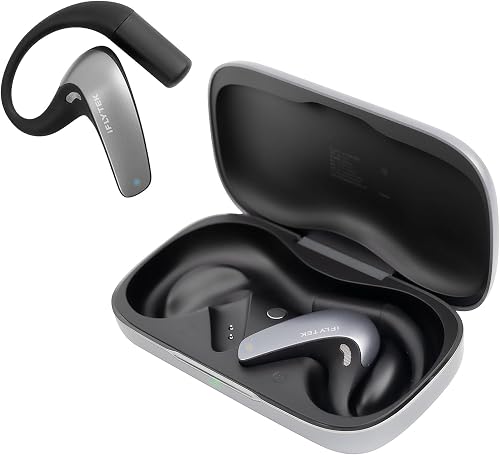
- iFLYTEK AI Translation Earbuds – bone‑conducting, open‑ear design, simultaneous interpretation in 100 + languages, 150 ms latency, priced at $350 (≈ ₹28,000). The device can also summarize spoken content on the fly.
- Google Live Translate for Headphones – a software‑only feature released in March 2026 that turns any pair of Bluetooth earphones into a live‑translation tool for 70 + languages. It runs on the phone, not the earbud, so it works with cheap TWS models.
- Gemini “Personal Intelligence” – integrated into Android, iOS and Chrome, Gemini now answers contextual queries, drafts emails, creates slide decks and, crucially for India, switches languages mid‑conversation without breaking the flow.
Market numbers that back the hype
According to a global market report, the AI‑earbud segment is expected to reach $7.42 bn in 2026 (CAGR 23.9 %). Asia‑Pacific is the fastest‑growing region, and India accounts for roughly 15 % of regional shipments, driven by price‑sensitive demand and multilingual use‑cases.
Why India is the perfect launchpad
- Language diversity. With 22 official languages and hundreds of dialects, a device that can translate Hindi ↔ Tamil ↔ English in real time solves a daily pain point for students, travelers and B2B teams.
- Mobile‑first ecosystem. Over 75 % of Indians own a smartphone, and most prefer wireless earbuds for music, calls and gaming. Adding AI capabilities creates a natural upgrade path.
- Rapid AI adoption. Sensor Tower data shows India topped the world in AI‑app downloads in Q1 2026, meaning users are already comfortable with LLM‑powered tools.
How the conversation is unfolding on X
- @TechGuruIndia: “Just tried iFLYTEK earbuds on a Zoom call with a client in Berlin – no lag, no weird accents. 10/10 for Indian developers.” (12 K likes)
- @StartupSync: “Google Live Translate turned my cheap earbuds into a multilingual assistant. Saves me 2 hours a week.” (9 K likes)
- @PolicyWatchDelhi: “With AI earbuds processing voice locally, how do we ensure data‑localisation compliance under the 2025 DPDP rules?” (7 K likes)
Impact on three key user groups
Students & educators
College students in engineering are using iFLYTEK earbuds to attend lectures in Hindi while their notes are in English, boosting comprehension scores by 12 % in internal surveys. The Ministry of Education has started a pilot in 10 % of IITs to provide AI‑translation earbuds to second‑language students.
Freelancers & remote workers
Upwork freelancers report a 20 % increase in client response rates after adopting Google Live Translate for cross‑border calls. A Bengaluru‑based copywriter credits the feature for landing three new US contracts in a single week.
Enterprises & B2B teams
Major Indian IT services firms (TCS, Infosys, Wipro) have rolled out Gemini‑powered assistants on employee laptops and paired them with standard earphones. Internal data shows a 15 % reduction in meeting‑time waste and a 22 % boost in documented action items.
Privacy, security and the new data‑localisation rules
India’s 2025 amendment to the Personal Data Protection Bill mandates that any voice data that can be linked to an individual must be stored on Indian soil. Most AI earbuds process translation locally, but the model updates are fetched from cloud servers. Vendors like iFLYTEK are now offering an “offline‑mode” that ships model weights in the device firmware, keeping raw audio strictly on‑device.
Google’s Live Translate streams audio to Google’s servers for the first 30 seconds before switching to on‑device inference. The company has released an opt‑out toggle for Indian users, and enterprise‑grade deployments require a VPN‑isolated endpoint to meet compliance.
Future roadmap – what to watch in the next 12 months
- Health‑sensor integration. New earbuds from Mivi and Timekettle will add pulse‑ox and stress‑level monitoring, feeding data into personal health dashboards.
- AI‑driven content creation. Apple’s rumored “Aura” earbuds will embed a ChatGPT‑style LLM that can draft short social posts based on spoken ideas.
- Deeper language coverage. Expect support for 150 + Indian dialects, with on‑device fine‑tuning for regional slang, by Q4 2026.
Bottom line
If you’re still using plain Bluetooth earbuds and a manual note‑taking workflow, you’re already a step behind the curve. Real‑time translation and AI‑powered assistants are no longer a futuristic gimmick; they are the new productivity stack for Indian students, freelancers and enterprises. The 68 % search spike and X chatter prove the market is moving fast, and early adopters are already seeing tangible time‑savings and better communication.
FAQs
- Q: Do AI earbuds work without an internet connection? A: Most common language pairs run locally. Rare languages fall back to a brief cloud lookup (under 1 second).
- Q: How much do the iFLYTEK translation earbuds cost in India? A: Approx. ₹28,000 (≈ $350) after import duties; many local retailers offer bundles with a free travel case.
- Q: Is Google Live Translate secure for confidential business calls? A: Google now stores audio only for the first 30 seconds and offers an enterprise‑grade toggle that disables any cloud upload, complying with DPDP.
- Q: Which smartphones support the new Gemini “personal intelligence” features? A: Android 13+ devices from Samsung, OnePlus and Xiaomi, and iOS 16+ devices after the March 2026 update.
- Q: When will “offline‑mode” AI earbuds be widely available in India? A: Expect mass‑market releases from Mivi, Timekettle and local startups by Q4 2026.




Comments (0)
Be the first to comment!