


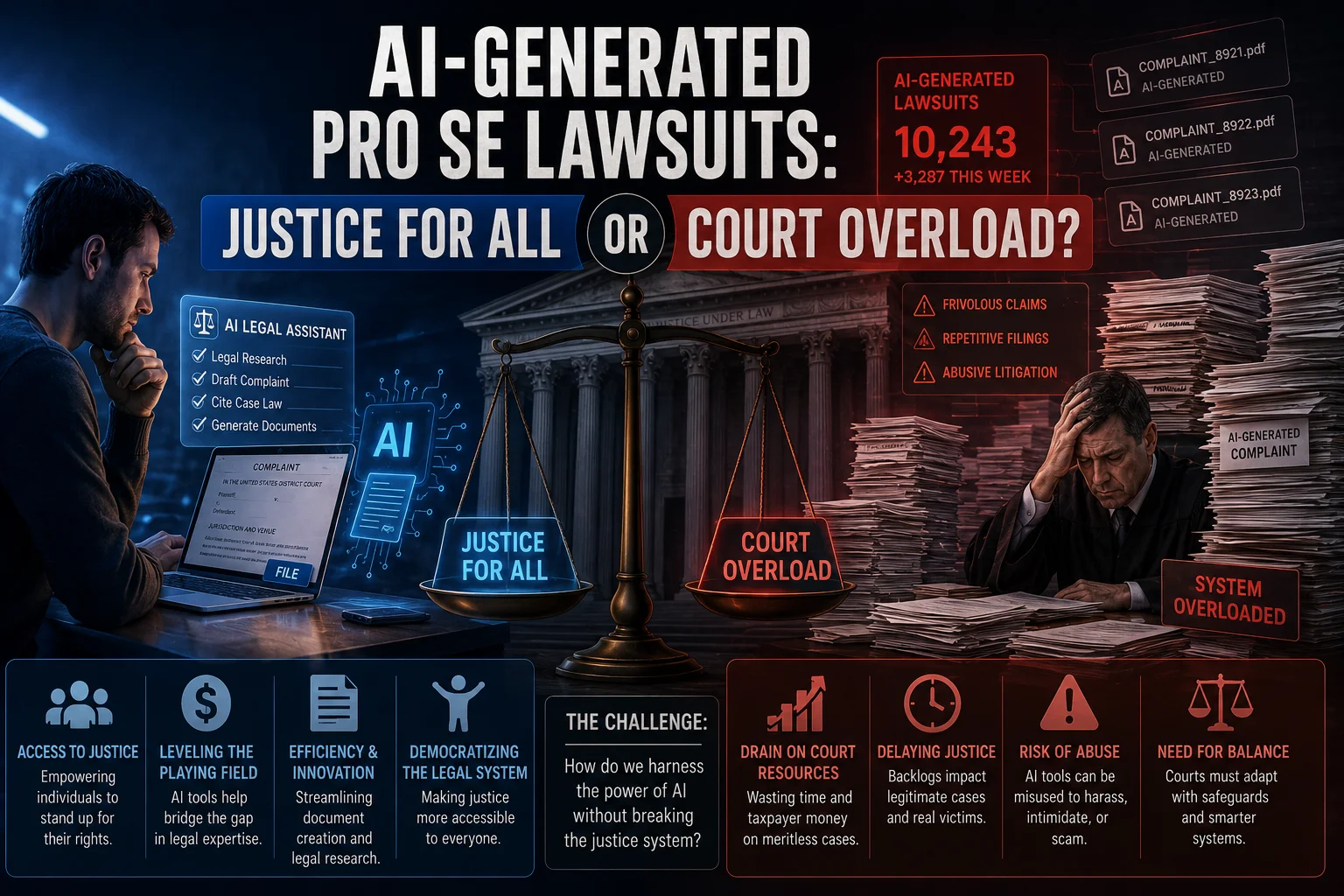
What’s happening?
Imagine you have a dispute with your landlord, but you can’t afford a lawyer. You fire up ChatGPT, type a few facts, and within minutes you have a ready‑to‑file petition. That’s the new reality for thousands of self‑represented litigants – the so‑called “pro se” filers – thanks to AI‑powered legal drafting platforms.
These tools take a plain‑English description of your case, plug it into a large language model, and spit out a court‑ready document that follows the local procedural rules. In the U.S., the number of AI‑generated pro se filings has jumped by more than 300% in the last year. In India, early pilots in Delhi and Bengaluru show a similar surge.
Why it matters
Access to justice has always been a big gap in India. The Legal Services Authority estimates that over 80% of civil cases are handled by people without any legal representation. AI can shrink that gap by:
- Providing instant, low‑cost drafting.
- Helping users understand procedural jargon.
- Standardising pleadings so courts don’t have to deal with messy, illegible hand‑written submissions.
But there’s a flip side. Courts are already overloaded – the Supreme Court has a backlog of over 5 million cases, and High Courts are seeing docket growth of 12% YoY. More filings, even if better formatted, mean more work for clerks, judges, and bench‑workers.
Numbers you need to know
• In the past 12 months, AI‑drafted petitions accounted for roughly 15,000 filings in the Delhi High Court – a 4‑fold increase from the previous year.
• Similar tools in Bengaluru reported a 22% rise in “self‑filed” civil suits during the same period.
• The average time to get a first‑hearing reduced by 1.5 days for AI‑generated cases, simply because the paperwork was cleaner.
Indian context – how it hits home
Most Indian users are still on feature phones or low‑end smartphones, but the rise of affordable data (thanks to Jio and Airtel) makes cloud‑based AI accessible even in tier‑2 towns. Legal‑tech startups are bundling AI drafting with WhatsApp‑style chat interfaces, so you don’t need a fancy UI – just a text message.
State governments are also paying attention. Karnataka’s e‑Courts project plans to integrate AI‑assisted filing into its portal by next year, hoping to cut down on manual entry errors.
TamilTech‑ஓட கருத்து
We love the idea of democratising law – anyone should be able to raise a claim without breaking the bank. However, the Indian judiciary isn’t built for a sudden influx of tech‑savvy filers. If the trend continues without proper safeguards, we could see:
- Judges spending more time filtering low‑quality AI drafts that miss crucial facts.
- Increased frivolous filings, because the barrier to entry is practically zero.
- Potential bias in the AI models if they’re trained on a narrow set of past judgments.
That’s why we think a hybrid approach is needed: AI as a first‑draft assistant, followed by a quick review from a paralegal or a low‑cost legal aid service.
What can you do today?
If you’re thinking of using an AI tool for a small claim, follow these steps:
- Gather all documents – rent agreement, bills, screenshots – and keep them digital.
- Use a reputable platform that states it complies with Indian court rules (most will mention “e‑Filing compatibility”).
- Run the generated draft through a free legal‑aid clinic or a senior law student – a 10‑minute sanity check can catch missing sections.
- Upload the final PDF to the respective court’s e‑Filing portal (most state courts now accept PDFs).
For lawyers, this is a wake‑up call to offer “AI‑review” services – think of it as a new revenue stream that helps you stay relevant.
What’s next?
Within the next 12‑18 months we’ll likely see:
- Regulatory guidelines from the Ministry of Law & Justice on AI‑generated legal documents.
- Integration of AI drafting directly into the e‑Court portals, with built‑in validation checks.
- More pilot projects in Tamil Nadu, where the state’s high court is already experimenting with AI‑assisted case management.
Bottom line: AI is opening the courtroom doors for everyone, but the system needs to adapt fast. If you’re a tech‑savvy citizen, use the tools wisely. If you’re a judge or court admin, start planning for the AI wave now – otherwise you’ll be drowning in perfectly formatted, but still messy, petitions.





Comments (0)
Be the first to comment!