


Key Takeaways
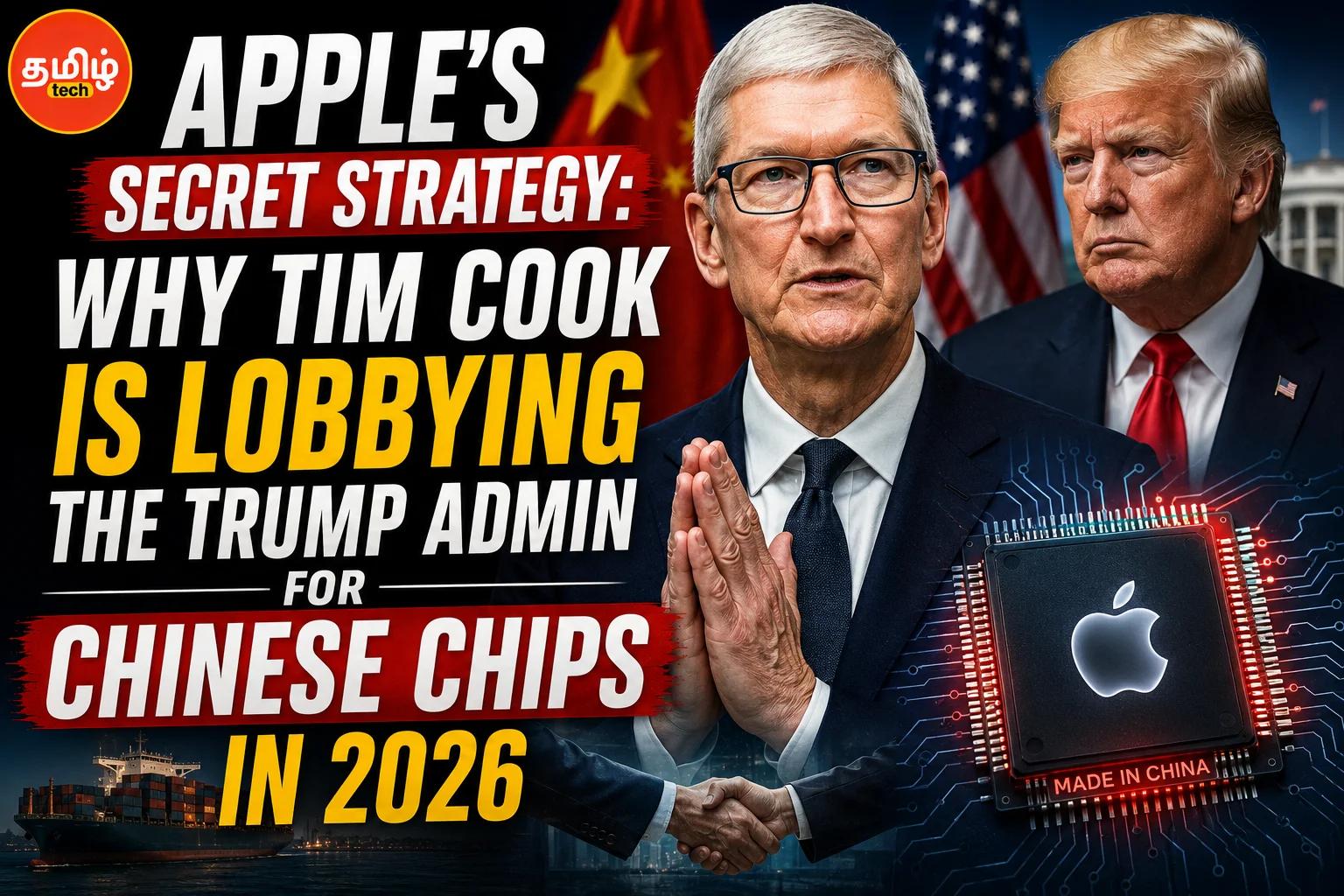
- Apple is officially lobbying the Trump administration for a special license to purchase DRAM chips from CXMT, a US-blacklisted Chinese company.
- Global memory chip prices have surged by nearly 40% in early 2026 due to supply chain constraints and AI server demands.
- If successful, this move could prevent the upcoming iPhone 18 series from seeing a massive price hike in India, keeping the base model around the ₹79,900 mark.
- This highlights a major shift where Apple is prioritizing cost-efficiency over the ongoing US-China tech war to maintain its profit margins.
The Billion-Dollar Chip Problem
Look, if you have been tracking smartphone prices lately, you know things are getting expensive. Whether it is the latest Samsung flagship or the newest iPhone, the price tags are hitting the ceiling. But behind the scenes, Apple is fighting a massive battle that most users don't see. As of June 2026, the cost of components—specifically memory chips or DRAM—has hit an all-time high. To solve this, Apple has reportedly gone straight to the top, lobbying the Trump administration for a special waiver. They want to buy chips from CXMT (ChangXin Memory Technologies), a Chinese giant that is currently on the US blacklist. This isn't just about business; it is about survival in a market where consumers are tired of year-on-year price hikes.
Why is Apple doing this now? Well, the situation is simple. The existing suppliers like Samsung and SK Hynix are prioritizing AI servers and high-end data centers because that is where the big money is. This has left smartphone manufacturers in a tight spot with limited supply and sky-high prices. By bringing CXMT into the mix, Apple can diversify its supply chain and, more importantly, get these chips at a much lower rate. If they don't get this clearance, we might see the iPhone 18 Pro Max crossing the ₹2,00,000 mark in India, which is something even the most hardcore Apple fans might find hard to swallow.
Who is CXMT and Why are They Blacklisted?
For those who aren't tech nerds, CXMT is basically China's best shot at beating the world in memory technology. They produce DRAM (Dynamic Random Access Memory), which is the 'short-term memory' your phone uses to run apps smoothly. However, because of the ongoing trade tensions, the US government put them on the Entity List, claiming national security concerns and the risk of technology theft. This means US companies—or companies using US tech like Apple—cannot buy from them without a specific 'hall pass' from the government. Apple is now asking for that exact pass, arguing that these chips are standard components and don't pose a security threat.
The irony here is thick. On one hand, the US government wants to decouple from Chinese tech. On the other hand, the biggest US company needs Chinese tech to keep its products affordable for the global market. Apple's argument is likely focused on the fact that CXMT's technology has matured significantly in 2026, making their LPDDR5X chips just as good as what you find in current flagships but at a 20-30% lower cost. If Apple gets the green light, it sets a massive precedent for other tech giants who are also feeling the burn of high component costs.
The Trump Factor in 2026
Lobbying the Trump administration is a calculated move by Tim Cook. We have seen this before—Tim Cook has a history of maintaining a direct line of communication with the President to negotiate tariffs and trade exemptions. In 2026, the political landscape is all about 'America First,' but Apple is likely pitching this as a way to keep an American company dominant in the global smartphone market. If Apple's margins drop, their stock drops, and that's bad for the US economy. It is a high-stakes poker game where the chips are literally... well, chips.
We are hearing that Apple is promising to increase its investments in US-based manufacturing or assembly in exchange for this CXMT clearance. This 'give and take' is classic Apple strategy. They know they can't just ask for a favor; they have to offer something that fits the current administration's narrative. For us users, this political drama determines whether the next iPhone we buy will have a 'Made in India' or 'Assembled in Vietnam' sticker and how much of our hard-earned money it will cost.
What This Means for the Indian Market
Now, let's talk about India. India is currently Apple's biggest growth engine. With Tata and Foxconn expanding local production in Tamil Nadu and Karnataka, the cost of manufacturing has slightly stabilized. However, the 'Bill of Materials' (BoM) is what really dictates the final price. If Apple has to buy expensive memory from Korea, the savings from Indian labor are wiped out. Sourcing from CXMT would allow Apple to keep the iPhone 18 and the rumored iPhone SE 4 (2026 edition) at very aggressive price points in India.
Imagine an iPhone SE 4 with flagship-level RAM but at a price of ₹45,000 because the memory was sourced cheaply from CXMT. That would be a game-changer for the Indian mid-premium segment, directly challenging OnePlus and Samsung's A-series. Furthermore, if Apple gets this clearance, it might encourage more component suppliers to set up warehouses closer to India, further boosting the local ecosystem. We at TamilTech believe that while this is a global corporate move, the real winners will be consumers in price-sensitive markets like ours.
Safety and Privacy: Should You Be Worried?
One question we always get is: "If my iPhone has a Chinese chip, is my data safe?" It is important to understand that a memory chip (DRAM) is very different from a processor (SoC). The processor is the 'brain' that handles data and security. The RAM is just a temporary storage space. It is extremely difficult, if not impossible, to hide 'spyware' in a DRAM chip that could bypass Apple's own Secure Enclave and iOS security layers. Apple is famous for its vertical integration, meaning they control every bit of software that touches the hardware.
So, from a technical standpoint, having a CXMT chip instead of a Samsung chip doesn't make your phone less secure. It is more about the politics of where the money goes rather than where your data goes. Apple has been using various Chinese components for years, from batteries to display panels from BOE, and their security track record has remained solid. We don't think this move, if it happens, should stop you from buying an iPhone based on privacy concerns.
TamilTech's Take: A Necessary Evil?
At TamilTech, we think this is a smart, albeit controversial, move by Apple. The reality of 2026 is that tech is no longer just about who has the fastest processor; it is about who can manage their supply chain the best. Apple knows that if they raise prices again, people will simply stop upgrading or switch to more affordable Android alternatives that are already using these cheaper Chinese components. By lobbying for CXMT chips, Apple is essentially trying to level the playing field.
What should you expect next? Keep an eye on the upcoming iPhone 18 launch. If the prices remain the same as the iPhone 17 despite the global inflation we are seeing in 2026, you can bet that Tim Cook's lobbying was successful. We expect a decision from the US government by the end of Q3 2026. Until then, if you are planning to buy an iPhone, maybe wait a few months to see how this supply chain drama unfolds. It could be the difference between a 'reasonable' price and a 'ridiculous' one.



Comments (0)
Be the first to comment!