


Key Takeaways
- Bodhan AI, with AI4Bharat, released four Indic AI models on 2 September 2026 covering OCR, translation and speech.
- The stack is built for messy Indian classroom reality: Hindi mixed with English loan words, scanned tables and handwritten equations.
- Goal is simple - make educational and official content searchable, translatable across Indian languages, and readable aloud.
- Direct boost for digital education platforms, state board digitisation and accessibility for non-English first users.
- Fits India's push for Indic AI that works beyond clean English text and high-resource languages.
What's the news
Bodhan AI has released four new Indic models aimed squarely at OCR, translation and speech tasks across Indian languages. The drop landed on 2 September 2026 and comes in collaboration with AI4Bharat, the IIT Madras-linked effort that has been grinding away at Indic NLP for years.
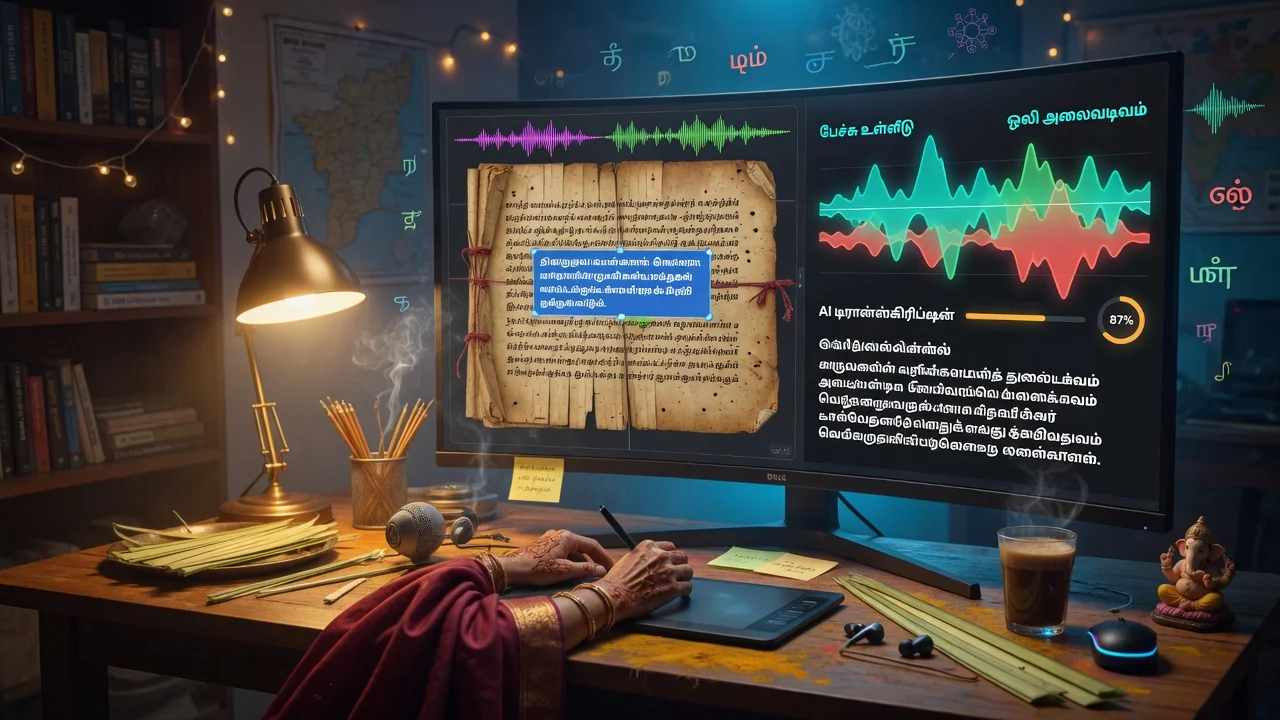
This is not another generic LLM announcement. The pitch is practical. A Hindi lesson rarely stays pure Hindi. Teachers throw in English terms, textbooks arrive as scanned PDFs with tables, and students scribble equations by hand. Turning that pile into something you can search, translate into Tamil or Kannada, or hear as audio needs specialised models, not one mega chatbot.
Bodhan AI and AI4Bharat packaged four models to cover those exact jobs. The timing matters. Indian edtech, government digitisation drives and regional content creators have been stuck with tools that choke on Devanagari, Tamil script or code-mixed sentences. These models try to close that gap.
Details
The four models target three core pain points that show up every day in Indian classrooms and offices: optical character recognition for printed and handwritten Indic text, machine translation that respects loan words and mixed scripts, and speech systems that can listen and talk back in Indian languages.
OCR is the first wall. Indian textbooks and old government circulars live as scans. Tables break most OCR engines. Handwritten maths and science notes break them even harder. An Indic-focused OCR model that can handle Devanagari, Tamil, Telugu and friends plus the English bits floating inside them is the difference between a searchable archive and a dead PDF folder.
Translation comes next. Pure Hindi to pure English is one problem. Real Indian text is code-mixed. A sentence can start in Hindi, drop an English technical term, then finish with a Sanskrit-derived word. Most commercial translators still butcher that. Models trained on Indic data and loan-word patterns stand a better chance of keeping meaning intact when a Class 10 science chapter moves from Hindi to Marathi or Bengali.
Speech rounds it out. Automatic speech recognition that understands Indian accents and code-switching, plus text-to-speech that sounds natural in regional languages, lets the same content become audio. That matters for students who learn better by listening, for visually impaired users, and for low-literacy adults who still need access to government schemes or exam material.
None of this requires inventing flashy model names. The value sits in the job they do together: scan, understand, translate, speak. Bodhan AI positioned the release as a toolkit for exactly that pipeline rather than a single do-everything model.
India impact
India runs on languages that big Silicon Valley models still treat as afterthoughts. Hindi, Tamil, Telugu, Kannada, Malayalam, Bengali, Marathi and the rest carry school education, state government paperwork and a huge chunk of YouTube and WhatsApp traffic. English-first tools leave millions behind.
These models hit three live Indian needs. First, school and college digitisation. State boards and platforms like DIKSHA keep pushing digital textbooks. If OCR fails on a scanned Kerala board physics chapter or a handwritten Uttar Pradesh board solution, the whole digital promise collapses. Better Indic OCR makes those libraries actually usable.
Second, translation at scale for education and public services. A good Indic translation stack lets a central scheme document or an NCERT chapter move into multiple languages without losing technical terms. That is how you get real multilingual coverage instead of English PDFs with a token Hindi cover page.
Third, speech access. Millions of Indians prefer voice. Jio-powered smartphones put data in almost every pocket, but reading dense text on a small screen is still painful. Clean Indic ASR and TTS turn the same content into audio lessons or voice search over scanned notes. Accessibility for visually impaired students jumps as a side effect.
Startups building edtech, legal-tech or agri-advisory apps in Indian languages get a ready toolkit instead of training everything from scratch. Government digitisation projects that currently rely on expensive human transcription or weak OCR also gain a cheaper path. The India angle is not abstract AI pride. It is whether a Class 8 kid in a Tier-3 town can search her own language notes and hear the explanation.
Use cases
Picture a coaching institute in Kota. Teachers photograph handwritten solutions that mix Hindi instructions with English physics terms and equations. An Indic OCR model pulls the text out. A translation model turns it into Tamil for students from Chennai. A speech model reads it aloud for revision while they travel. That full loop was painful or impossible with generic tools.
State education departments scanning decades of board exam papers and textbooks face the same stack. Tables of marks, footnotes in regional scripts, and English scientific names all need to survive OCR. Once the text is clean, translation and TTS open the archive to more students.
Content creators on YouTube and Instagram who teach in Hindi or Telugu can auto-generate accurate captions and dubbed versions for other Indian languages. Product teams at Flipkart or local marketplaces can improve search over Hindi and Tamil product descriptions that currently get mangled. Even UPI and banking apps that push vernacular support benefit from better speech interfaces that understand mixed language commands.
NGOs and government helplines that explain schemes in local languages can turn written FAQs into spoken answers. Farmers listening to weather or crop advisories in their own language get clearer audio. The models do not magically solve every dialect, but they raise the floor for anyone building on Indic text and voice.
Developers get another practical win. Instead of stitching five half-working open models and praying, they can start with a coherent OCR-translation-speech set tuned for Indian scripts and code-mixing. That shortens the path from prototype to something that survives real classroom or field data.
Honest take
This release is useful. Indian AI has spent years watching English-centric models get all the oxygen while Indic work stayed underfunded and under-benchmarked. Bodhan AI and AI4Bharat shipping a focused quartet for OCR, translation and speech is the right kind of boring progress. Classroom mess is the correct test case. If the models handle loan words, tables and handwriting without collapsing, they will earn their keep.
Still, keep the hype in check. Indic languages vary wildly in data quality and script complexity. What works cleanly for Hindi may struggle with low-resource languages or heavy dialect speech. Handwritten equations remain a nightmare even for English OCR; Indic versions will need continuous fine-tuning on real student notebooks, not just clean printed books.
Adoption will decide everything. Open weights, clear licences, easy APIs and honest benchmarks against existing Indic baselines matter more than launch posts. Schools and state IT departments move slowly. If the models stay locked behind complicated enterprise deals, the classroom impact stays theoretical. If developers can actually plug them into DIKSHA-style apps, WhatsApp bots and offline-first tools that run on mid-range Android phones, then we get real usage.
Compute cost and latency also count. A beautiful OCR model that needs a fat GPU for every page scan will not fly in a government school computer lab. Edge-friendly versions or smart distillation will separate the tools that stay in demos from the ones that reach students.
Net: this is a solid step for Indic AI that targets actual Indian friction instead of chasing English leaderboard glory. Watch how the models perform on messy real data over the next few months. If they hold up, Bodhan AI and AI4Bharat just made life easier for every teacher, student and builder stuck with scanned PDFs and code-mixed notes. If they do not, we are back to the same old gap between announcement and usable Indian-language tech.

Comments (0)
Be the first to comment!