


Key Takeaways
- PhonePe serves over 400 million registered users across India.
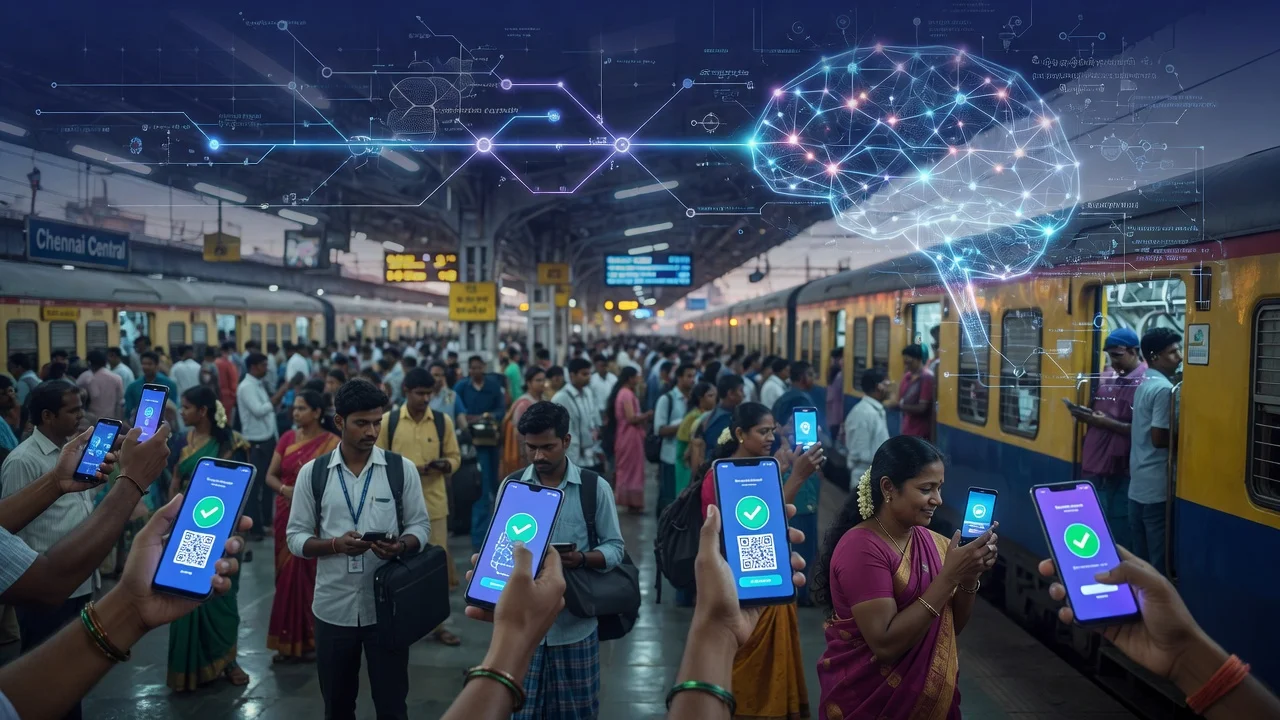
- Rahul Chari said AI will drive the next wave of UPI innovation for a billion Indians.
- The company is investing in real‑time fraud detection models that cut false declines by around 30%.
- PhonePe is experimenting with voice‑based UPI in Hindi, Tamil and Telugu.
- AI‑powered credit scoring aims to bring informal workers into formal credit.
What's the news
In a recent ET Tech video, Rahul Chari, President of PhonePe, outlined how the payments platform is weaving artificial intelligence into every layer of its service. He emphasized that the goal is not just to improve internal efficiency but to create tangible benefits for the hundreds of millions of Indians who rely on PhonePe for daily transactions. The discussion came at a time when UPI volumes are crossing ten billion transactions a month, and competitors are also racing to embed AI.
Details
Chari explained that PhonePe’s AI strategy rests on three pillars: security, personalization, and financial inclusion. On the security front, the company has deployed machine‑learning models that monitor transaction patterns in real time. These models flag anomalous behaviour and help reduce fraudulent attempts while keeping genuine payments flowing. According to internal tests, the false‑decline rate has dropped by roughly thirty percent since the models were tuned.
For personalization, PhonePe uses recommendation engines that suggest relevant bill payments, recharge offers, or investment products based on a user’s past activity. The engine runs on lightweight models that can operate on low‑end smartphones, ensuring that the experience stays smooth even in regions with limited connectivity.
The third pillar focuses on extending credit to underserved segments. By analysing alternative data such as UPI transaction frequency, utility bill payments, and mobile‑usage patterns, PhonePe’s scoring model can generate a creditworthiness estimate for users who lack a formal banking history. Chari noted that early pilots have shown a two‑fold increase in loan approval rates among gig‑economy workers.
India impact
The ripple effects of PhonePe’s AI push are already visible in the broader digital payments ecosystem. Faster fraud detection means lower losses for merchants, which in turn can translate to more competitive pricing for consumers. Personalized offers encourage users to adopt additional financial services, boosting overall financial literacy.
From a macro perspective, extending credit to informal workers aligns with the government’s push for a less‑cash economy. When small‑scale vendors gain access to short‑term working capital, they can invest in inventory, hire helpers, or weather seasonal dips. This contributes to higher productivity at the grassroots level.
Also, the voice‑based UPI experiments aim to break language barriers. By allowing users to initiate payments in their mother tongue, PhonePe hopes to bring the next wave of adopters from rural and semi‑urban areas where English proficiency is lower. Early feedback indicates a completion rate that is twenty percent higher than the traditional text‑based flow for first‑time users.
Use cases
Let’s look at a few concrete scenarios where PhonePe’s AI is already at work.
- Fraud shield: A user attempts to transfer money to a new beneficiary. The AI model checks the device fingerprint, recent location, and past transaction velocity. If the score crosses a risk threshold, the transaction is held for additional verification, protecting both sender and receiver.
- Offer engine: After paying a utility bill, the app shows a cashback offer on a grocery app that the user has used before. The suggestion is generated in real time, increasing the chance of conversion.
- Voice UPI: A farmer in Tamil Nadu says "Send five hundred rupees to my brother" in Tamil. The speech‑to‑text engine converts the utterance, validates the beneficiary via contacts, and prompts for confirmation. The whole flow completes within fifteen seconds.
- Credit line: A delivery partner who receives daily earnings via UPI gets a notification offering a micro‑loan of ten thousand rupees. The offer is based on his weekly transaction volume and repayment history on previous micro‑loans.
Honest take
PhonePe’s AI roadmap is ambitious, yet it faces the usual challenges that accompany large‑scale machine‑learning deployments. Data quality remains a concern; inconsistent transaction tags can confuse models, especially when users switch between multiple bank apps. Privacy advocates will continue to scrutinise how alternative data is stored and used for credit scoring.
On the upside, the company’s focus on lightweight models that run on modest hardware shows a genuine intention to serve the mass market, not just the urban elite. If the pilots scale successfully, PhonePe could set a benchmark for how fintechs in emerging markets harness AI responsibly.
Overall, the vision of "AI for a Billion Indians" feels less like a marketing slogan and more like a concrete plan that could reshape the way everyday Indians interact with money.
Future outlook
Looking ahead, PhonePe plans to expand its AI‑driven credit engine to include more alternative data sources such as mobile recharge patterns and e‑commerce browsing behaviour, while maintaining strict consent mechanisms. The company also aims to roll out voice‑based UPI to additional Indian languages including Bengali, Marathi and Gujarati by the end of 2027. In the security domain, deeper integration with device‑level biometrics is being explored to further reduce false positives without compromising speed.





Comments (0)
Be the first to comment!