


Key Takeaways
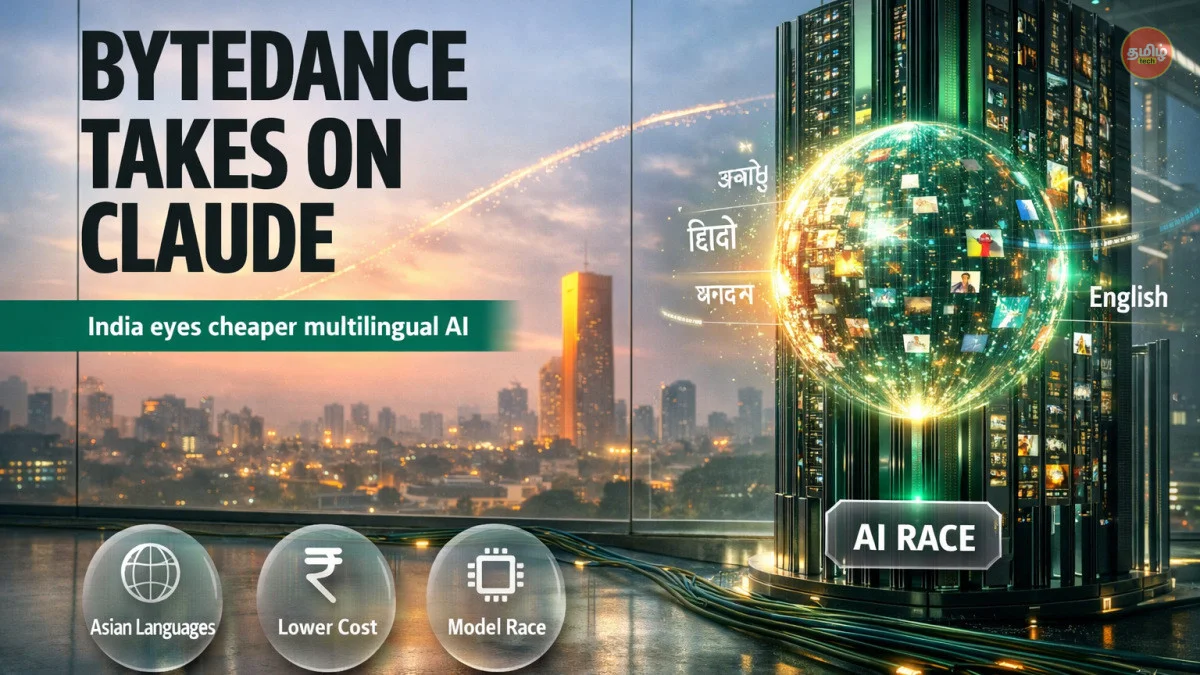
- ByteDance is developing a massive AI model to rival Anthropic's Claude series, leveraging its TikTok user data and computational resources
- The project could democratize advanced AI capabilities for Indian startups and developers at competitive pricing
- ByteDance's model might focus on multilingual capabilities, particularly strong in Asian languages including Tamil, Hindi, and Bengali
- This move intensifies the AI race between Chinese tech giants and Western AI companies, with India as a key battleground
- Indian businesses could benefit from potentially lower-cost AI solutions tailored for local markets and use cases
What's the news
ByteDance, the Chinese tech giant behind TikTok, is reportedly training a massive artificial intelligence model aimed directly at competing with Anthropic's popular Claude series. According to industry sources, this new model represents ByteDance's most ambitious AI project yet, combining the company's vast user data from TikTok with its substantial computational resources.
The initiative comes at a critical time when AI companies are racing to develop more powerful and efficient models. ByteDance's entry into the high-end AI space could significantly disrupt the current market dynamics, particularly for companies in emerging markets like India that are looking for cost-effective AI solutions.
Details
ByteDance's AI model is expected to leverage several key advantages over its competitors. The company's access to TikTok's massive user base provides unprecedented data for training AI models, particularly in understanding user behavior, content preferences, and cultural nuances across different regions.
The model is reportedly being trained on a proprietary dataset that includes extensive multilingual content, with special emphasis on Asian languages and cultural contexts. This approach could give ByteDance's AI a significant edge in markets like India, where language diversity and cultural specificity are crucial for AI adoption.
Technical specifications suggest the model will be built on a transformer architecture similar to other state-of-the-art models but with optimizations for efficiency and cost-effectiveness. ByteDance has reportedly invested heavily in developing custom hardware and software solutions to reduce training costs and improve model performance.
India impact
For India's tech ecosystem, ByteDance's AI ambitions could be a game-changer. Indian startups and businesses have been grappling with high costs associated with accessing advanced AI models, particularly from Western companies. ByteDance's entry into the market could drive down prices and increase accessibility.
The company's focus on multilingual capabilities aligns well with India's linguistic diversity. A model that truly understands and processes Indian languages could unlock tremendous value for sectors like education, healthcare, agriculture, and local language content creation. Indian developers might finally get access to AI tools that truly understand context, idioms, and cultural nuances specific to the Indian subcontinent.
However, there are also concerns about data sovereignty and privacy. Indian regulators have been increasingly strict about data localization and cross-border data transfers. ByteDance would need to navigate these regulatory challenges carefully to succeed in the Indian market.
Use cases
The potential applications of ByteDance's AI model in India are numerous. In education, it could power personalized learning platforms that adapt to students' native languages and learning styles. Healthcare providers could use it for multilingual patient communication and medical diagnosis assistance.
For Indian content creators, the AI could help generate and localize content across multiple languages, making it easier to reach diverse audiences. Small and medium businesses could leverage the AI for customer service, marketing, and operations without the need for extensive technical expertise.
The agricultural sector, which employs a significant portion of India's population, could benefit from AI-powered advisory services in regional languages. Similarly, government services could become more accessible through AI-powered interfaces in local languages.
Honest take
While ByteDance's AI ambitions are exciting, we should approach them with cautious optimism. The company has demonstrated impressive technical capabilities, but its track record with data privacy and transparency raises legitimate concerns.
For Indian users and businesses, the key question is whether ByteDance will prioritize local needs and regulations or simply export its existing model with minor modifications. The ideal scenario would be a truly collaborative approach where ByteDance works with Indian partners to build solutions that address local challenges.
What's clear is that competition in the AI space benefits everyone, including Indian innovators. If ByteDance can deliver high-quality AI models at competitive prices with genuine multilingual capabilities, it could accelerate AI adoption across India and potentially create new opportunities for Indian talent in the AI ecosystem.
The next few months will be crucial in determining whether ByteDance can successfully navigate the complex landscape of global AI competition while addressing legitimate concerns about privacy, security, and cultural sensitivity. For India's tech community, this development represents both an opportunity and a challenge that we'll need to navigate carefully.





Comments (0)
Be the first to comment!