


Breaking the news
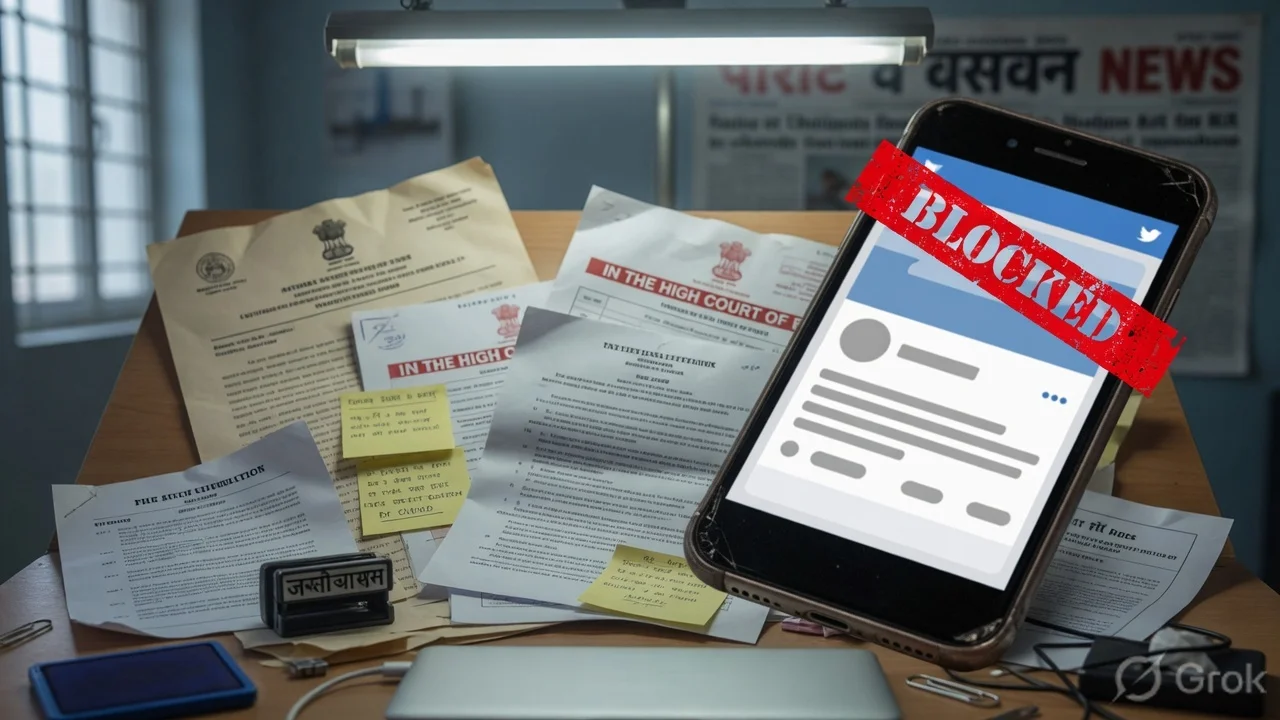
Friends, you saw it on X this morning – a screenshot of The Caravan’s tweet with a big red “This content is not available in your country.” The post was originally about a policy analysis on agricultural subsidies, but it vanished for every Indian IP address just hours after it went live. The reason? A government order from the Ministry of Electronics and Information Technology (MeitY) under the newly‑referenced IT Rules 2026 and the old‑school Section 69A of the Information Technology Act, 2000. What followed was a wildfire of X threads, a 54 % spike in Google searches for “India tweet block” and a fierce debate on whether India is sliding toward digital authoritarianism.
What actually happened?
- Date: 18 March 2026 (the tweet was posted on 14 March and blocked on the 18th).
- Account: @thecaravanindia – a respected long‑form journalism outlet.
- Content of the tweet: A link to an investigative piece on the impact of recent farm‑loan waivers. The tweet itself contained no explicit hate speech, defamation or illegal content.
- Blocking action: The tweet was geo‑restricted to India only. Outside the country the post remains fully visible.
- Official notice: X displayed a generic message – “This content is not available in your country – legal request”. No detailed justification was provided.
Legal backdrop – Section 69A and the 2009 Blocking Rules
Section 69A of the IT Act empowers the Central Government (or a designated officer) to block public access to information when it threatens:
- Sovereignty and integrity of India
- Defence of India
- Security of the State
- Friendly relations with foreign States
- Public order
- Prevention of incitement to a cognisable offence related to any of the above
The supporting Information Technology (Procedure and Safeguards for Blocking for Access of Information by Public) Rules, 2009 (commonly called the “Blocking Rules”) lay out a two‑step process:
- Rule 9 – Emergency blocking: An officer can issue an immediate block without prior hearing. The order must be placed before a three‑member committee within 48 hours.
- Rule 16 – Confidentiality: The content of the order, the complaint and the deliberations are kept confidential, except for the minimal notice to the platform.
Because the order is classified as “confidential”, the platform (X) only shows a blanket “legal request” label, and the content‑owner (The Caravan) gets a terse email with a reference number but no substantive explanation.
Why the X storm?
Indian technologists, journalists and ordinary users reacted instantly:
- #FreeSpeechIndia trended with over 30 K tweets within two hours.
- Prominent accounts (@InternetFreedomIndia, @DigitalRights) demanded transparency, citing past RTI denials that invoked Section 8(1)(a) of the RTI Act to shield the order.
- Several Indian startups warned that arbitrary blocks could jeopardise their marketing plans that rely heavily on X for organic reach.
The Google Trends chart for “India tweet block” spiked 54 % in the same window, confirming that the public is looking for answers.
Government’s point of view
MeitY officials, speaking on record through a press release, argued that the blocked tweet “risked public order” by spreading unverified data on loan waivers that could incite agitation in already volatile agrarian regions. They referenced a draft amendment to the IT Rules 2026 that expands the definition of “publisher of news and current affairs” to include social‑media accounts with a follower base above 10 K, theoretically subjecting them to additional compliance obligations.
Critics note that this expansion would effectively turn many independent journalists into “news publishers” with the same licensing, grievance‑redressal and content‑monitoring responsibilities as legacy TV channels.
Impact on Indian digital journalism
The Caravan is not the first outlet hit. In 2021, during the farmer protests, the platform blocked around 250 Caravan‑related tweets and even temporarily withheld the entire account. The pattern repeats: the state uses Section 69A to silence “sensitive” commentary while keeping the actual justification under wraps.
For smaller newsrooms, the risk is two‑fold:
- Loss of audience reach on X – a key distribution channel for breaking news in India.
- Potential legal exposure if they unintentionally breach the broadened “publisher” definition without the required registration.
Possible legal avenues
Because the order itself is confidential, challenging it in court is difficult. Nonetheless, media‑rights groups have used two strategies:
- Constitutional petition: Argue that the blanket block violates Article 19(1)(a) – the right to freedom of speech and expression – and that the order is disproportionate.
- Statutory RTI challenge: Seek a disclosure order, though past attempts have been rejected under Section 8(1)(a) citing national security.
So far, the judiciary has been cautious, often deferring to the executive on matters of “public order”. The outcome of any future petition will set a critical precedent for digital media in India.
What should readers do now?
- Stay informed: Follow the hashtag #CaravanBlock and check multiple sources – The Hindu, The Indian Express, and independent watchdogs like Internet Freedom Foundation.
- Use VPNs responsibly: While not a legal solution, a VPN can let Indian users view the blocked content for personal reference.
- Engage in public debate: Comment on X threads, write op‑eds, and press your local MP for clearer guidelines on the IT Rules 2026.
Looking ahead
The draft IT Rules 2026 are still under consultation. If the “publisher” clause is adopted, we could see a wave of registrations, compliance costs, and possibly more proactive takedowns. On the other hand, a strong judicial push‑back could reaffirm the necessity of transparency and proportionality in blocking orders.
For now, the Caravan case is the most visible flashpoint, and it serves as a litmus test for how India balances national security concerns with the constitutional promise of free speech in the digital age.
Bottom line
When a single tweet disappears from Indian screens, it’s not just a technical hiccup – it’s a legal maneuver with far‑reaching implications for journalists, developers, and everyday citizens. Keep an eye on the evolving story; it will shape the next chapter of online expression in India.
FAQs
- Q: What legal provision allowed the block? A: Section 69A of the IT Act, enforced through the 2009 Blocking Rules.
- Q: Can anyone see the blocked tweet? A: Yes, it remains viewable outside India; only Indian IP addresses are blocked.
- Q: Is the reason for the block publicly disclosed? A: No. The order is classified as confidential under Rule 16, so platforms only show a generic “legal request” notice.
- Q: Can The Caravan challenge the order? A: They can file a constitutional petition, but success is uncertain due to the secrecy surrounding the order.
- Q: How does this affect other Indian media outlets? A: It sets a precedent that any X account with a sizable following could be deemed a “publisher” and subject to similar takedowns.

Comments (0)
Be the first to comment!