


What’s the big news?
Jensen Huang – the charismatic CEO of Nvidia – runs a charitable arm called the Jensen Huang Foundation. In a bold move, the foundation has purchased $108.3 million worth of AI compute time from CoreWeave, a cloud‑GPU specialist, and is donating that capacity to universities and other non‑profit research institutes worldwide.
In plain English: a massive pool of Nvidia‑powered graphics cards (the same A100 and H100 GPUs that train GPT‑4) will now be free for academic labs that can’t afford the cloud bills. The donation is not limited to the US; it explicitly includes Indian institutes, which is where our TamilTech readers should sit up and take notice.
How does CoreWeave fit in?
CoreWeave is a boutique cloud provider that focuses on GPU‑intensive workloads – think deep‑learning, rendering, scientific simulations. Unlike the giant AWS or Azure, CoreWeave offers a more flexible pricing model and often better access to the latest Nvidia hardware. By buying a bulk block of compute from them, the foundation can allocate the resources like a “GPU‑bank” that any eligible university can tap into.
Numbers that matter
- Total spend: $108.3 million (about ₹9 billion at current rates).
- Estimated GPU hours: roughly 5‑6 million hours of A100/H100 time.
- Initial beneficiaries: 30‑plus universities across 12 countries, with at least 5 Indian institutes on the list.
That’s enough to train a mid‑size language model from scratch or run thousands of scientific simulations per year.
Why Indian universities care
India’s AI research budget is still a fraction of what the US or EU pours into it. Most Indian labs rely on on‑premise GPUs that are a few years old, or they have to scrape together limited cloud credits. The cost of a single A100 instance on a major cloud can be $3‑$4 per hour – a price that quickly eats up a modest research grant.
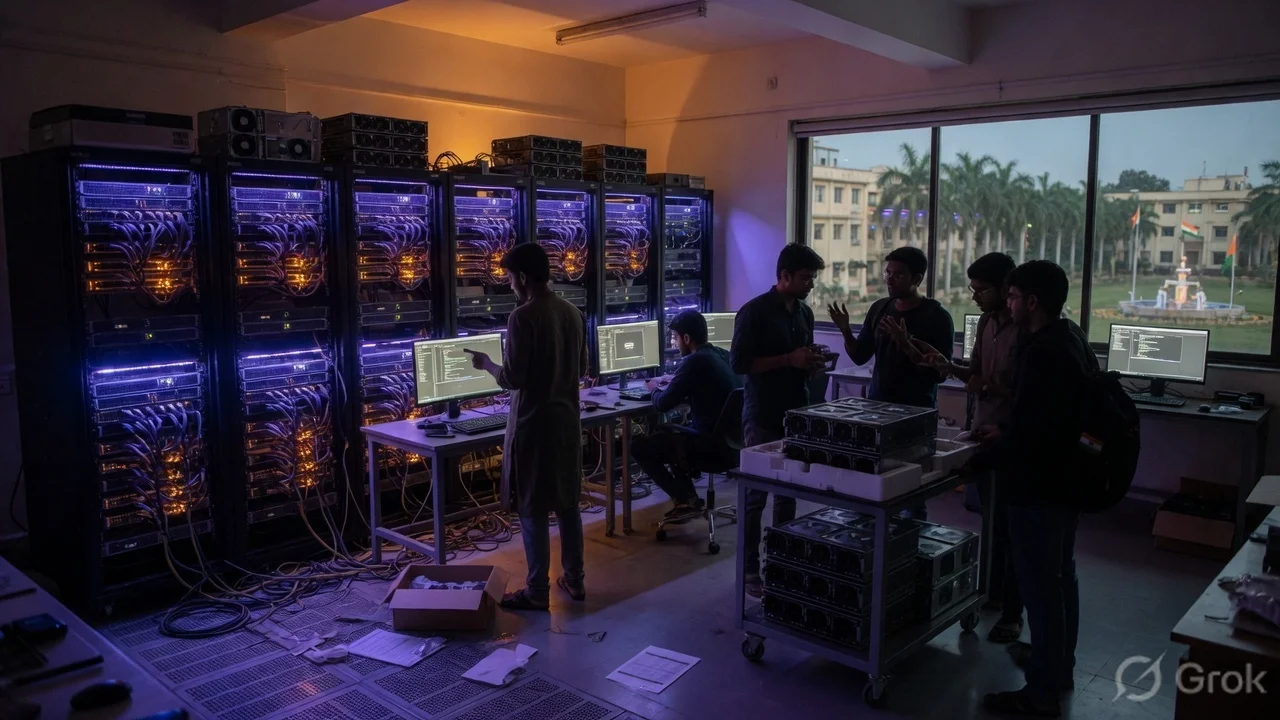
With this donation, a lab at IIT Madras, for example, could spin up a cluster of 100 A100 GPUs for weeks without paying a rupee. That opens doors to:
- Training home‑grown large language models in Tamil, Malayalam, and other regional languages.
- Running climate‑impact simulations that need petascale compute.
- Collaborating with industry on AI‑driven drug discovery – an area where India is trying to become a global hub.
What’s the catch?
Nothing hidden, but there are a few hoops:
- Institutes must apply and prove they are non‑profit research entities.
- They need to have staff that can manage GPU clusters – a skill gap that many Indian colleges still face.
- Usage is tracked; if a project exceeds its allocated hours, the institute will have to pay the standard CoreWeave rates.
In short, it’s a generous grant, but you still need the know‑how to use it wisely.
Impact on the Indian AI ecosystem
We’re already seeing a ripple effect. A few months after the announcement, the Ministry of Electronics and Information Technology (MeitY) hinted at a partnership to channel some of these credits into its AI‑for‑Social‑Good program. If that materialises, the compute could be earmarked for projects like:
- AI‑based crop‑yield prediction for small‑holder farmers in Tamil Nadu.
- Real‑time speech‑to‑text for rural health clinics.
- Low‑resource NLP models for government services.
For students, this could mean more hands‑on experience with state‑of‑the‑art hardware, which in turn makes Indian graduates more attractive to global AI firms.
TamilTech’s take
We think this is a game‑changer for Indian academia. The biggest bottleneck has always been compute, not talent. By removing that wall, the foundation is basically saying “we trust Indian researchers to do great stuff”.
Pros:
- Massive compute boost without upfront cost.
- Encourages home‑grown AI models in regional languages.
- Potential to accelerate public‑sector AI projects.
Cons:
- Administration overhead – applying, reporting, and managing GPU clusters isn’t trivial.
- Limited to institutions that already have some AI expertise.
Our recommendation: if you’re a faculty member or a student leader, start a small pilot project now. Even a proof‑of‑concept that uses a few hundred GPU hours can showcase the value and secure more funding later.
What’s next?
The foundation plans to roll out more batches of compute over the next 12‑18 months, possibly expanding to more Indian institutes. Keep an eye on the official CoreWeave portal – they’ll publish a “grant‑eligible” list and a simple web‑dashboard to request hours.
In the meantime, TamilTech will be tracking the first few research papers that emerge from this pool. Expect to see more papers on Tamil language models, climate AI, and biotech from Indian labs in the coming year.





Comments (0)
Be the first to comment!