


Key Takeaways
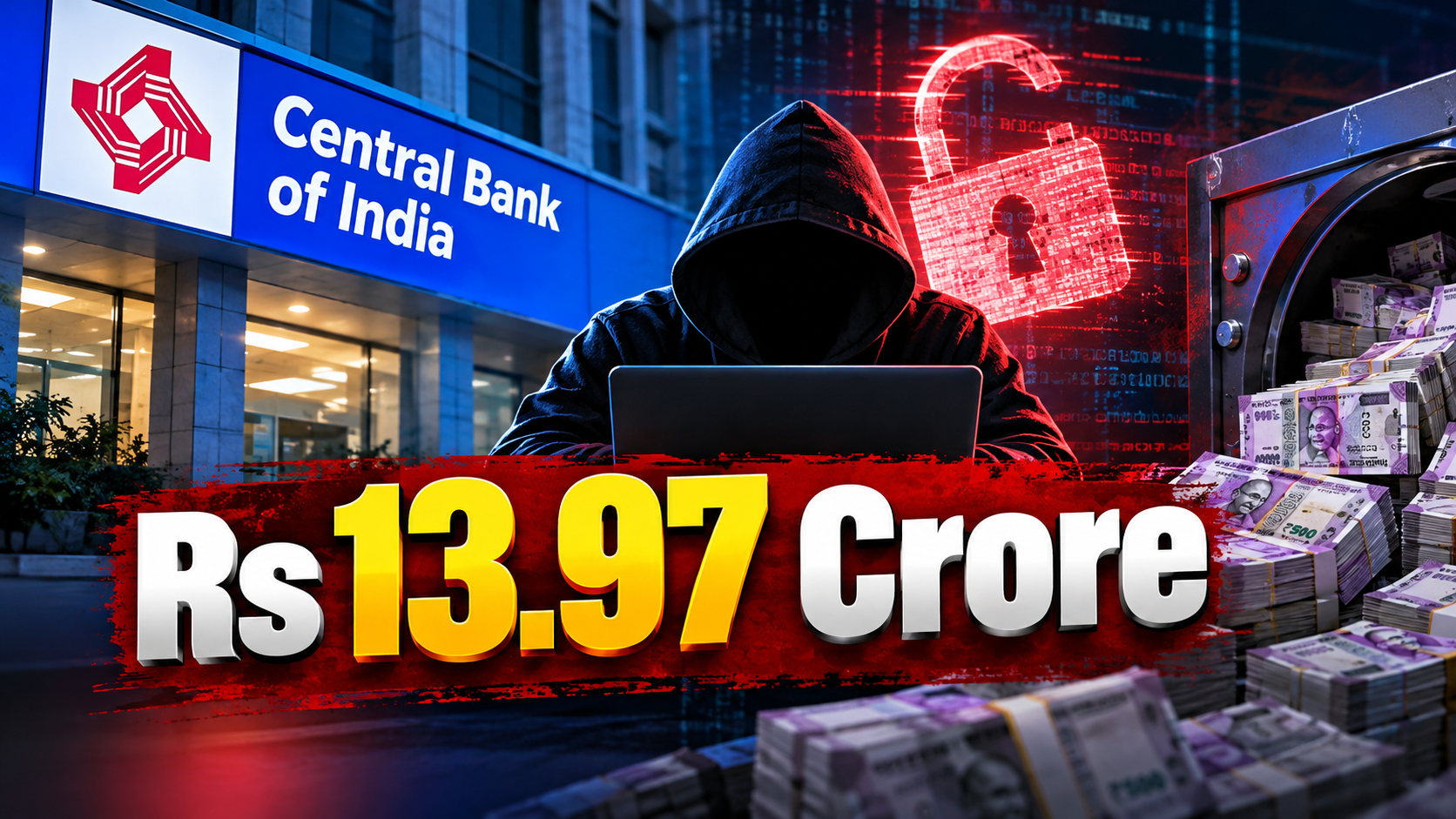
- Central Bank of India reported an unauthorized siphoning of Rs 13.97 crore across 187 untraceable transactions.
- The unauthorized transfers reportedly manipulated financial messaging pipes without registering regular entries in the bank's core banking ledger.
- Discrepancies came to light during back-end settlement reconciliations rather than real-time user debit alerts.
- Retail depositor funds remain protected under standard banking reserves, but the incident highlights urgent perimeter risks in interbank messaging gateways.
What just happened?
Imagine checking your passbook at the end of the month, matching every tea stall UPI payment and salary credit, and feeling satisfied that everything balances out. Now imagine your bank doing the exact same thing across its central treasury vaults, only to discover a gaping hole of Rs 13.97 crore that never triggered a single internal ledger alert.
That is the reality facing state-run lender Central Bank of India right now. According to media reports and preliminary regulatory disclosures, hackers allegedly broke into the perimeter of the bank's interbank communication flow. They siphoned off nearly fourteen crore rupees across 187 separate transfer requests.
The wild part is not just the stolen amount. The real shocker lies in how the transfers slipped through. The bank reportedly could not trace these 187 outgoing transfers from its routine day-to-day banking transaction records. In plain English: the money left the building, but the turnstile camera and the security register showed empty hallways.
The bank has flagged the incident to law enforcement agencies and cyber specialists to isolate the breach. While investigators race to trace the beneficiary accounts, this incident raises serious questions about how financial messages get generated, verified, and cleared across Indian public sector banks.
How does this actually work?
To understand what happened here, you have to separate a bank into two major engines: the Core Banking Solution (CBS) and the Financial Messaging System. Think of CBS as the giant digital ledger. It tracks who owns what, debits your account when you send money, and credits the payee. Every time you send money on Google Pay or transfer rent through net banking, CBS records the debit before anything moves.
The Financial Messaging System is completely different. It acts like an encrypted courier network. In India, interbank transfers like RTGS and NEFT travel through structured messaging networks like the Structured Financial Messaging System (SFMS), alongside global protocols like SWIFT. When Bank A wants to send Rs 10 lakh to Bank B, CBS tells the messaging gateway to format an authorized, cryptographically signed message. That message travels across the reserve network, and the recipient bank deposits the funds.
Normally, these two systems talk to each other in lockstep. You cannot fire off an outward courier message without your CBS ledger approving and debiting the source pool. But when sophisticated threat actors target banks, they look for gaps right at that handshake interface.
If hackers gain administrative credentials or inject rogue code into the messaging terminal, they can forge outbound transfer messages directly. The receiving banks see valid, authenticated instructions arriving through official secure rails. They accept the payment and credit the money to designated beneficiary accounts. Meanwhile, because the rogue messages bypassed the originating bank's core ledger, the local CBS software has no idea the transaction ever occurred.
The bank only notices the bleed during end-of-day or periodic clearing reconciliation. That is when the reserve settlement accounts show that real cash walked out the door, while internal customer debit ledgers show zero matching activity. That appears to be why these 187 transfers left no routine transaction trail.
What changes for people in India?
Whenever a headline mentions a public sector bank losing crores to hackers, panic spreads through WhatsApp family groups. People start asking whether their savings accounts, fixed deposits, or salary credits are in jeopardy.
If you hold an account with Central Bank of India, your personal balance is safe. Attacks on bank messaging infrastructure do not skim money out of individual consumer savings accounts. Hackers do not guess your four-digit ATM PIN or break into your phone. Instead, these breaches target settlement pools and institutional transit accounts held at the bank level.
Public sector banks absorb these operational losses through institutional reserves and cyber risk insurance policies. Your deposits continue to enjoy standard regulatory coverage and statutory protection under the Deposit Insurance and Credit Guarantee Corporation (DICGC) up to Rs 5 lakh per depositor.
However, what definitely changes is the friction you might experience over the coming months. Incidents like this force the Reserve Bank of India and internal compliance teams to tighten scrutiny across outgoing fund rails. Expect public sector lenders to introduce stricter velocity checks, secondary out-of-band approvals for bulk transfers, and extended cooling periods on newly added high-value beneficiaries.
You might also see slower processing windows for high-value RTGS settlements during non-peak hours while banks patch their gateway verification logic. Regulators will undoubtedly demand comprehensive forensic audits across all financial messaging server endpoints to ensure no persistent backdoor malware remains undetected.
What should you do now?
Even though this specific breach hit the bank's back-end messaging architecture rather than consumer login screens, you should treat it as a loud reminder to tighten your own personal banking hygiene.
Start by auditing your registered notification channels. Ensure your active mobile number and personal email ID receive immediate SMS and email alerts for every debit, however small. If rogue actors ever test compromised credentials against your account, your immediate notification receipt is your first and best defense.
Second, review your daily transaction limits inside your bank's official mobile app or net banking portal. Most Indian banks now let you toggle daily caps for UPI transfers, POS card swipes, and net banking NEFT or IMPS transfers. Keep these limits dialed down to realistic daily spending levels. If you rarely transfer more than Rs 25,000 in a day, do not leave your daily transfer ceiling sitting wide open at Rs 5 lakh.
Third, stay alert against copycat social engineering scams. Fraud rings often take advantage of news about bank hacks. They call unsuspecting customers pretending to be IT desk executives or branch managers, claiming your account needs urgent re-verification or migration due to a cyber alert. Remember that no bank representative will ever ask for your net banking password, OTP, or UPI PIN to protect your account from a server breach.
If you spot any unexpected activity or discrepancy on your monthly statement, report it immediately to the bank's official national helpline and file a ticket on the National Cyber Crime Reporting Portal at cybercrime.gov.in. Prompt reporting within three days remains the single most effective legal protection for bank customers in India under RBI zero-liability frameworks.




Comments (0)
Be the first to comment!