


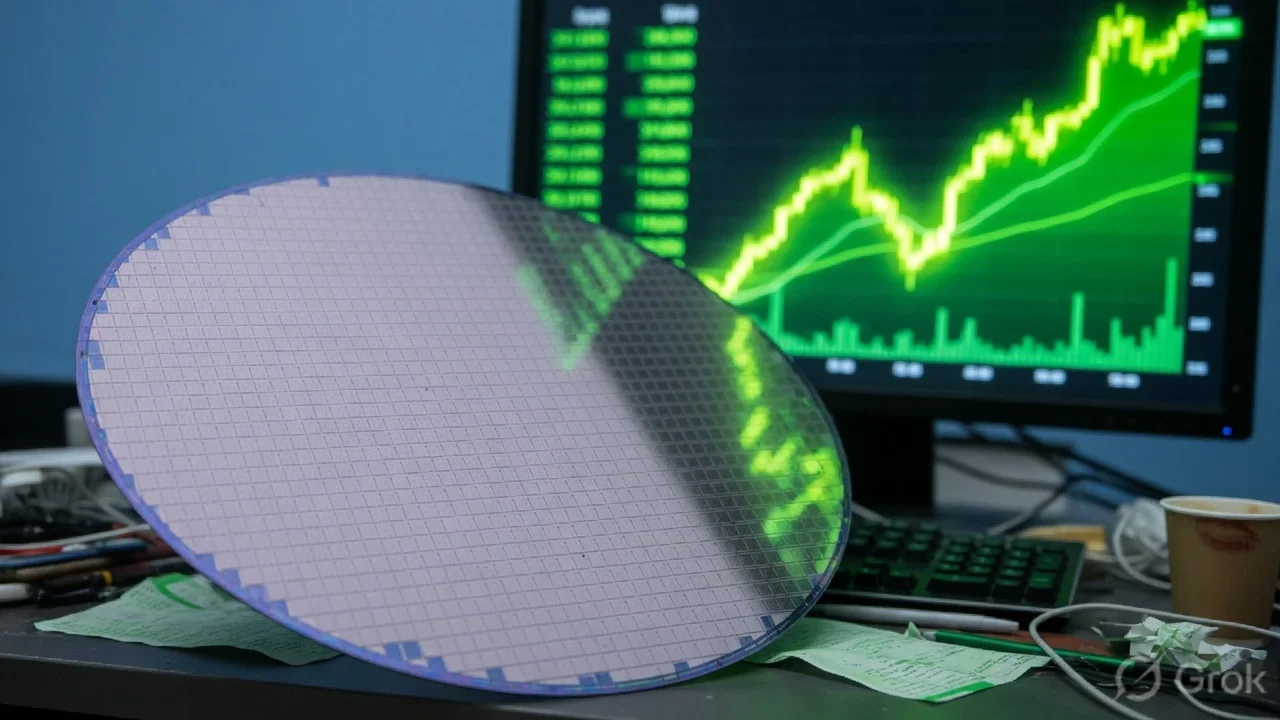
What happened?
On Thursday morning Cerebras Systems (ticker: CSBR) opened at $135 per share, a staggering 68% jump from its IPO price of $80. The surge lifted the company’s market capitalisation to roughly $95 billion, putting it in the same league as Nvidia and AMD.
Why the hype?
Cerebras builds the world’s largest AI processor – the Wafer‑Scale Engine (WSE‑3). Instead of stitching together dozens of smaller chips, they fabricate a single silicon wafer (about 300 mm across) as one massive die. The result is a processor with over 4 trillion transistors, 850 GB/s memory bandwidth and a power envelope that rivals a small server rack.
Investors love the narrative: while Nvidia dominates GPUs, a new class of “wafer‑scale” silicon could unlock lower latency and higher throughput for massive transformer models like GPT‑4 and the upcoming GPT‑5. The company claims a single WSE‑3 can replace a whole GPU cluster, shaving both cost and energy.
Numbers that matter
- IPO size: $8 billion (largest US tech IPO of 2024)
- Opening price: $135 vs. IPO price $80 (+68%)
- Market cap post‑open: $95 billion
- Revenue 2023: $215 million (up 140% YoY)
- Cash on hand: $2.1 billion
How does this affect India?
Indian AI startups have been scrambling for affordable compute. Right now, most of them rent Nvidia A100 or H100 GPUs on cloud platforms like AWS, Azure, and Google Cloud – cost can easily cross ₹2 lakhs per month for a single node.
If Cerebras’ wafer‑scale chips become a viable alternative, Indian firms could see a dip in cloud spend. Moreover, Cerebras announced a partnership with an Indian data‑center operator to set up a pilot in Bangalore later this year. That could mean faster access to on‑prem AI hardware for companies like Zoho, Freshworks, and even government research labs.
TamilTech’s take
We’re excited but cautious. The wafer‑scale approach is technically brilliant, yet scaling manufacturing yields for a 300 mm die is a nightmare. If yield rates stay low, the per‑chip cost could stay high, limiting adoption to only the deepest pockets.
For Indian developers, the immediate takeaway is that more options are emerging. Keep an eye on price‑per‑TFLOP metrics – if Cerebras can beat Nvidia on cost‑efficiency, we might see a shift in the local AI ecosystem.
What’s next?
Expect the next tranche of the IPO proceeds to fund a second‑generation WSE (WSE‑4) and expand the Bangalore pilot. Also watch the SEC filings for any hints of strategic alliances with Indian cloud providers.
Bottom line: Cerebras’ blockbuster debut tells us the market still believes custom silicon is the next frontier in AI. Whether that translates into cheaper compute for Indian startups remains to be seen, but the buzz alone is enough to make us sit up and take notice.




Comments (0)
Be the first to comment!