


What’s happening?
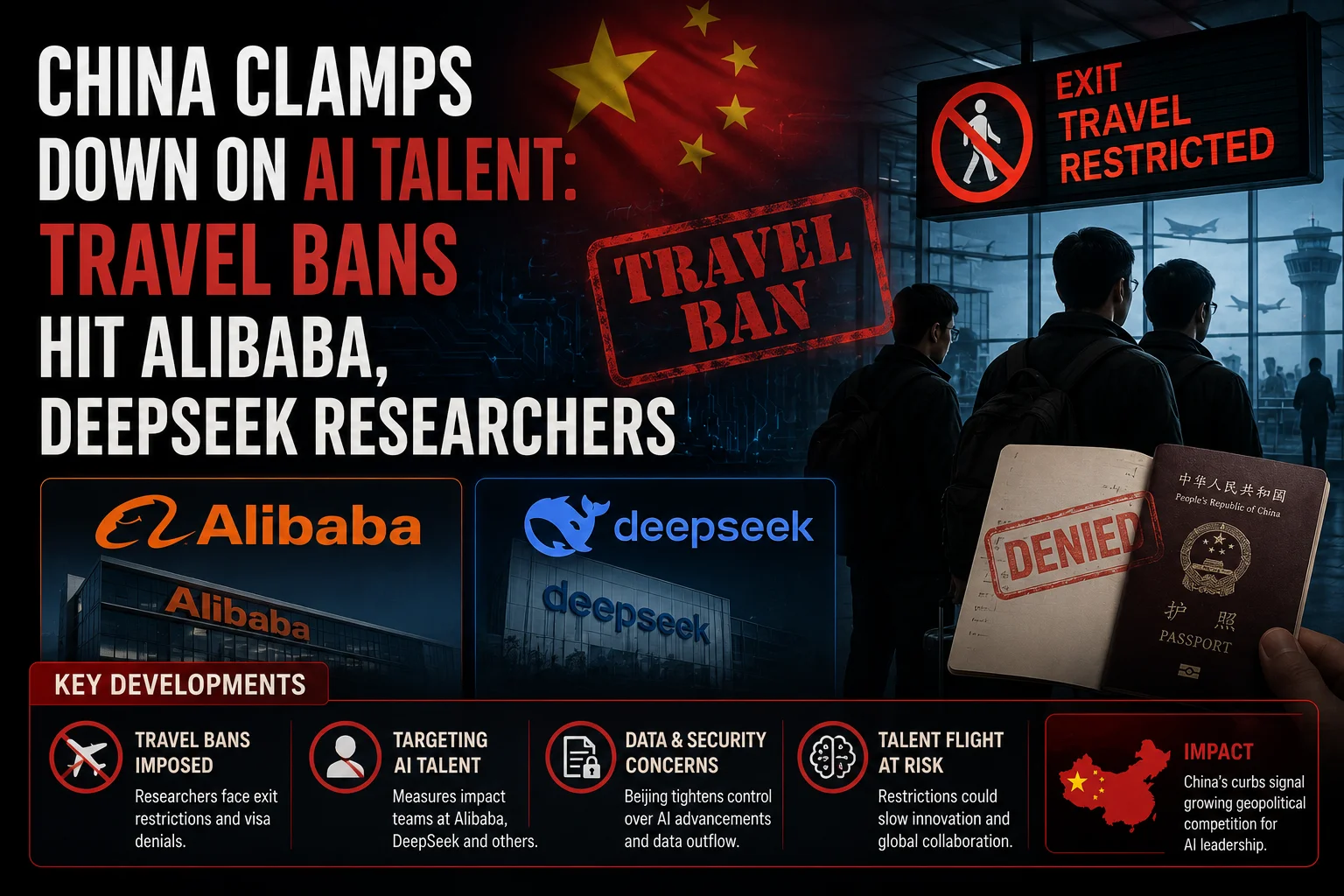
Beijing’s Ministry of Science and Technology has quietly rolled out a new rule that stops anyone involved in “advanced artificial intelligence” projects from leaving the country without special permission. The move hits big names – Alibaba’s DAMO Academy, the up‑and‑coming DeepSeek, and a handful of university labs that are building large language models (LLMs) rivaling ChatGPT.
Why now?
China’s AI race has accelerated since 2022. The government poured billions into AI chips, data centres, and talent programmes. At the same time, Washington’s export controls on AI chips and the U.S. push to limit China’s access to frontier models have made Beijing nervous. The travel ban is a precaution: officials fear that key engineers could be poached by foreign firms or that sensitive research could leak during overseas conferences.
Who’s affected?
- Alibaba DAMO Academy – dozens of researchers who contributed to the Tongyi Qianwen family of models are now on a watch‑list.
- DeepSeek – the Shanghai‑based startup that released a 130‑billion‑parameter model last month sees its core team barred from attending AI summits in Europe.
- University labs – professors at Tsinghua, Zhejiang and the Chinese Academy of Sciences working on transformer‑scale architectures must apply for travel exemptions.
The rule does not ban all travel. Scientists can still go abroad for “nationally important” missions, but each request goes through a multi‑layer approval process involving the Ministry, local public security bureaus, and the employer’s HR.
How does it work?
1. Identify the researcher – HR departments flag anyone whose project is tagged as “advanced AI” in internal databases.
2. Apply for exemption – the employee submits a written request detailing the purpose, destination, and security measures.
3. Review – local public security, the Ministry’s AI office, and the employer’s legal team evaluate the request.
4. Decision – approval can take weeks; denial means the employee must stay in China until the project ends.
Impact on Indian tech scene
For Indian startups that collaborate with Chinese AI firms, the rule adds a layer of uncertainty. Many Indian AI teams use Chinese‑sourced datasets or hardware accelerators (like the Huawei Ascend series). If Chinese partners can’t send engineers to Bangalore or Hyderabad for joint‑development, project timelines could stretch.
On the flip side, the travel clamp might open doors for Indian talent. Companies like Reliance Jio, Tata Elxsi, and startups in the AI‑ML space could attract researchers who now see fewer chances to work abroad. Expect a modest uptick in senior AI hires from China to Indian R&D hubs over the next 12‑18 months.
TamilTech’s take
We think the move is a double‑edged sword. It protects China’s strategic AI assets, but it also isolates its researchers from the global community. Innovation thrives on cross‑border exchange – think of how many breakthroughs happen at conferences like NeurIPS or ICML. Cutting that off could slow down progress, especially for startups that rely on fast feedback loops.
For Indian users, the immediate effect is limited. Most AI‑powered services you use – from Baidu‑backed search to Alibaba‑driven e‑commerce recommendation engines – will keep running. However, if the travel bans push Chinese firms to double‑down on domestic talent, we might see more home‑grown Chinese models competing with OpenAI, Anthropic, and Google. That could affect the pricing and availability of API services for Indian developers.
What’s next?
Watch for two things:
- Policy tweaks – the government may loosen the rule for “strategic partnership” projects, especially if they involve Indian firms.
- Talent migration – keep an eye on LinkedIn trends; a sudden rise in senior AI hires in Bengaluru, Hyderabad, and Pune could be a direct result of this policy.
Bottom line: China is tightening the reins on its AI elite. For us in India, it’s a reminder to build home‑grown expertise and diversify our AI supply chain.






Comments (0)
Be the first to comment!