


What’s the buzz?
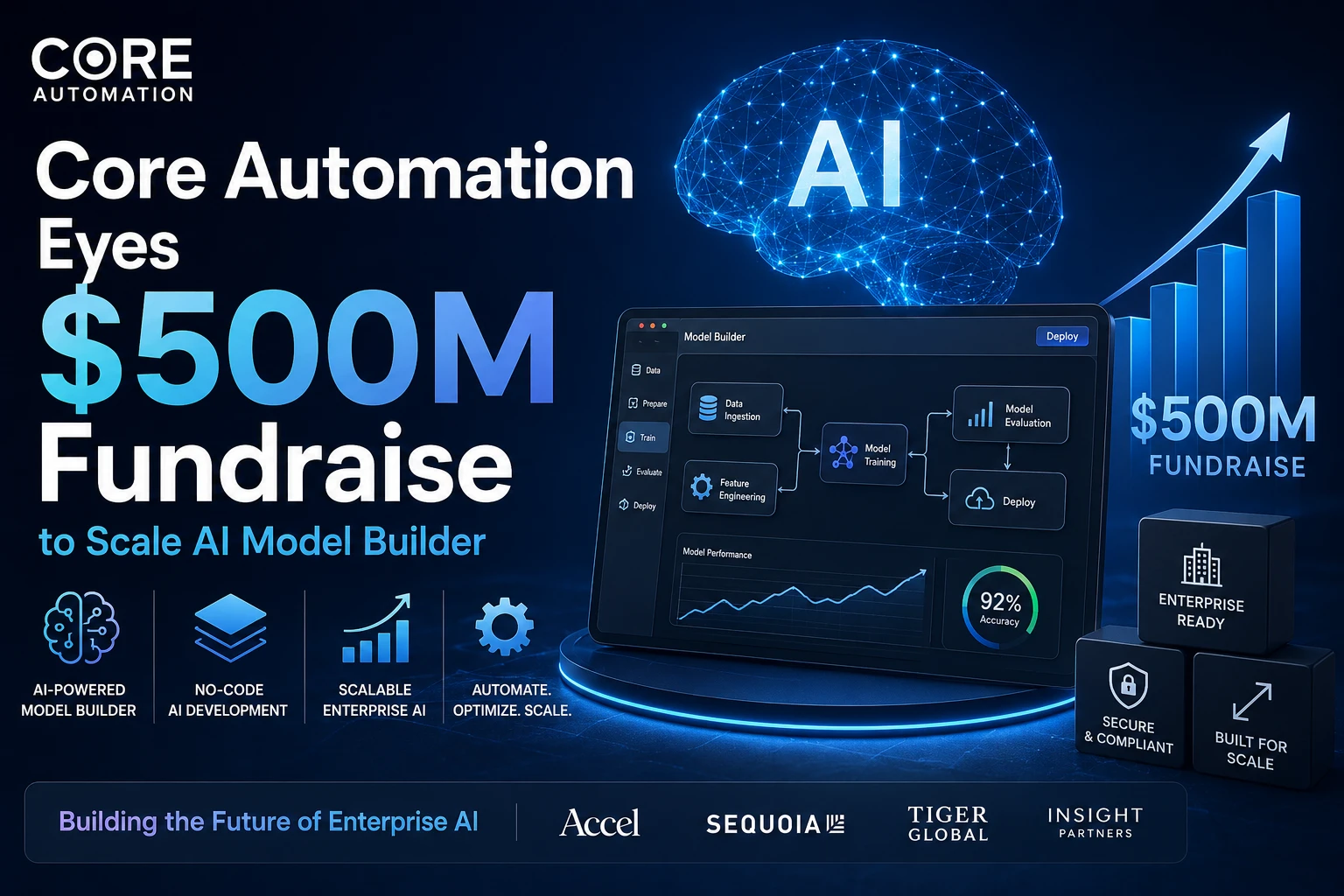
Core Automation, the AI model‑building platform that lets developers spin up custom ML pipelines with a few clicks, is on the hunt for a fresh round of capital. The company, started in March by ex‑Google AI veteran Jerry Tworek, is aiming to raise between $300 million and $500 million. If the math works out, the post‑money valuation will sit around $4 billion – a huge leap from the $1 billion valuation that backed its recent $100 million Series C.
Who’s behind the numbers?
Jerry Tworek, the brain‑child of Core Automation, spent a decade at Google AI, where he helped build TensorFlow and the internal AI tooling that powers Google Search. After a short stint at a stealth AI startup, he launched Core Automation with the idea that building, training, and deploying AI models should be as simple as dragging‑and‑dropping components in a UI.
Since its March launch, the platform has attracted big‑name customers – from fintech firms looking to detect fraud in real time to e‑commerce players needing recommendation engines. The company claims that its auto‑ML engine can cut model‑training time by up to 80 % and reduce cloud spend by 30 % compared to traditional pipelines.
Funding trail so far
Core Automation’s seed round in early 2023 raised $15 million, led by Insight Partners. A year later, Series B brought in $45 million from Andreessen Horowitz and Sequoia Capital. The most recent Series C, closed just six months ago, pulled in $100 million at a $1 billion valuation – a round that featured participation from SoftBank Vision Fund and Tiger Global.
Now the company is courting a mix of growth‑stage VCs and strategic investors. Sources say the lead investors could be a partnership between SoftBank and a sovereign wealth fund from the Middle East, with participation from existing backers.
Why such a big ask?
The money will go into three main buckets:
- Product acceleration: Adding more pre‑built model templates, expanding the low‑code UI, and integrating deeper with major cloud providers (AWS, Azure, GCP).
- Global expansion: Opening sales offices in Bangalore, Singapore, and Berlin to capture enterprise demand in Asia‑Pacific and Europe.
- Talent war: Hiring more AI researchers, data engineers, and sales engineers to keep the platform ahead of rivals like DataRobot, H2O.ai, and Google Vertex AI.
What does this mean for India?
India’s AI market is projected to cross $5 billion by 2027, driven by government push for AI‑first policies and a surge in AI‑enabled startups. Core Automation’s push to set up a Bangalore hub could create 200‑plus high‑skill jobs in the next 18 months. For Indian enterprises, the platform promises a faster route to production‑grade models without hiring a full data‑science team.
Moreover, the pricing model – a usage‑based pay‑as‑you‑go plan starting at $0.02 per compute hour – aligns well with Indian startups that operate on tight cash flows. The company also announced a “Startup‑First” tier offering 30 % discount for early‑stage firms, which could be a game‑changer for Bangalore’s vibrant tech ecosystem.
TamilTech’s take
We think Core Automation is betting on the growing appetite for low‑code AI. The platform’s ability to auto‑tune hyper‑parameters and auto‑scale training jobs could lower the barrier for non‑technical founders to experiment with AI. However, the market is crowded, and giants like Google and Microsoft are rolling out similar capabilities within their cloud suites.
For Indian enterprises, the real test will be integration with existing ERP and CRM stacks – something Core Automation claims to have built native connectors for SAP, Oracle, and Zoho. If those connectors work as promised, the platform could see rapid adoption in sectors like logistics, fintech, and health‑tech.
What’s next?
We’ll keep an eye on the funding round’s final numbers – the range is wide, and the valuation could swing based on who signs the term sheet. If Core Automation closes the round at the high end, it will join the elite club of Indian‑friendly AI unicorns, positioning itself as a serious alternative to the cloud‑native AI services.
Meanwhile, keep watching for product demos that showcase end‑to‑end pipelines – from data ingestion to model monitoring – especially the new “Auto‑Deploy” feature that promises one‑click production rollout.
Bottom line: Core Automation is scaling fast, the money is coming, and Indian AI players should watch this space closely.




Comments (0)
Be the first to comment!