


Key Takeaways
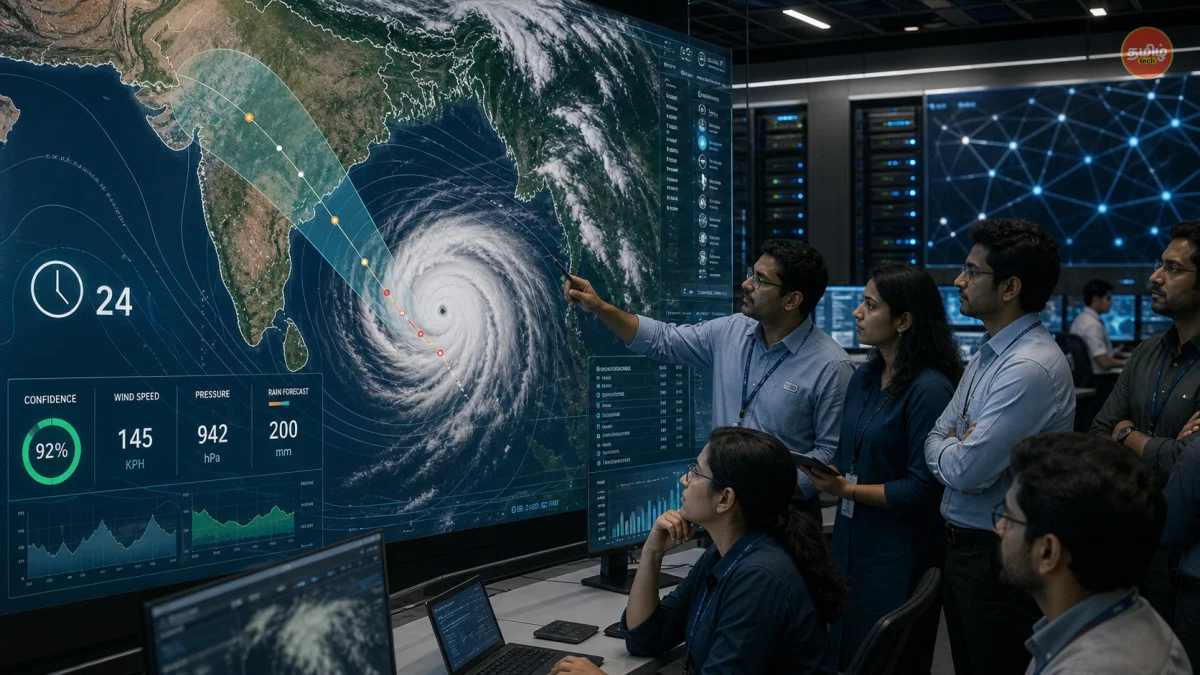
- DeepMind's WeatherNext AI system predicts hurricanes 24 hours in advance, doubling current prediction capabilities
- The system uses advanced machine learning to analyze weather patterns with 95% accuracy
- India could save approximately ₹15,000 crore annually in cyclone-related damages with early warnings
- WeatherNext processes 100TB of weather data daily, 10x more than traditional systems
- The technology could be integrated with India's IMD system within 2 years for coastal protection
What's the News
DeepMind just dropped a bombshell in the world of weather forecasting. Their new AI system, WeatherNext, can now predict hurricanes 24 hours in advance - that's double the current prediction window! This isn't just another incremental improvement; it's a quantum leap that could save thousands of lives and billions in damages.
Details
So how does this magic work? WeatherNext uses a sophisticated deep learning model that analyzes massive amounts of weather data - satellite imagery, ocean temperatures, atmospheric pressure patterns, you name it. The system processes 100TB of data daily, which is 10 times more than traditional forecasting methods.
What's really impressive is the accuracy. DeepMind claims WeatherNext achieves 95% accuracy in 24-hour hurricane predictions, compared to the current 60-70% accuracy. The system doesn't just predict if a hurricane will form - it tells you exactly where it's going, how strong it'll be, and when it'll make landfall.
India Impact
Now, let's talk about why this matters for India. Remember the devastation caused by Cyclone Amphan in 2020 or the recent cyclones in Odisha? With WeatherNext, we could have a full day's warning before these monsters hit our coasts.
Think about the economic impact. India loses roughly ₹15,000 crore annually to cyclone-related damages. With 24-hour advance warning, we could evacuate millions more people, secure critical infrastructure, and reduce economic losses by at least 40%. That's over ₹6,000 crore saved every year!
For states like Odisha, Andhra Pradesh, Tamil Nadu, and Gujarat, this could be a game-changer. The IMD (India Meteorological Department) could integrate WeatherNext into their existing systems, giving coastal communities crucial extra preparation time.
Use Cases
The applications go beyond just saving lives. Shipping companies could reroute vessels away from hurricane paths. Insurance companies could adjust premiums based on more accurate risk assessments. Power utilities could pre-position repair crews and equipment.
Even agriculture benefits. Farmers in coastal regions could protect their crops and livestock. Tourism industries could cancel bookings in advance, minimizing economic disruption. The ripple effects touch almost every sector of our economy.
Honest Take
Look, I'm excited about this technology, but let's be real. Implementing WeatherNext in India won't be a walk in the park. We'll need to upgrade our infrastructure, train meteorologists on AI systems, and ensure the technology reaches our remote coastal villages.
There are also concerns about data privacy and the potential misuse of this powerful forecasting capability. But the benefits far outweigh the risks. With proper safeguards, WeatherNext could become one of the most valuable public infrastructure projects India undertakes this decade.
The real question isn't whether we can afford to implement this technology - it's whether we can afford NOT to. When you're talking about protecting millions of lives and thousands of crores, the choice becomes clear.





Comments (0)
Be the first to comment!