


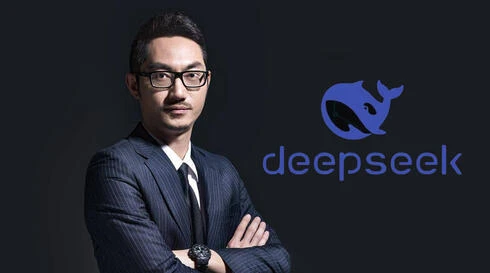
In January 2025, a little-known Chinese AI startup called DeepSeek released a model called R1 that did what the entire tech industry thought was impossible — it matched OpenAI's best reasoning model while being trained at a fraction of the cost. Within two weeks, DeepSeek's AI assistant overtook ChatGPT as the #1 free app on Apple's U.S. App Store. The shockwave was so powerful that investors dumped shares of Nvidia and American tech stocks, triggering a $1 trillion market value drop in a single day.
Behind this earthquake was a quiet, unassuming man named Liang Wenfeng — not a Silicon Valley veteran, not a PhD from a famous AI lab, but a hedge fund manager from Hangzhou, China.
The Early Years: A Math Prodigy from Guangdong
Born in 1985 in the village of Mililing in Wuchuan city, Guangdong province, Liang Wenfeng was raised by parents who were both primary school teachers. Growing up on the southern coast of China, he was a straight-A student with an exceptional aptitude for mathematics.
At 17, he enrolled at Zhejiang University, one of China's top institutions, majoring in electronics and communication engineering. He went on to earn a master's degree in information and communication engineering in 2010.
From Wall Street Algorithms to AI: The Quant Trader Phase
After graduating, Liang didn't enter the tech industry — he went into quantitative finance. In 2013, he opened his first venture, Jacobi, an investment firm named after German mathematician Carl Jacobi. Two years later, he and several college friends co-founded High-Flyer Quantitative Investment Management, a hedge fund specializing in machine-learning-driven trading models.
High-Flyer became enormously successful. Under Liang's leadership, the fund's assets under management surpassed RMB 100 billion (approximately $14 billion) by 2021. But Liang was already thinking beyond finance.
The Nvidia Stockpile: A "Hobby" That Changed Everything
In 2021, while most of the world was still figuring out what GPT-3 meant, Liang began quietly buying thousands of Nvidia A100 GPUs. Acquaintances viewed it as a quirky hobby — a hedge fund manager collecting computing chips. But Liang had a vision.
His timing was impeccable. When the Biden administration began restricting AI chip exports to China in 2022, Liang already had his stockpile. SemiAnalysis estimates DeepSeek accumulated at least 50,000 Nvidia A100 units before the ban took effect. This GPU arsenal became the foundation of what would come next.
The Birth of DeepSeek: From Finance to Frontier AI
In April 2023, High-Flyer announced plans to "explore the essence of AGI" — artificial general intelligence. A month later, DeepSeek was officially created as an independent research group, backed by High-Flyer's resources, with Liang at the helm.
What made DeepSeek different from the start was Liang's philosophy. He told Chinese media:
"In the past thirty years, China's tech industry has only emphasized making money and ignored innovation. We want to change that."
Instead of chasing quick commercial products, DeepSeek focused on fundamental research — understanding how to train models more efficiently, how to get maximum performance from limited hardware.
The Breakthrough: DeepSeek-R1
On January 20, 2025, DeepSeek released R1, the first open-weight model that genuinely challenged OpenAI's o1 reasoning model. The numbers were staggering:
- Training cost: Approximately $5.6 million (vs. billions spent by OpenAI and Google)
- Hardware used: 2,048 Nvidia H800 GPUs (export-restricted, less powerful versions of A100s)
- Training time: 2.8 million GPU hours
- Result: Performance that matched or exceeded OpenAI's models on key benchmarks
Marc Andreessen, co-founder of the legendary VC firm Andreessen Horowitz, called DeepSeek-R1 "AI's Sputnik moment" — a reference to the 1957 Soviet satellite launch that shocked America into the space race.
The $1 Trillion Shockwave
Headlines seized upon DeepSeek's modest training cost, casting doubt on mega-projects like OpenAI's $500 billion Stargate venture. If a Chinese startup could achieve comparable results at 1/100th the cost, was the entire Western AI investment thesis wrong?
Frantic investors dumped shares of Nvidia, Microsoft, and other AI-linked stocks, driving a $1 trillion market value drop in a single day — one of the largest single-day losses in stock market history.
The Open-Source Commitment
Perhaps the most remarkable aspect of DeepSeek's story is Liang's steadfast commitment to open source. While competitors like OpenAI have moved toward closed systems, Liang has firmly stated: "We won't go closed-source."
His reasoning is both philosophical and strategic:
"In disruptive tech, closed-source moats are fleeting. Even OpenAI's closed-source model can't prevent others from catching up. Therefore, our real moat lies in our team's growth — accumulating know-how, fostering an innovative culture."
Where DeepSeek Stands Today
Liang now ranks #5 on AI Magazine's Top 100 AI Leaders 2026 list. DeepSeek has proven that breakthrough AI innovation is no longer solely dependent on billion-dollar budgets — and that the next major breakthrough could emerge from anywhere in the world.
As the AI race intensifies, Liang Wenfeng's journey from a quant trader in Hangzhou to the man who shook Silicon Valley remains one of the most inspiring success stories in modern tech history.




Comments (0)
Be the first to comment!