


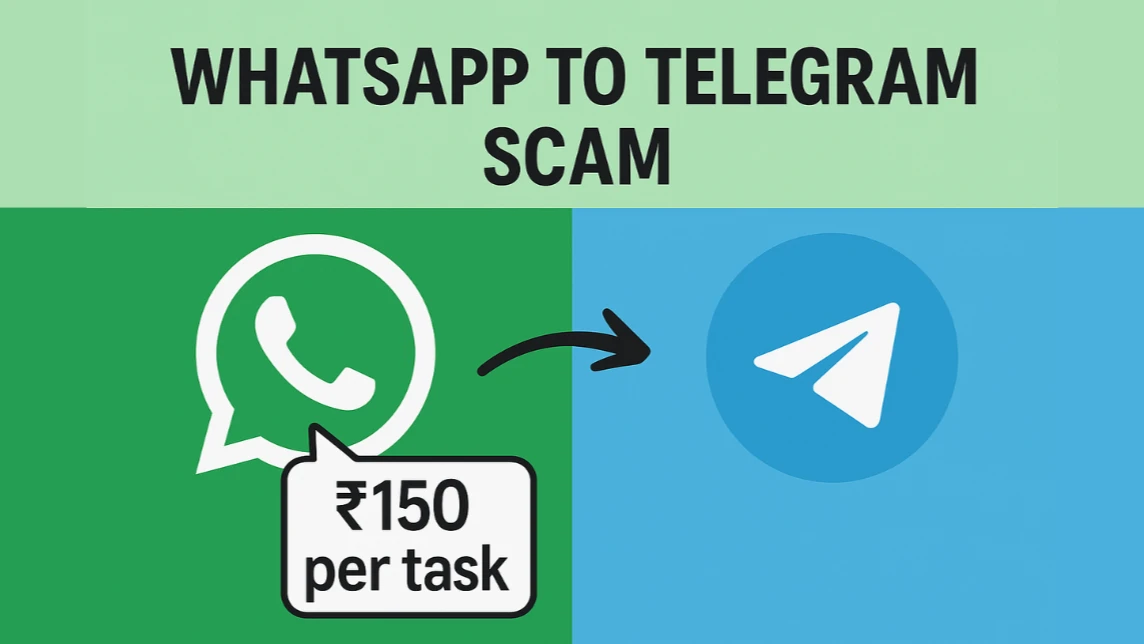
A devastating scam is sweeping across India, specifically targeting students, freshers, and job seekers through WhatsApp and Telegram. Promising easy money through simple online tasks, this scam has destroyed lives — including a Telangana software engineer who lost ₹12 lakh meant for his sister's wedding and tragically took his own life.
How the Fake Job/Task Scam Works
Day 1: The Hook
You receive a WhatsApp message from an unknown number:
- "Hi! We have a part-time work-from-home opportunity. Earn ₹5,000-₹15,000 daily"
- "Like YouTube videos and earn ₹150-₹250 per task"
- "Rate hotels/restaurants on Google and get paid"
You're added to a Telegram group with thousands of "members" (mostly bots or fake accounts).
Day 2: The Small Payouts (Building Trust)
You complete simple tasks — liking videos, writing reviews, subscribing to channels. And surprisingly, you actually get paid ₹200-₹500. Screenshots of other "members" getting paid flood the group. This builds trust.
Day 3: The Trap Springs
A "receptionist" guides you to the "next stage" — premium tasks that require deposits:
- "Deposit ₹5,000 to unlock premium tasks worth ₹15,000"
- "Invest in this crypto package for guaranteed 3x returns"
- The tasks are gamified — each level requires a bigger deposit for bigger "earnings"
Day 4+: The Spiral
- When you try to withdraw, you're told you need to "complete one more task" requiring a bigger deposit
- Withdrawals are always "pending" or "processing"
- By the time you realize it's a scam, you've invested ₹50,000 to ₹12,00,000
- The Telegram group suddenly disappears, and all contacts go silent
Real Impact
- Telangana: Software engineer lost ₹12 lakh (his sister's wedding fund) and tragically died by suicide
- Kerala, NCR, Gujarat: Multiple victims reported losses of ₹7,000 to ₹12 lakh
- Global losses: Job scam texts led to losses of $470 million globally in 2024
- Delhi Police: Arrested 229 people involved in online job scams over 16 months — but actual operators are based in China, Cambodia, UAE, Myanmar
Red Flags — How to Identify Fake Job Scams
- Unsolicited contact — Real employers don't recruit via random WhatsApp messages
- "Pay to earn" — Any job requiring upfront payment is a scam. You should NEVER pay to get paid
- Too good to be true — ₹5,000-₹15,000 daily for liking videos? No legitimate job pays that
- Telegram groups — Legitimate companies don't recruit through Telegram groups
- Crypto investment — If a "job" pivots to crypto investment, it's a Ponzi scheme
- Pressure to deposit — Real jobs never require deposits, processing fees, or registration charges
- No company details — No official website, no Glassdoor reviews, no LinkedIn presence
Why Telegram Is the Scammer's Favourite Platform
- Anonymity: Unlike WhatsApp, Telegram doesn't require phone number verification
- Groups of 200,000+: Scammers create massive groups to appear legitimate
- Self-destructing messages: Evidence disappears automatically
- Lax compliance: Telegram has faced criticism for slow response to Indian law enforcement requests
How to Protect Yourself
- Only apply through verified platforms: Naukri, LinkedIn, Indeed, company websites
- NEVER pay anyone to get a job — registration fees, training fees, deposits are all scam indicators
- Verify the company: Check Glassdoor, LinkedIn, and MCA (Ministry of Corporate Affairs) records
- Don't join unknown Telegram groups
- Talk to friends/family before investing any money in "easy earning" schemes
- Report: Call 1930 or file complaint at cybercrime.gov.in
"If a job sounds too good to be true, it is. No legitimate company pays thousands for liking videos. If someone asks you to pay money to earn money, walk away immediately." — Cyber Crime Cell Advisory





Comments (0)
Be the first to comment!